
An hour from Barcelona, there’s a mountain that stops people in their tracks. I know it did for me the first time I visited. Not because it’s on every travel list, (though it’s common if you’re planning a trip to Barcelona already), but because nothing quite prepares you for the scale of it. The jagged limestone peaks, the ancient Benedictine monastery built into the rock face, the silence up top that somehow coexists with hundreds of other visitors. Montserrat is one of those places that earns its reputation rather than coasting on it.
After many visits myself, I’m always surprised how stunningly beautiful this part of Catalunya is. In fact, it’s one of my favorite day trips from Barcelona that I often recommend to friends and family visiting this region.
So, is Montserrat worth visiting? If you’re weighing up whether to add it to your trip, here’s everything you need to know, the logistics, the highlights, and the honest bits too.
This article may contain affiliate links. If you book something through my website, I may earn a small commission, at no additional cost to you. Thank you for supporting Following My Compass!
Key Takeaways
- Montserrat is absolutely worth it: the combination of a living Benedictine monastery, dramatic mountain scenery, and world-class hiking trails makes it unlike anywhere else in Spain.
- Go early and on a weekday: the crowds can be brutal, especially on weekends. Arriving by 9am transforms the experience.
- Plan your ticket strategy: the Trans Montserrat or Tot Ticket packages from Plaça Espanya station or online are the smartest ways to cover transport, funiculars, and entry in one go.
Short on time? Check out the best hotels to stay at in Barcelona:
- Best overall luxury hotel: Alma Barcelona
- Best hotel in El Born: Miiro Borneta
- Best romantic boutique hotel in the center: Wittmore Hotel
- Best design-forward stay: Seventy Barcelona
- Best rooftop & city views: The Barcelona EDITION
How to Get to Montserrat from Barcelona: Starting from Plaça Espanya
Most visitors kick off their Montserrat day trip from Plaça Espanya station in Barcelona, which is essentially the nerve center for the whole operation. From there, you have a couple of options.
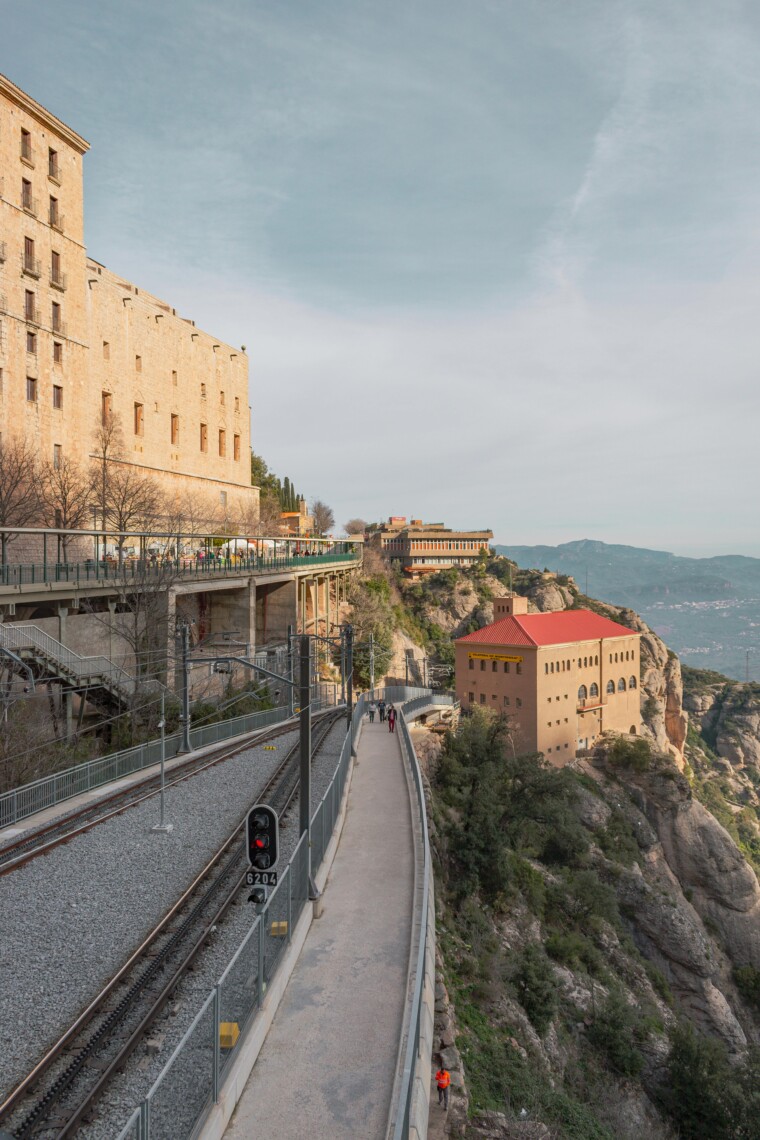
The Cremallera de Montserrat: the rack railway departs from Monistrol de Montserrat after you take the R5 line train from Plaça d’Espanya. This route is enormously popular for good reason: it’s scenic, smooth, and deposits you right at the monastery’s doorstep.
Aeri de Montserrat: Your other option is the Aeri de Montserrat, a cable car that swings you up the mountain’s southern face. It’s faster, more dramatic, and, fair warning, not for the faint of heart on a windy day.
The smartest move? Grab a Trans Montserrat or Tot Ticket at Plaça Espanya station before you leave. These integrated tickets bundle your train, the Aeri de Montserrat or Cremallera, and unlimited rides on the Sant Joan funicular and Santa Cova funicular throughout the day. They will save you money in the long run.
Pro tip: If you’re coming from Barcelona Airport, take the Aerobus or metro into the city first and connect at Plaça Catalunya.
The Montserrat Monastery: More Than Just a Pretty Façade
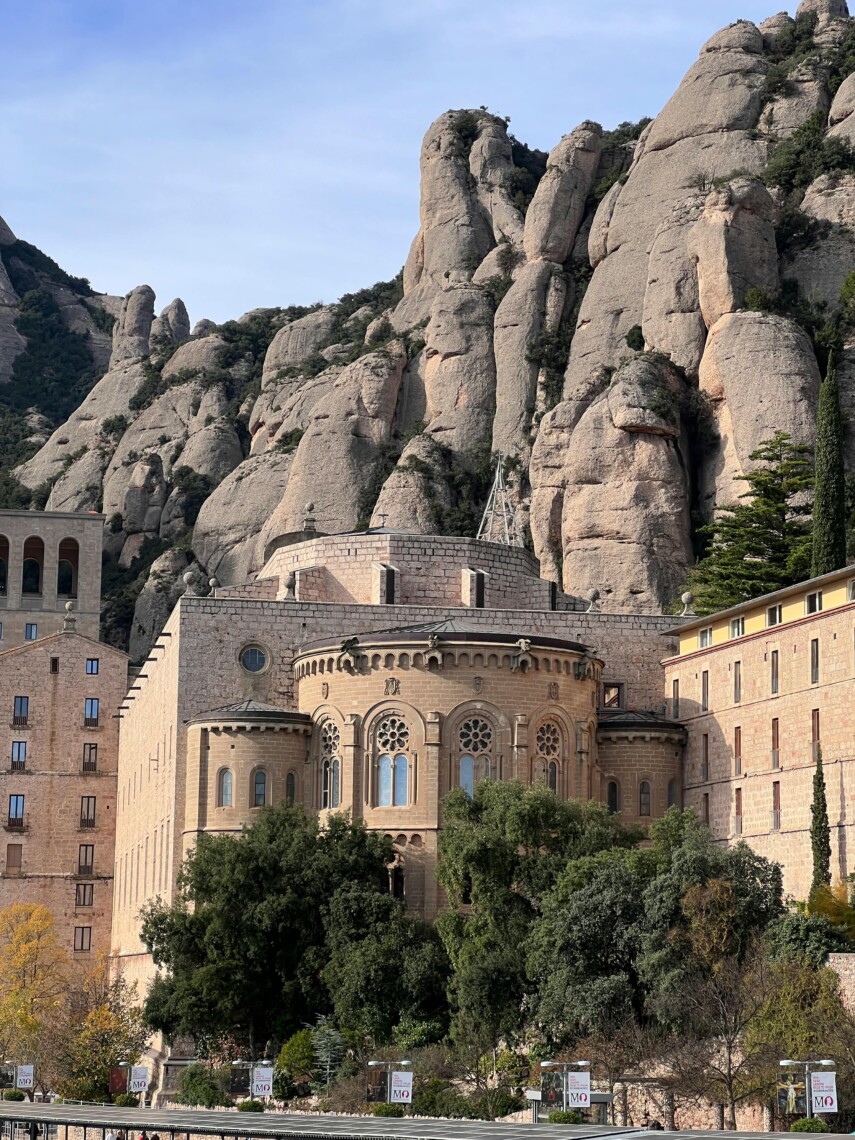
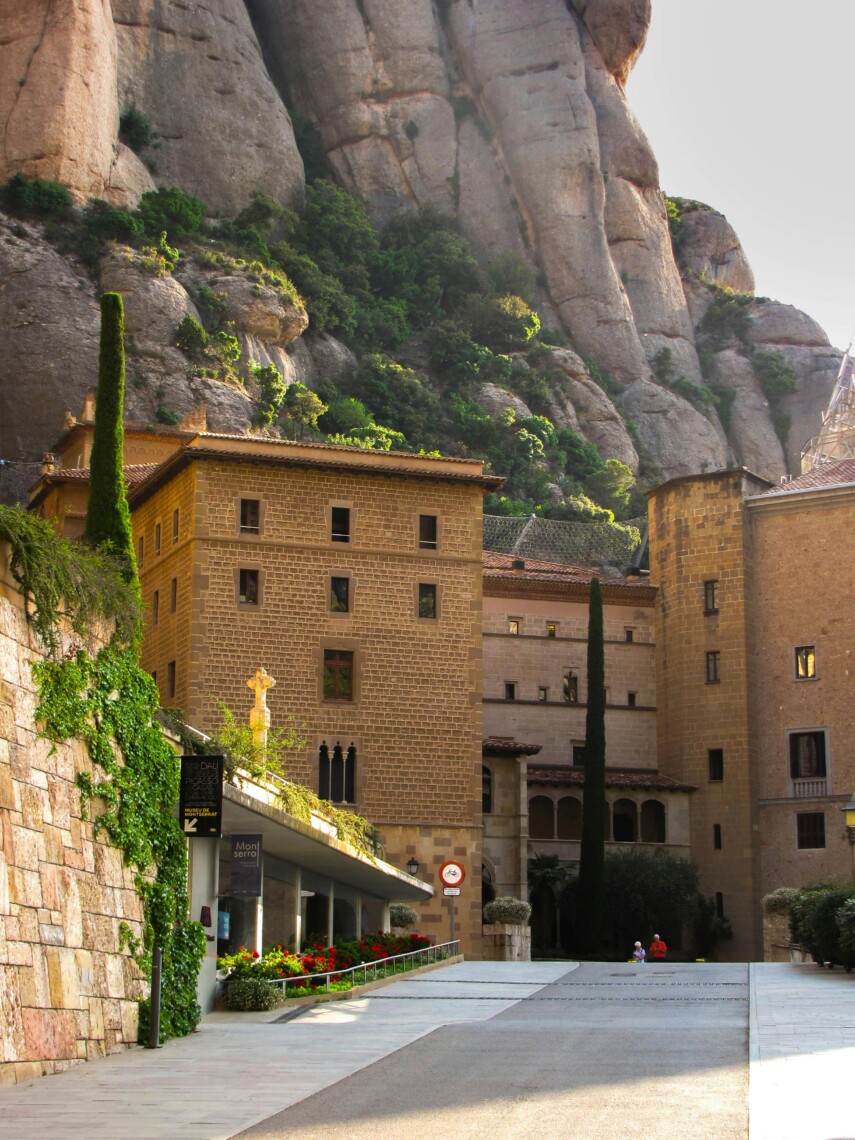
Let’s talk about the main event. The Montserrat monastery, officially the Benedictine abbey of Santa Maria de Montserrat, has been continuously inhabited since the 11th century. Benedictine monks have been living, praying, and making cheese up here for nearly a thousand years.
The Montserrat Basilica is the spiritual heart of the complex, and inside it you’ll find La Moreneta: the Black Madonna, a Romanesque wooden statue dating to the 12th century that is Catalonia’s patron saint. Pilgrims queue to touch her orb and offer a moment of reverence. Even if you’re not remotely religious, the atmosphere inside is genuinely moving. Hushed, heavy with incense, lit by the flicker of a thousand candles.
If your timing is right (10am or noon on most days), you’ll catch the Montserrat Boys Choir, the Escolania, performing in the basilica. One of Europe’s oldest boys’ choirs, they’ve been singing here since the 13th century.
Don’t overlook the Montserrat Museum on your way through the monastery complex, either. It houses an impressive collection that swings from Egyptian mummies to paintings by El Greco, Caravaggio, and Picasso.
Best Things to Do on Montserrat
Here’s where visiting Montserrat really opens up. The monastery is the anchor, but the mountain itself is a whole other world.
Take the Sant Joan Funicular Up, Then Hike
The Sant Joan funicular whisks you from the monastery level up to a higher ridge, where the hiking trails begin to unfold. From the top station, you’re looking at some genuinely breathtaking views across the Catalonian plain, all the way to the Mediterranean on a clear day.
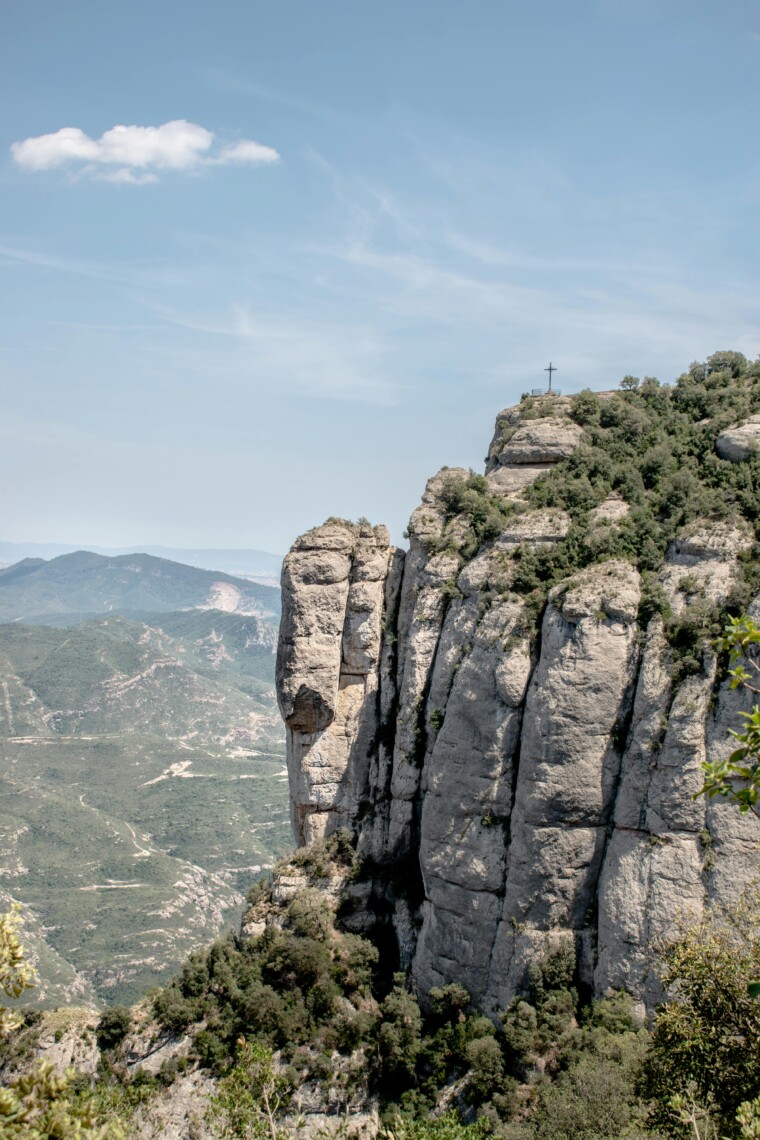
The trail to Sant Jeroni, Montserrat’s highest peak at 1,236 metres, is the classic. It’s about a 3km hike each way, moderately strenuous, and rewards you with a panoramic view that makes every uphill hike absolutely worth it. Incredible views in every direction: valleys, plains, distant mountains, and those extraordinary serrated rock formations up close.
The Montserrat Natural Park surrounding the mountain is laced with hiking trails of varying difficulty. The St Michael’s Cross viewpoint along the Sant Joan trail is one of the most photographed spots on the mountain, and rightly so.
Descend to the Santa Cova
In the other direction, the Santa Cova funicular drops you partway down the mountain to the path leading to the Santa Cova (Holy Cave), the site where, according to legend, shepherds discovered La Moreneta in the 9th century. The trail is dotted with sculptural stations of the cross by Catalan modernist artists, including Gaudí and Puig i Cadafalch. It’s a beautiful, quieter walk and a fascinating contrast to the bustle up at the monastery.
Explore the Monastery Squares and Courtyards
Don’t rush through the monastery complex itself. The courtyards and cloisters are genuinely gorgeous, and it’s worth slowing down to soak up the ambiance. Grab a coffee, people-watch, and take in the entire experience.
Eating and Drinking on the Mountain
Food on the mountain is limited. The restaurant Montserrat and the various cafeterias serve decent Catalan food, and there’s a self-service canteen that’s great for a quick, affordable lunch. Pack your own snacks if you’re planning a long day of hiking; it’ll keep you going between meals without having to stop in one of the crowded food stops.
One unexpected delight: the monastery shop sells its own products, including wine, olive oil, and liqueurs made by the monks. A little wine tasting detour in the shop is a fun way to spend fifteen minutes and pick up a genuinely unique souvenir. The monastery honey is also exceptional.
Should You Book a Guided Tour or Go Independent?
Both work well, but they suit different travelers.
An organized tour from Barcelona typically includes transport, skip-the-queue access, and a knowledgeable guide who can bring the history and legends of the mountain to life. If you’re short on time, anxious about logistics, or simply prefer the security of someone else doing the planning, a Montserrat tour from Barcelona is excellent value. The return journey is also taken care of, which matters more than you’d think after a full day on the mountain.
Going independently, on the other hand, gives you total freedom. You can linger at the Montserrat museum, take a second run up the Sant Joan funicular, or sit in the basilica for an extra hour. Independence suits slower travelers and those who like to wander without a schedule.
Book an organized tour to Montserrat here.
Frequently Asked Questions
How long should I spend at Montserrat?
A solid day, six to eight hours, is ideal. That gives you time for the basilica, La Moreneta, a hike or two, the museum, and a leisurely lunch. A rushed half-day is possible but thats better if you’re doing a guided tour.
Is Montserrat suitable for children?
Absolutely. The funiculars are exciting for kids, the open spaces are fantastic for running around, and the easier hiking trails are manageable for older children. Just pack layers — it’s cooler up top than in Barcelona.
Is visiting Montserrat free?
Getting to and around the mountain has costs (transport, funiculars), but the basilica itself is free to enter. The Montserrat museum has an entry fee. Budget around €25–35 per person for a comfortable day, depending on which ticket package you choose.
What’s the best time of year to visit Montserrat?
Spring (April–June) and autumn (September–October) are the sweet spots: pleasant temperatures, manageable crowds, and gorgeous light. July and August are busy and hot. Winter visits have a moody, atmospheric quality, and significantly fewer tourists.
Can I do Montserrat as a day trip from Barcelona?
Easily. The train from Plaça Espanya takes about an hour to Monistrol, and then the Cremallera or Aeri bring you up. You can be at the monastery by mid-morning and back in Barcelona for dinner. It’s one of the best day trips from Barcelona, full stop.
The Honest Verdict: Is Montserrat Worth Visiting?
Without question: yes. Visiting Montserrat isn’t even up for debate, it’s one of the most singular places in all of Spain, a landscape that manages to be spiritually resonant, visually astonishing, and genuinely fun to explore all at once.
Is it touristy? Sure. Can it get crowded around the monastery on a summer Saturday? Absolutely. But arrive early, grab a Tot Ticket at Plaça Espanya station, head straight up on the funicular or gondola, and take a morning hike before the masses arrive.
The best Montserrat experience isn’t the one where you tick off a checklist. It’s best enjoyed slowly, with no expectations.
Planning a trip to Barcelona? Discover more helpful articles here:
The Ultimate Montserrat Day Trip from Barcelona: How to Get There & What to See
The 15 Best Day Trips From Barcelona: 2026 Guide
Best Hotels in Barcelona: 18 Incredible Stays (From Boutique to Luxury)
Best Neighborhoods to Stay in Barcelona

No Comments