
Sitges comes up constantly when people ask about good day trips from Barcelona, and for good reason. But before you start planning your full Barcelona itinerary, the first question is usually the most practical one: how far is Sitges from Barcelona, and how long does it actually take to get there?
Short answer: it’s 35 kilometres southwest of Barcelona, about 21 miles, and on a good day you can be walking its seafront promenade in under 40 minutes. Longer answer: it depends on how you get there, where in Barcelona you’re starting from, and how much you’ve thought through the logistics.
After living in Barcelona the past 8 years, I have planned countless day trips to this seaside town and really never get tired of it. So, with that being said, I’m now going to walk you through everything you need to know about planning a trip to Sitges, Spain.
This article contains affiliate links, which means I may earn a small commission at no additional cost to you. Thank you for supporting my blog!
Key Takeaways
- Sitges is 35 kilometres from Barcelona, roughly 40 minutes by direct train, making it one of the easiest day trips from the city.
- The train is by far the best option, it’s frequent, affordable, and stress-free. A return ticket costs just a few euros.
- You can also get there from Barcelona El Prat Airport directly, which is worth knowing if you’re landing and heading straight to the coast.
Where Exactly Is Sitges?

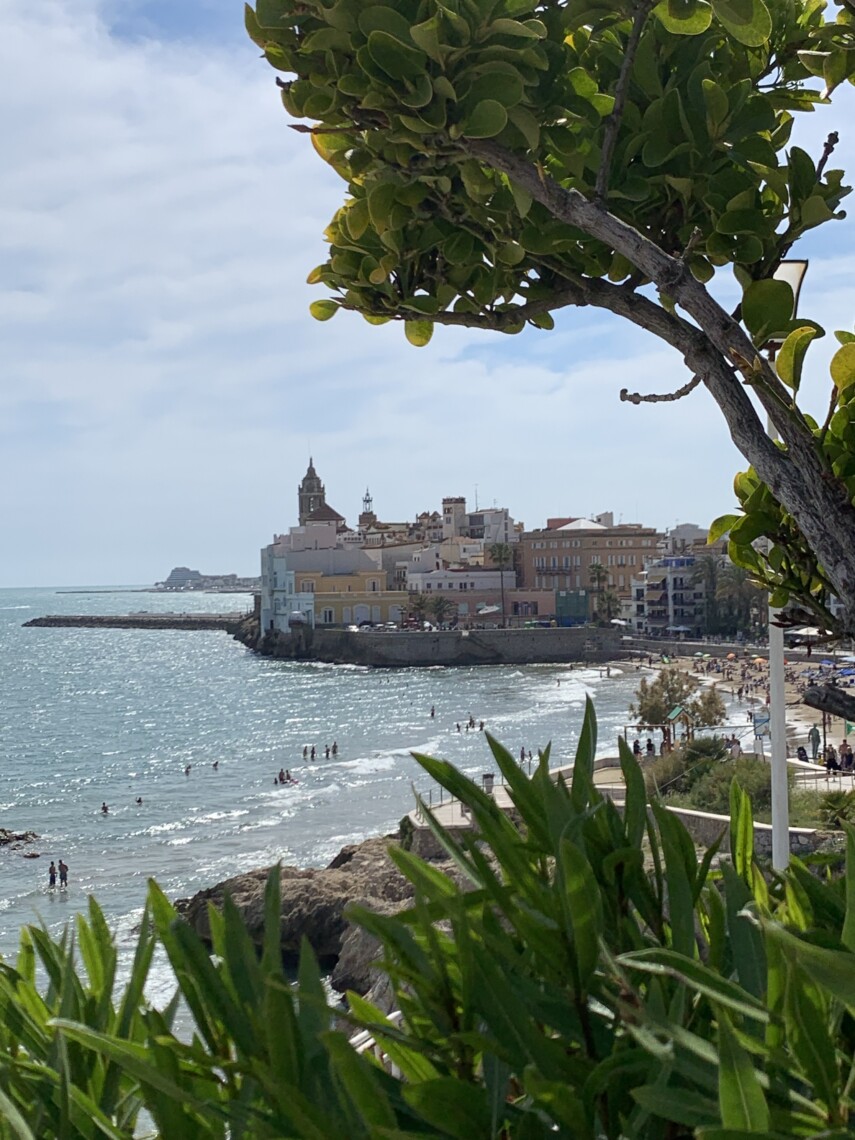
Sitges sits on the Garraf Coast, 35 kilometres southwest of Barcelona, sandwiched between the Mediterranean Sea and the dramatic limestone cliffs of the Garraf Massif. The landscape driving or riding into town is genuinely beautiful, one moment you’re in suburban Barcelona, the next you’re hugging a coastline of rocky headlands and endless blue water. My favorite part of the train ride is when the tracks lay almost right above the water below, making you feel like the train is literally floating on water.
Although Sitges has a big reputation, the town itself is small. Around 30,000 people live here year-round, though that number swells considerably in summer. What it lacks in size it more than makes up for in character, a well-preserved old town, serious art history, seventeen beaches, and a cultural calendar that punches well above its weight.
How to Get from Barcelona to Sitges
There are a few ways to make the journey. While I’ve only come here by train, I’ll still go over all the options to help you plan out your trip.
By Train: My Favorite Option
The train is how most people get to Sitges from Barcelona, as this is by far the easiest option. It’s fast, cheap, reliable, and drops you directly into the heart of the town at Sitges train station, a five-minute walk from the seafront.
The R2 Sud line operated by Renfe trains connects Barcelona to Sitges throughout the day, with departures roughly every 20–30 minutes depending on the time of day. You can board at several points in the city:
- Barcelona Sants: the main long-distance station, and probably the most convenient starting point for most visitors
- Barcelona Passeig de Gràcia: ideal if you’re staying in the Eixample or around the city centre
- Plaça España: another useful stop on the line
Journey time from Barcelona Sants is around 35–40 minutes on a direct train. From Passeig de Gràcia it’s similar, occasionally a few minutes longer depending on the specific service. Check the train schedule before you go, as some services stop more frequently than others.
Train tickets are very affordable. As of writing, a single fare is around €4–5 each way, making the return journey under €10. Cheap train tickets are the norm here rather than the exception; this isn’t a high-speed intercity route, it’s a regional commuter line, which means it’s priced accordingly. No need to book in advance, you can buy your ticket at the machine in any of the station departure points, or via the Renfe app if you’d rather sort it before you leave.
Train times run from early morning until late at night, so you’re not locked into a rigid schedule. If you want to stay for dinner and catch a late train back, that’s entirely doable.
By Car: Works, But Not Necessary
If you’re driving, the journey from central Barcelona takes around 35–45 minutes via the C-32 motorway, which cuts through tunnels in the Garraf Massif before dropping you down towards the coast. The drive itself is pleasant and the road is well-maintained.
That said, driving isn’t the obvious choice here. Parking in Sitges in summer (and anywhere in Barcelona for that matter) is a genuine headache, the town is compact, the streets are narrow, and the seafront spots fill up fast. Unless you’re travelling with a lot of gear, staying somewhere with private parking, or visiting well out of season, the train is the smarter call.
Travel time by car: 35–45 minutes from central Barcelona, longer in summer traffic.
From Barcelona El Prat Airport
If you’re flying into Barcelona El Prat Airport and heading straight to Sitges, maybe you’re based there for the trip rather than in Barcelona itself, the connection is more straightforward than most people expect.
The airport sits roughly between Barcelona and Sitges on the coast, which works in your favor. From Barcelona El Prat airport, you can take the R2 Sud train directly from the airport station (Barcelona Airport terminal link) connecting through to Sitges. Total journey time is typically around 30–40 minutes depending on the service, with a change at Barcelona Sants or Passeig de Gràcia in some cases.
Alternatively, a taxi or rideshare from the airport to Sitges takes around 25–30 minutes and costs roughly €35–50 depending on traffic, not unreasonable if you’ve got luggage and want the convenience.
By Bus: Possible, But Slower
There is a bus option, the Bus Garraf service connects Barcelona with Sitges and the surrounding Garraf area. It’s cheap and covers some routes the train doesn’t, but the travel time is considerably longer than the train ride, particularly in traffic. For most visitors doing a day trip, the bus isn’t the first choice, but it’s useful to know it exists, particularly if you’re moving between towns along the Garraf coast rather than coming directly from Barcelona.
The bus stop for the Garraf service is near Plaça España. Check current schedules before you travel, as these can vary seasonally.
Tips for Traveling from Barcelona to Sitges
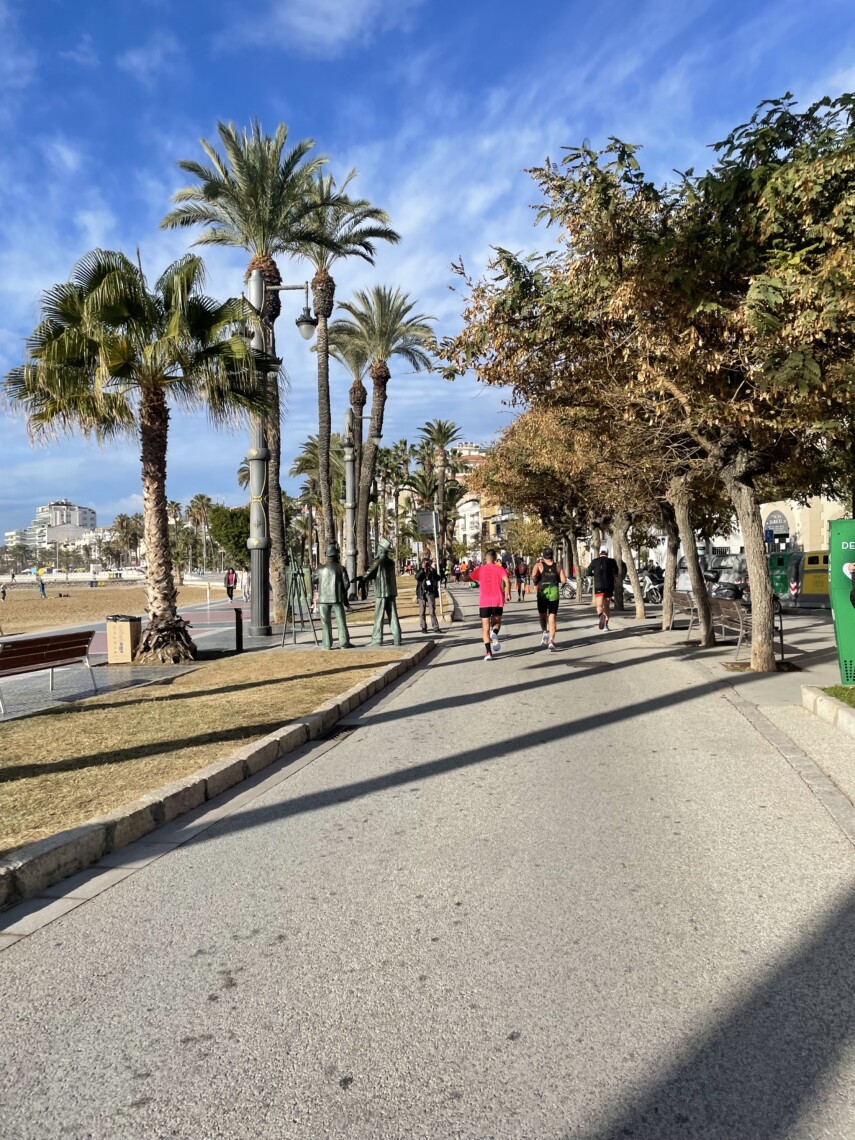

While Sitges may be one of the best day trips from Barcelona, it’s still important to do your research ahead of time so you know what to expect. Here are just a few things to keep in mind that will make the trip smoother:
- Go on a weekday if you can. The train and the town both get significantly busier on weekends, especially in summer. A Tuesday morning arrival is a different experience from a Saturday afternoon one.
- Check the train schedule in advance. Services are frequent but not constant, a quick look at the Renfe app or the Rodalies website before you leave means no standing around at the train station wondering when the next one is.
- Buy your ticket at the machine, not the counter. The automated machines at Barcelona Sants and Passeig de Gràcia are fast and support multiple languages. Ticket prices are the same either way, but the machines are quicker.
- Get yourself a good spot on the train. Sit on the right side of the train heading south for sea views through the Garraf Massif tunnels and along the coast. It’s a small thing, but definitely worth it.
- Don’t rush the return. The last trains back to Barcelona run late, so there’s no need to bolt after dinner. One of the nicest things about the proximity is how unstressful the whole trip feels, 30 minutes on a train and you’re back in the city.
What to Do What’s Worth Your Time Once You Arrive: Top Sitges Attractions
Since you’ve come this far in the planning: a few quick pointers on what to actually do once you get there.
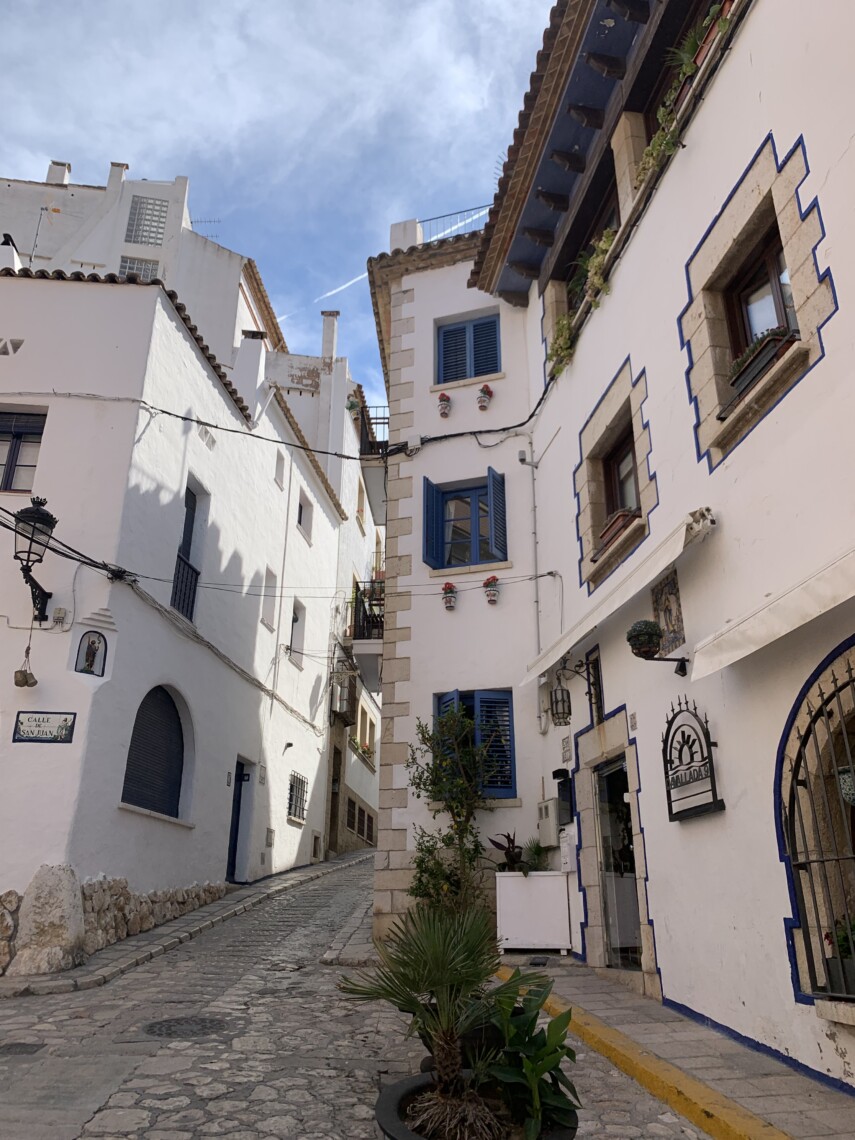
The old town is the obvious starting point, wander the whitewashed lanes, work your way up to the church of Sant Bartomeu i Santa Tecla, and take in the view. The Palau Maricel and the Museu del Cau Ferrat are genuinely great attractions, and together make for a compelling cultural hour or two (it’s a good plan if it’s raining or you’re in need of a break from the sun). The beautiful beaches are, obviously, a major draw, Platja de la Fragata and the beaches on either side of the headland are the most central.
Here are some other things to do and see in Sitges, Spain:
- Explore the Terramar Gardens
- Walk the Passeig Marítim at golden hour
- Browse the local weekly market
- Take the coastal path toward Garraf
- Try the local vermouth scene
- Hike the trails through Garraf Natural Park
- Sit down for a proper paella lunch by the sea
If you’re visiting in October, the Sitges Film Festival transforms the town completely, it’s one of the world’s best genre film festivals and a genuinely fun time to be there. For a beach club experience, Vivero Beach Club is one of the most popular spots along the coast.
Frequently Asked Questions
How far is Sitges from Barcelona?
Sitges is 35 kilometres southwest of Barcelona, roughly 21 miles. By direct train from Barcelona Sants, the journey takes around 35–40 minutes.
What’s the cheapest way to get to Sitges from Barcelona?
The train, specifically the R2 Sud Renfe service. A single ticket costs around €4–5, making it one of the most affordable day trips from Barcelona. No advance booking needed; just turn up and buy at the machine.
Can I get to Sitges from Barcelona Airport?
Yes. The R2 Sud line connects Barcelona El Prat airport to Sitges, with a journey time of around 30–40 minutes. It’s one of the most convenient airport-to-coast connections in the region.
Do I need to book train tickets in advance?
For this route, no. The R2 Sud is a commuter and regional service with frequent departures, you can buy your train ticket at the station on the day without any issue.
Is Sitges worth it as a day trip?
Completely. The short travel time, easy train ride, and quality of the destination make it one of the most rewarding day trips from Barcelona. If your schedule allows an overnight stay, even better, (there are lots of great hotels in Sitges) but a day is absolutely enough to get a proper feel for the town.
Planning a trip to this corner of Catalunya? Check out my latest articles:
Things to Do in Sitges: A Complete Guide to Catalonia’s Most Charming Coastal Town
The 15 Best Day Trips From Barcelona: 2026 Guide
When Is the Best Time to Visit Barcelona, Spain?
How to Get From Barcelona to Costa Brava: Best Routes & Travel Tips
Best Hotels in Barcelona, Spain
Best Neighborhoods to Stay in Barcelona
8 Cities to Visit in Catalonia, Spain
The Bottom Line: Taking a Day Trip to Sitges from Barcelona
Sitges is close, closer than you probably thought, and getting there is straightforward enough that there’s really no reason to put it off. 35 kilometres, a direct train from Barcelona Sants or Passeig de Gràcia, and around 40 minutes of travel time.
Sort your train ticket the morning you go, sit back, and let the coastline come to you. I promise that after a day here, you’ll already be planning your next routine.
Have you been to Sitges? What was your favorite part of the town? Let me know in the comments below!



No Comments