
You land in a new time zone, it’s the middle of the afternoon, and your body is completely convinced it’s 3am. Your eyes are heavy, your focus is gone, and the last thing you want to do is explore, but you’ve only got a few days.
Jet lag is one of the most frustrating parts of long-haul travel. And while it’s tempting to just push through and hope for the best, there are actually a handful of science-backed strategies (and a few key products) that make a real difference in how fast you recover.
Here’s exactly how to avoid jet lag, or at least make it significantly more manageable.
This post contains affiliate links, meaning I may earn a small commission if you shop through them, at no extra cost to you. I only recommend products I genuinely believe in.
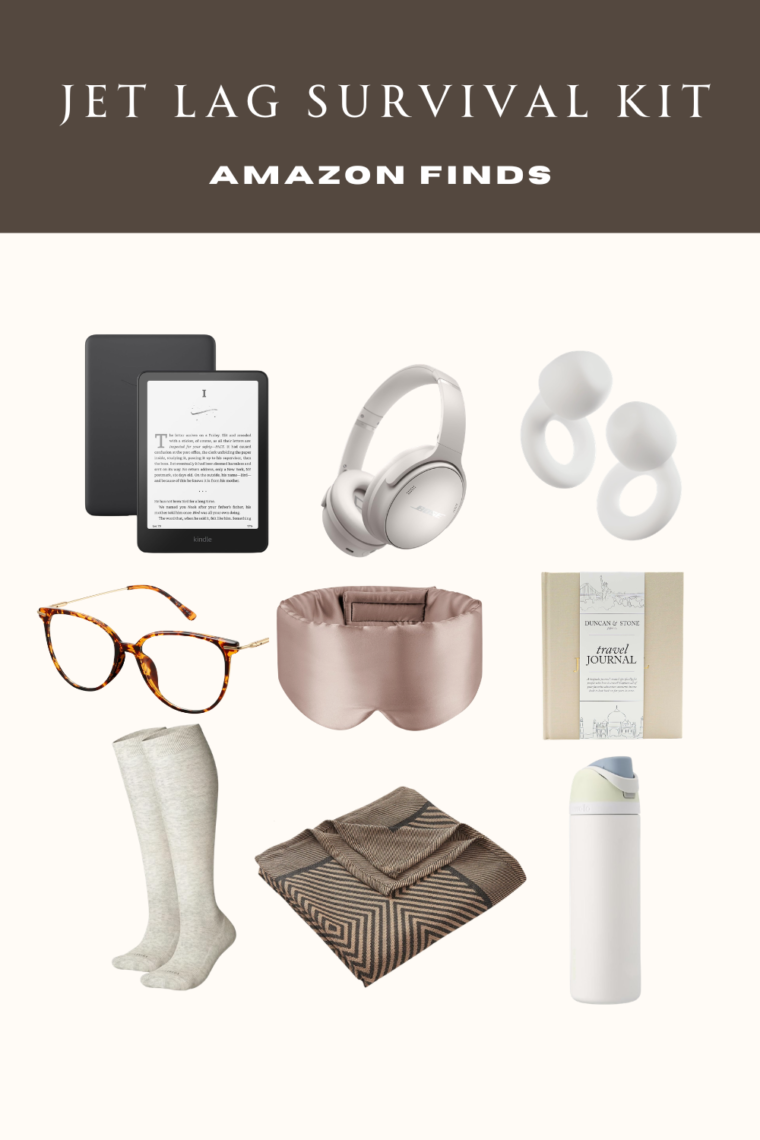
Best Products for Jet Lag Recovery (Quick Picks)
Short on time? These are the products that make the biggest difference:
- Best for falling asleep faster: Contoured blackout sleep mask
- Best for blocking noise: Noise canceling headphones or Loop earplugs
- Best natural sleep aid: Low-dose melatonin gummies
- Best for recovery and sleep quality: Magnesium supplement
- Best for staying hydrated: Liquid IV or Ultima electrolyte packets
- Best for circulation: Compression socks
- Best for eye relief: Hydrating eye drops
- Best for comfort: Compact travel blanket and wrap
- Best for blue light management: Blue light blocking glasses
- Best for skin comfort: Travel facial mist
What Is Jet Lag, and Why Does It Happen?
Jet lag happens when your body’s internal clock, also called your circadian rhythm, falls out of sync with your new local time zone. Your body clock regulates everything from your sleep-wake cycle to digestion and energy levels, so when it gets disrupted, you feel it everywhere.
Jet lag symptoms typically include fatigue, difficulty sleeping, brain fog, irritability, and sometimes digestive issues. They tend to be worse when traveling east (because you’re losing time) compared to traveling west.
The good news? You can significantly reduce the impact if you prepare in advance and know what to reach for.
Manage Light Exposure Strategically
Light is the single most powerful signal your circadian rhythm responds to. Knowing when to seek it out, and when to block it, is key to resetting your body clock faster.
- Traveling east: Seek bright light in the morning at your destination. Avoid it in the late afternoon.
- Traveling west: Get as much daylight as possible in the early evening. Avoid bright light first thing in the morning.
On the plane, a contoured blackout sleep mask blocks cabin light so your body can actually produce melatonin, even at 35,000 feet. Look for a silk option with a 3D contoured shape so it doesn’t press against your eyes.
And when you’re trying to stay awake during daylight hours at your destination but your eyes are fried from the flight, blue light blocking glasses help reduce the visual fatigue that makes jet lag feel so much worse.
The Best Products for Sleeping on the Plane
Getting quality sleep on the flight, even a few solid hours, can be the difference between arriving functional or completely depleted. Here’s what I never fly without:
Neck pillow with real support A good travel pillow keeps your head from drooping forward on long-haul flights. Look for structured memory foam with chin support, the flimsy inflatable ones are not worth the bag space.
Noise canceling headphones or loop earplugs Engine noise and cabin sounds keep your brain in a light, stimulated state, making deep sleep on a plane nearly impossible. Noise canceling headphones are the gold standard, but Loop earplugs are a great budget-friendly option that actually deliver.
Travel blanket Airplane cabins are unpredictably cold. Being physically uncomfortable derails your sleep schedule fast. A compact travel blanket or oversized wrap lets you control your own temperature without relying on the thin airline option.
Stay Hydrated On Your Long-Haul Flight
Airplane cabins run at extremely low humidity, which means you’re dehydrating faster than you would on the ground. And dehydration makes every jet lag symptom measurably worse, headaches, fatigue, brain fog, and dry eyes all get amplified when your hydration is off.
Plain water helps, but electrolyte packets take it further by replenishing what your body actually loses. I pack a few in my personal item bag and mix one into my water bottle during the flight. Ultima Replenishers and Liquid IV are both easy to find on Amazon and genuinely make a difference in how you feel by the time you land.
Dry airplane air also wrecks your eyes, especially if you wear contacts or tend to sleep on the flight. A small bottle of hydrating eye drops is one of those things you don’t think about until you desperately need them mid-flight.
And while we’re talking about physical comfort: a travel facial mist (the one from Caudalie is my personal favorite) is a quick way to counteract how dry and heavy your skin feels after a long flight. It takes ten seconds and makes a surprisingly big difference in how refreshed you feel landing.
Melatonin and Magnesium: Natural Sleep Aids Worth Trying
If you’re looking for a sleep aid that doesn’t leave you groggy, melatonin and magnesium are the two most commonly recommended for jet lag recovery, and for good reason.
Low dose Melatonin gummies help signal to your body that it’s time to rest. A low dose (0.5mg to 3mg) taken around your target bedtime in the new time zone is typically more effective than a higher dose. It’s not a sleeping pill, it’s a sleep timing tool, which is exactly what jet lag recovery needs.
Magnesium supports overall sleep quality and helps your nervous system wind down. It’s particularly helpful for that anxious, restless feeling that makes falling asleep in a new time zone so difficult.
A calming herbal tea like chamomile or valerian root is another gentle option for easing into your new sleep schedule without relying on sleep medicine.
Always test any supplement before your flight, not during.
Compression Socks: The Most Underrated Part of Jet Lag Recovery
Sitting in the same position for hours slows circulation significantly, which leads to swelling, leg fatigue, and that heavy, depleted feeling that makes travel fatigue so much worse.
Compression socks keep blood moving during your flight so you land feeling noticeably less stiff and worn down. They’re also one of the cheapest upgrades you can make to your travel setup.
Short Naps: Handle With Care
Napping can either support or sabotage your recovery depending on timing.
A short nap of 20 to 30 minutes when you first arrive can take the edge off without locking you into the wrong sleep pattern. But a long nap, especially in the late afternoon, can set your recovery back by a full day.
A calming essential oil roll-on can help you wind down at the right time without reaching for anything stronger.
Final Thoughts: Jet Lag Is Manageable, Not Inevitable
Most people treat jet lag like something that just happens to them. But with the right preparation and the right products, you can recover significantly faster, sometimes by a full day or more.
Whether you’re crossing two time zones or twelve, these strategies make a real difference in how you feel when you land.
If you’re building out your full travel setup, these will help round it out:
- Amazon Travel Essentials Under $25 That Actually Make Your Flight Better
- Best Personal Item Bag for Flying: The Buyer’s Guide to Bags Worth Taking
- Long-Haul Flight Essentials: Everything You Need to Survive a Travel Day
- Travel Skincare Essentials: How to Keep Your Skin Happy While Traveling
- 20 Carry On Essentials You’ll Never Want to Travel Without
Jet lag can take a toll, but with the right essentials, it becomes a lot more manageable. Simple additions like hydration support, light exposure, and a few well-chosen sleep aids can help your body adjust faster and feel more in sync. The goal isn’t perfection, it’s giving yourself the tools to ease the transition. With a little preparation, you can spend less time recovering and more time actually enjoying your trip.



No Comments