
There are some cities you visit for a checklist of famous sights, and then there are places where the city itself becomes the reason you want to stay. Seville is very much the latter.
The capital of Andalusia has all the ingredients you’d expect from a trip to southern Spain: beautiful architecture, tiny tapas bars, sun-soaked plazas, late dinners, and enough history to keep you busy for days. But what I love most about Seville is how much life happens between the landmarks.
One minute you’re walking through the narrow streets of Barrio Santa Cruz, the next you’re sitting outside with a glass of wine and a plate of croquetas you didn’t technically need to order. By evening, there’s flamenco music spilling out of a tiny bar somewhere, and everyone seems to be outside.
While I may call Barcelona home, I’ve been to Seville more times than I can count. In fact, over the past nine years of living in Spain, it’s easily become one of the cities I find myself returning to most. For me, without any hesitation, it is the most beautiful city in Spain (I know, it’s a bold claim but I mean it).
This Seville travel guide covers everything you need to plan your first trip, including when to visit, how many days you need, where to stay, what to eat, and the best things to do in Seville, Spain.
Short on Time? Here Are My Top Hotel Picks in Seville, Spain
- Hotel Alfonso XIII: Best for luxury. Seville’s most iconic five-star hotel, with gorgeous Moorish-inspired interiors and a prime location near the Alcázar and Cathedral.
- Corral del Rey: Best boutique stay. An intimate hotel tucked into the winding streets of the historic center, perfect if you want something romantic and full of character.
- Querencia de Sevilla: Best overall location. A polished, modern stay right by the Cathedral with a rooftop pool and views over Seville, ideal for first-time visitors.
Seville, Spain at a Glance: Key Takeaways
If you’re in the early stages of planning your trip, here’s the quick version:
- Best time to visit Seville: March through May and October through November for comfortable weather. I particularly love Seville in Spring, especially around La Feria (the city’s spring fair).
- How many days you need: Three full days is ideal for a first trip, however, longer is better if you want to take any day trips.
- Where to stay: Look around Barrio Santa Cruz, El Arenal, Las Setas, or the cathedral for a central location.
- Getting around: Walk. Seville is compact, flat, and incredibly pedestrian-friendly.
- Don’t miss: The Real Alcázar, Seville Cathedral and La Giralda, Plaza de España, Las Setas, Triana, and a flamenco show.
- Book ahead: Tickets for the Royal Alcazar and Seville Cathedral, particularly during spring and fall.
- Foods to try: Espinacas con garbanzos, montaditos, croquetas, pescadito frito, cazón en adobo, flamenquín, and gambas al ajillo.
- Best sunset: Walk along the Guadalquivir River or head to the top of Las Setas.
- My favorite restaurant: Espacio Eslava. If you can get a dinner reservation, go.
Why Visit Seville, Spain?
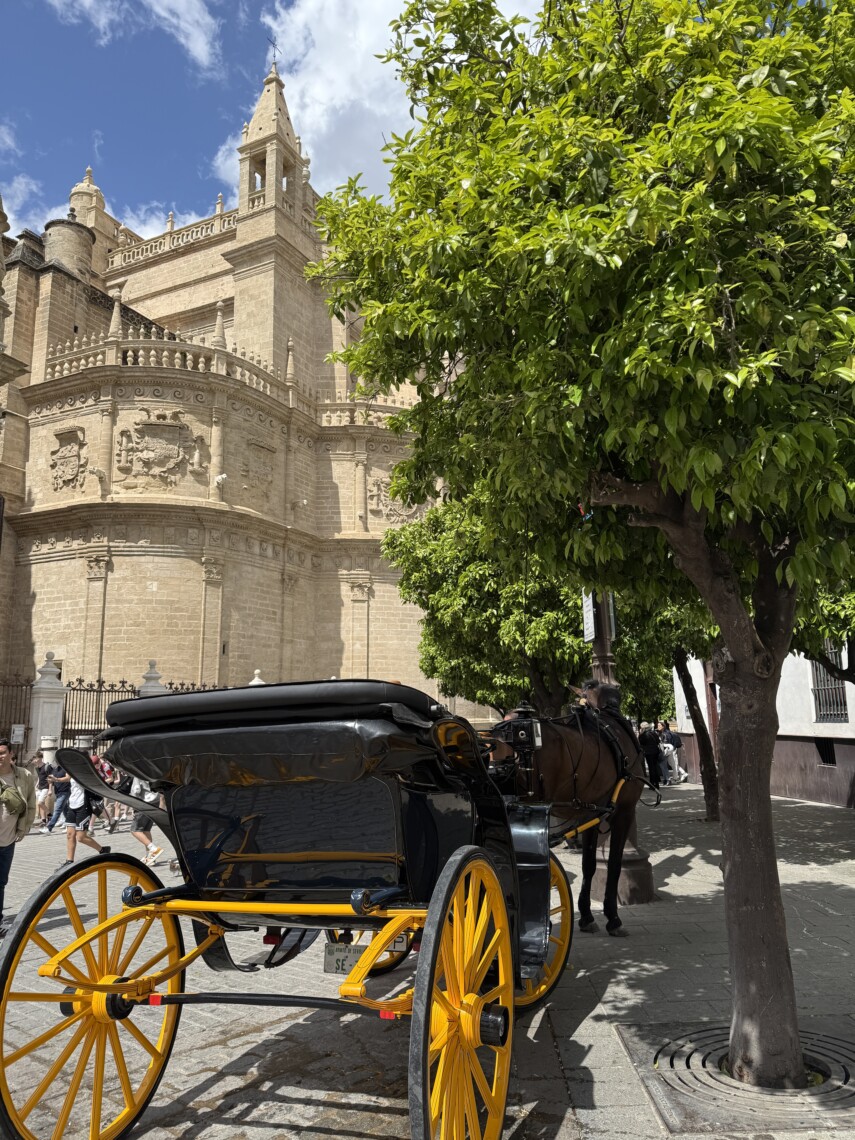
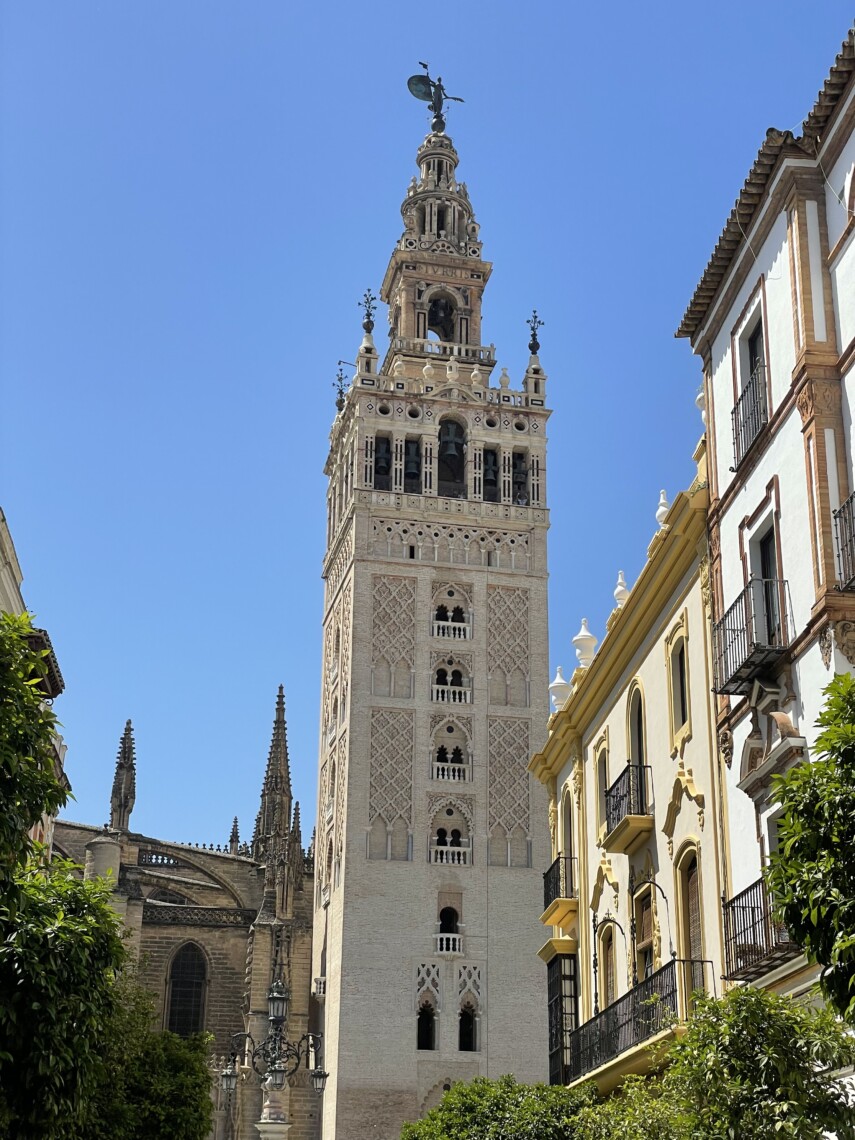
Seville is the capital of Andalusia and one of the most beautiful cities on the Iberian Peninsula. It’s a Spanish city where centuries of Islamic, Christian, and Jewish history sit quite literally on top of one another. You’ll see it around every corner.
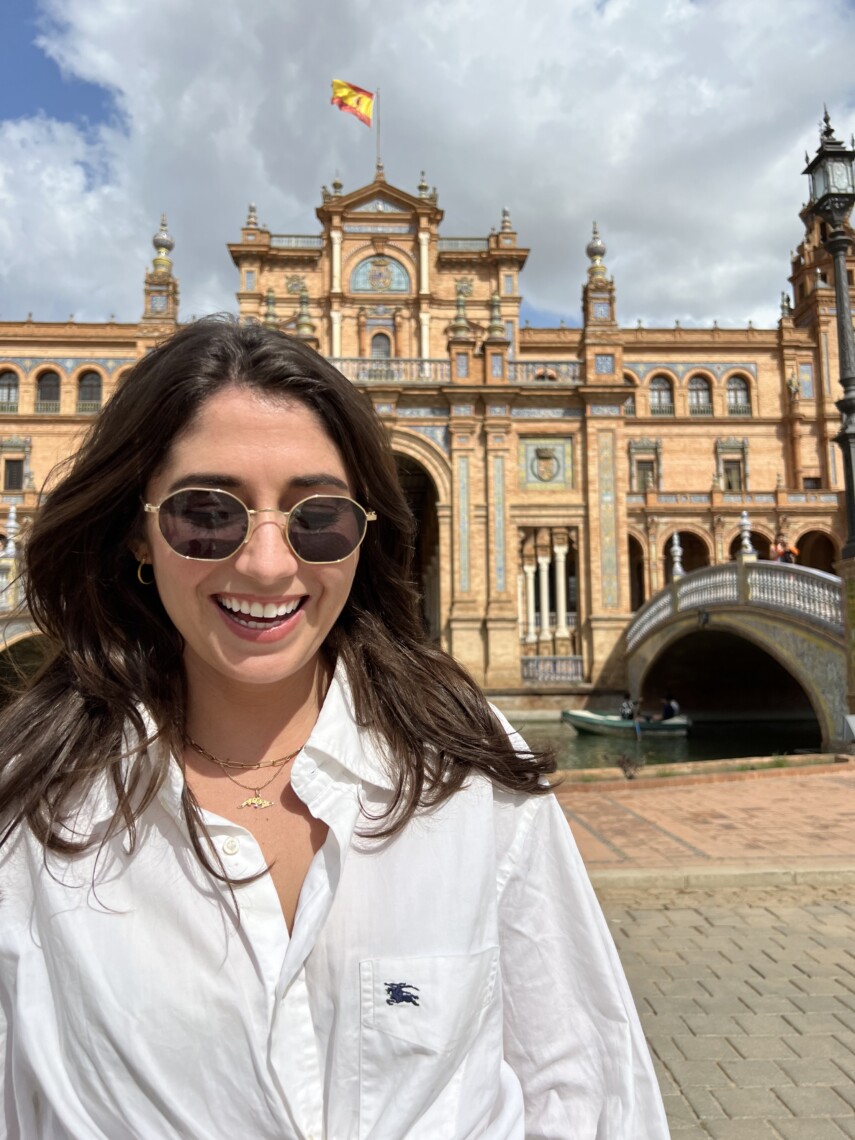
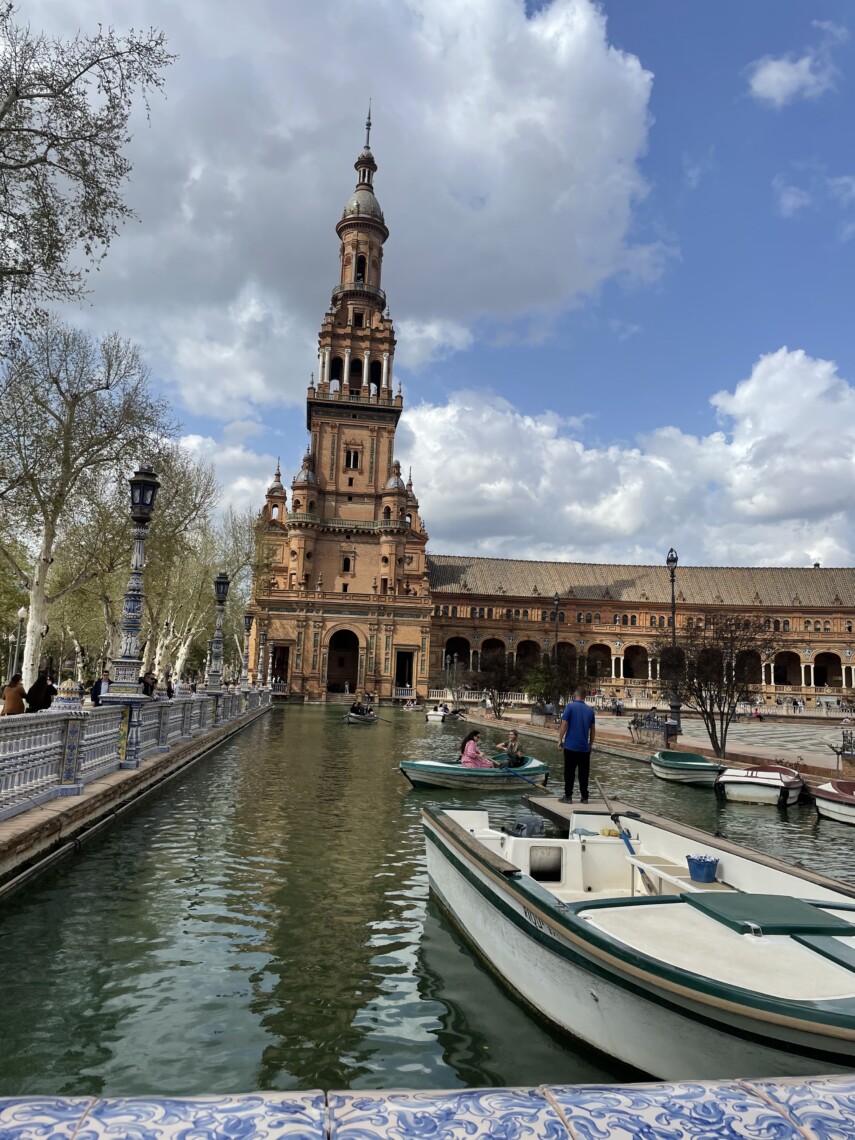
The Giralda Tower began as the minaret of a mosque before becoming the bell tower of Seville Cathedral. The Real Alcázar combines Islamic, Mudéjar, Gothic, Renaissance, and Baroque architecture. Across town, Plaza de España looks centuries old but was actually built for the 1929 Ibero-American Exposition.
Seville’s history is also closely tied to Spain’s voyages across the Atlantic Ocean and the New World. The nearby Archive of the Indies contains millions of pages of documents relating to Spain’s overseas territories, including writings connected to explorers such as Christopher Columbus.
After just a single walking tour, you’ll see just how impactful Sevilla was in the early history of Spain.
However, with all of that being said, Sevilla never feels like a stale museum. Tables spill into plazas. Friends linger and drink over tapas. Flamenco is part of the cultural fabric rather than simply a performance put on for travelers. And once the afternoon heat fades, the streets seem to come alive all over again.
That’s really what makes Seville special.
When Is the Best Time to Visit Seville, Spain?
The best time to visit Seville is generally spring or fall, particularly March through May and October through November.
Seville gets hot. Even in late spring you can feel the summer heat lurking. Summer temperatures regularly make sightseeing in the middle of the day uncomfortable, which is why I’d avoid July and August if this is your first visit and you have flexibility. I’ve never visited Sevilla in summer, and to be honest, I don’t think I ever will.
- Spring: This is by far my favorite time to visit Sevilla. Beautiful weather and major festivals like Semana Santa and Feria de Abril, but expect bigger crowds and higher prices. However, seeing Feria de Abril is worth a trip in itself.
- Summer: Very hot, especially in July and August. Plan sightseeing for early mornings and evenings.
- Fall: One of the best times to visit Seville, with comfortable temperatures, fewer crowds, and great sightseeing weather.
- Winter: Cooler with some rain, but still relatively mild compared with much of Europe and great for exploring without the crowds. If you’re looking for places in Europe to visit in winter, I would definitely add Sevilla to your list.
How Many Days Should You Spend in Seville?
I recommend three days in Seville for a first trip.
You could technically see Seville Cathedral, the Real Alcázar, and Plaza de España during a rushed day trip, but you’d miss much of what makes the city enjoyable.
Three days gives you enough time to see the major landmarks, wander through different neighborhoods, eat a slightly ridiculous number of tapas, see a flamenco show, and still have time to sit in a plaza and people watch without any rush.
Four days is even better if you like traveling slowly or want to take a cooking class.
If you have five or more days, I’d consider using one for a day trip to another destination in Andalusia. Córdoba, Cádiz, Jerez de la Frontera, and Ronda are some of the possibilities worth looking into.
How to Get to Sevilla, Spain
Flying Into Seville Airport
Flying is the easiest option for arriving in Sevilla if you’re coming from a different city or country. Seville Airport, officially Aeropuerto de Sevilla-San Pablo, is roughly 10 kilometers from the city center.
The EA airport bus connects the airport with central Seville and is generally the easiest budget-friendly option. Taxis and ride services are another straightforward choice, particularly if you’re traveling with luggage or splitting the fare between several people.
Taking the Train to Seville
If you’re already traveling around Spain, I’d strongly consider taking the train.
High-speed rail connects Seville with major Spanish cities, including Madrid and Córdoba, and you’ll arrive at Sevilla-Santa Justa station. What I love about traveling by train is that it’s super relaxing, you can bring all your bags without worrying about the weight limit, and the train stations tend to drop you off right in the center of the city.
How to Get Around Seville
One of my favorite things about Seville is that you really don’t need a complicated transportation plan.
Walk whenever you can.
The old town is compact, and many of the major attractions are relatively close together. Seville Cathedral, the Royal Alcazar, Barrio de Santa Cruz, Plaza del Triunfo, and the riverfront can easily be combined on foot.
Seville also has buses, trams, taxis, and bike lanes when you need them.
Bring comfortable shoes, though. The pretty cobblestone streets are significantly less charming when your feet hurt.
Where to Stay in Seville, Spain
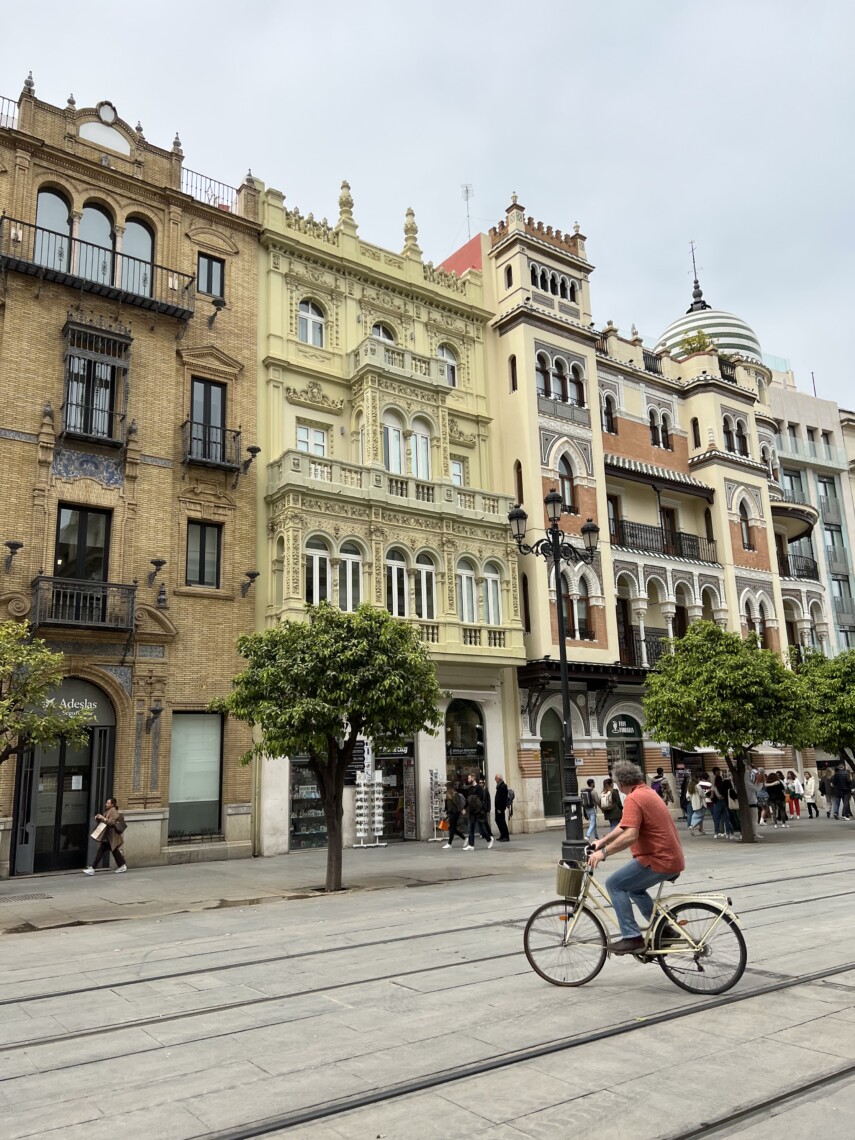
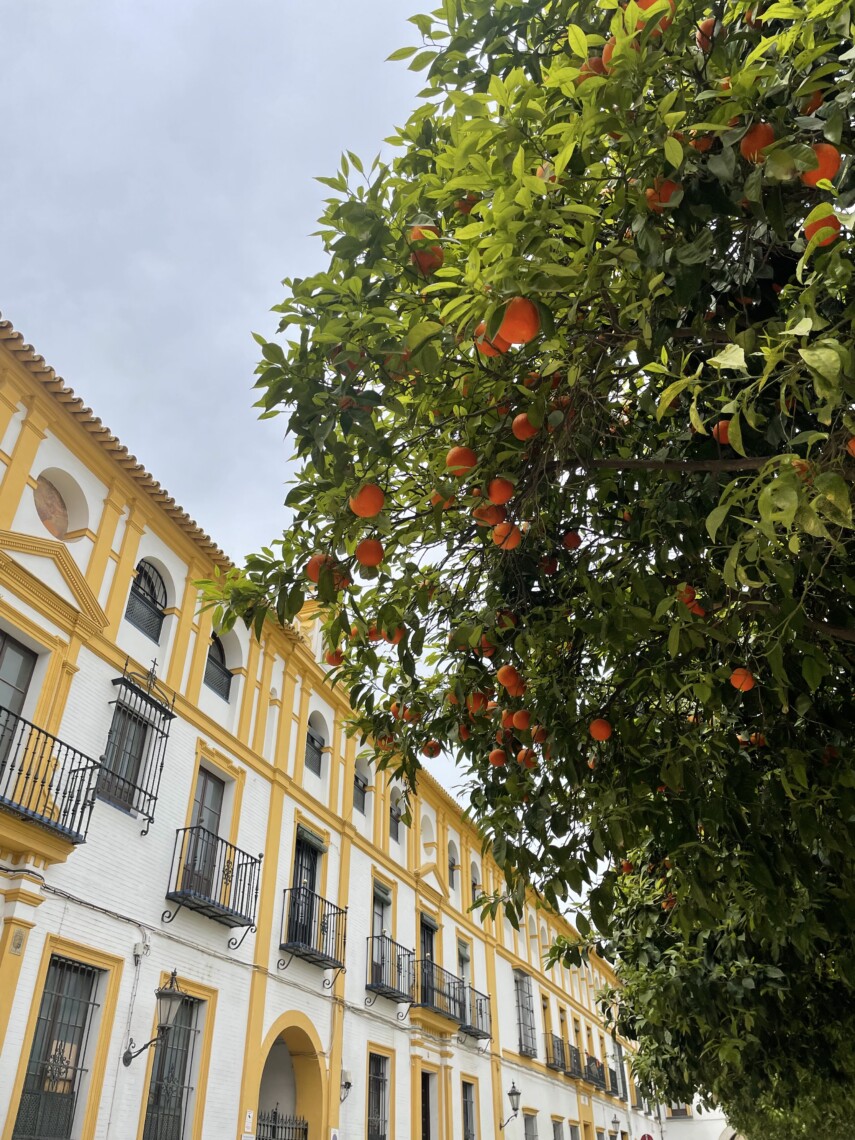
For your first visit, I’d stay somewhere central.
You don’t necessarily need to obsess over finding the “perfect” neighborhood because the center of Seville is actually quite small. As a general rule, look for accommodations around Seville Cathedral or Las Setas and you’ll be within easy walking distance of most places you’ll want to visit.
- Barrio Santa Cruz: Best for first-time visitors who want to be steps from the Cathedral and Real Alcázar, with charming narrow streets, plazas, and courtyards.
- El Arenal: Central and convenient, with easy access to the Cathedral, riverfront, Triana, and plenty of tapas bars.
- Las Setas: A great central option close to major sights, Calle Feria, Alameda de Hércules, restaurants, and nightlife. This is usually where I stay or recommend to friends.
- Triana: Best for a more local feel, with flamenco, traditional ceramics, great food, and beautiful sunset walks along Calle Betis. However, it’s a little further from all the action.
Best Hotels in Seville, Spain
Here are a few properties I’d put on your radar if you’re coming to visit Sevilla.
Hotel Alfonso XIII, a Luxury Collection Hotel
If you want the grand Seville experience, this is it.
Hotel Alfonso XIII is one of the city’s most iconic luxury hotels and sits in an incredible location near the Real Alcázar, cathedral, and María Luisa Park. This is by far the best option if you’re looking for a luxury stay in the city.
Hotel Boutique Casa de Colón
For something smaller, Hotel Boutique Casa de Colón offers a boutique atmosphere close to the cathedral.
Hotel Boutique Corral del Rey
Tucked into the historic center, Corral del Rey is a beautiful option if you prefer intimate boutique hotels over large luxury properties.
Plácido y Grata Boutique Hotel
Design lovers should take a look at Plácido y Grata. The aesthetic is much more contemporary and minimalist than many of Seville’s traditional hotels.
Querencia de Sevilla, Autograph Collection
Querencia combines a central location with a polished, upscale feel and puts you within minutes of the cathedral. Highly recommend this spot if you’re looking for a design forward stay.
The Best Things to Do in Seville, Spain
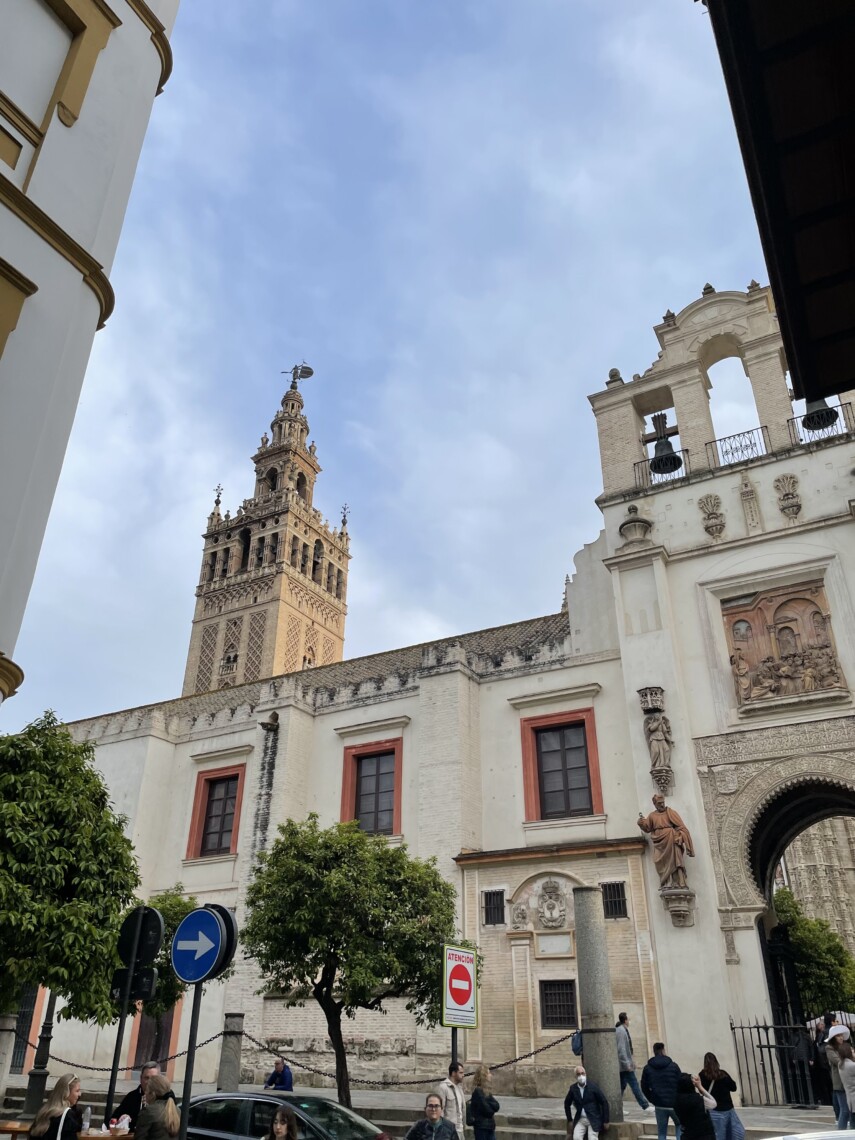
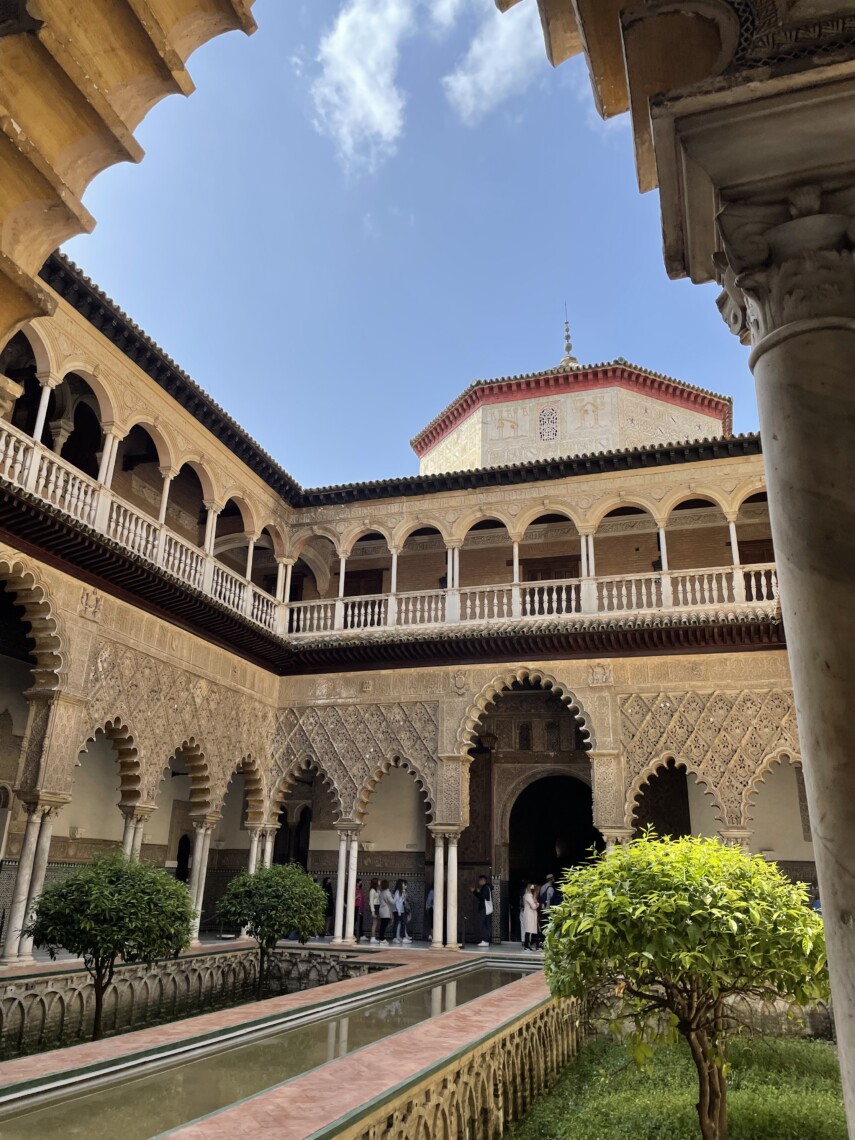
You could easily fill several days here, but these are the places I’d prioritize on a first trip.
1. Visit the Real Alcázar
If you only pre-book one thing besides the cathedral, make it the Real Alcázar of Seville.
The palace complex traces its origins back more than a thousand years and was expanded by generations of rulers. Today, Islamic, Mudéjar, Gothic, Renaissance, and Baroque elements all coexist within the complex.
The courtyards are gorgeous, but give yourself enough time for the gardens too. Every time I come here I can easily spend half a day wandering and exploring every corner of this palace.
Pro Tip: buy your ticket and book a tour in advance.
The official Real Alcázar website currently lists general admission at €15.50, and opening hours vary by season, so double-check the latest information when planning your visit.
2. Explore Seville Cathedral
You can’t really understand Seville without visiting its cathedral. Plus, it’s impossible to miss.
Seville Cathedral stands on the site of the city’s former Almohad mosque and is considered the world’s largest Gothic cathedral. It forms part of Seville’s UNESCO World Heritage Site alongside the Alcázar and Archive of the Indies.
Inside you’ll find an enormous altarpiece, dozens of chapels, the Patio de los Naranjos, and the tomb traditionally identified as that of Christopher Columbus.
While the line can be long, especially on the weekends, it is so worth it to go inside.
3. Go Up La Giralda
Don’t visit the cathedral and skip La Giralda.
My favorite fun fact of the city is that the Giralda Tower was originally constructed as the minaret of the mosque before later being converted into the cathedral’s bell tower.
Instead of a traditional staircase, much of the ascent uses ramps, which historically allowed riders on horseback to reach higher sections of the tower.
The views from the top are worth the climb.
My tip: Buy your cathedral and Giralda tickets ahead of time directly through the official website or through tour providers like Get Your Guide. The cathedral itself recommends booking online, particularly during high season.
4. Wander Around Barrio Santa Cruz
After the cathedral and Alcázar, don’t immediately rush off to another attraction.
Give yourself time to wander through Barrio de Santa Cruz, one of my personal favorites.
The maze of whitewashed buildings, balconies, tiny squares, orange trees, and narrow streets is exactly what many people picture when they imagine southern Spain.
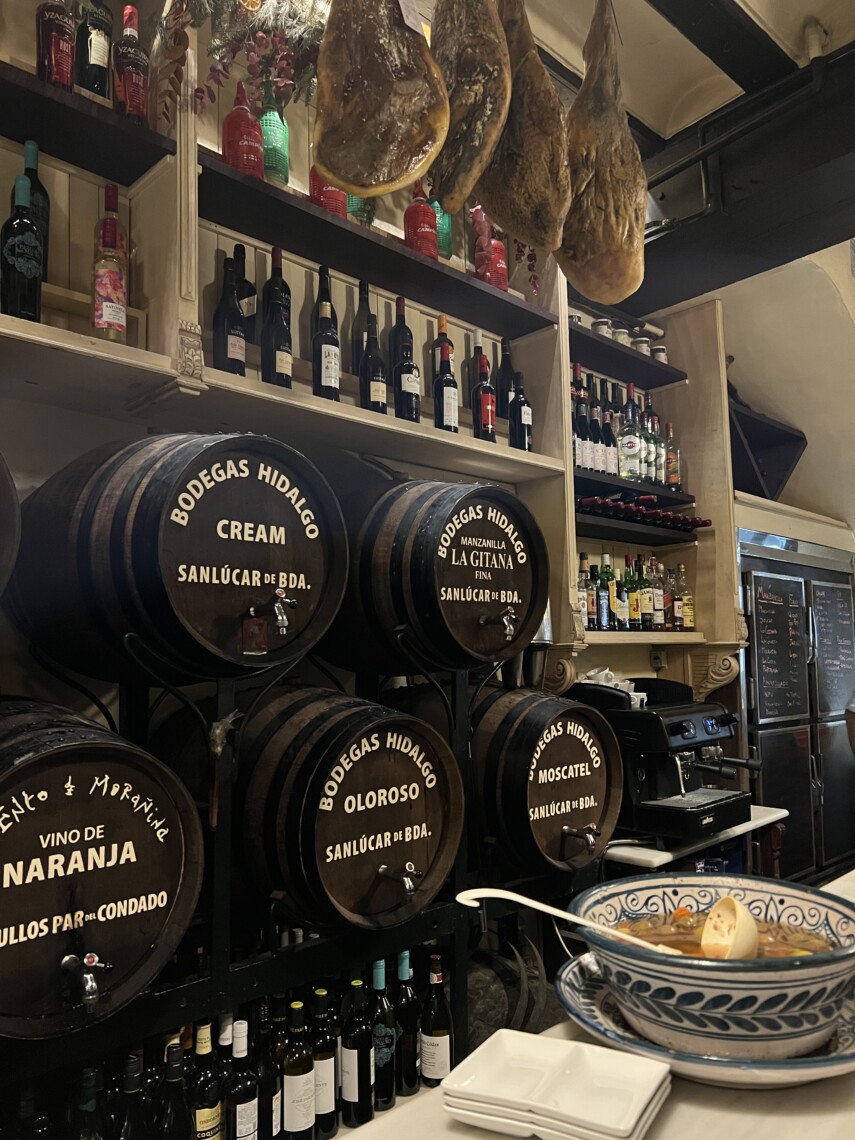
If you want to have a super local experience, stop by Taberna Alvaro Peregil for a glass of orange wine. This is a stop I have to do on every trip. Sit outside, try the sweet syrupy orange wine, and admire the Giralda under a row of orange trees.
5. Visit Plaza de España
If there’s one place in Seville that somehow looks even more impressive in person, it’s Plaza de España.
The huge semicircular complex is covered in colorful tiles, bridges, fountains, and intricate architectural details.
Afterward, continue into María Luisa Park, also called Parque de María Luisa, for a break from the city streets.
I’d give yourself at least an hour or two for Plaza de España and the surrounding park rather than treating it as a quick photo stop.
6. Watch Sunset From Las Setas
Las Setas, officially known as Metropol Parasol, is one of Seville’s most recognizable modern landmarks.
And yes, it looks a little bizarre next to all the centuries-old architecture. That’s part of the fun!
Head up shortly before sunset for panoramic views over the rooftops. The light over the city at this time of day is beautiful, and it’s one of my favorite ways to end an afternoon of sightseeing. If not, you can also grab a drink at La Terraza de EME for great sunset views over the cathedral.
Below Las Setas you’ll also find Mercado de la Encarnación.
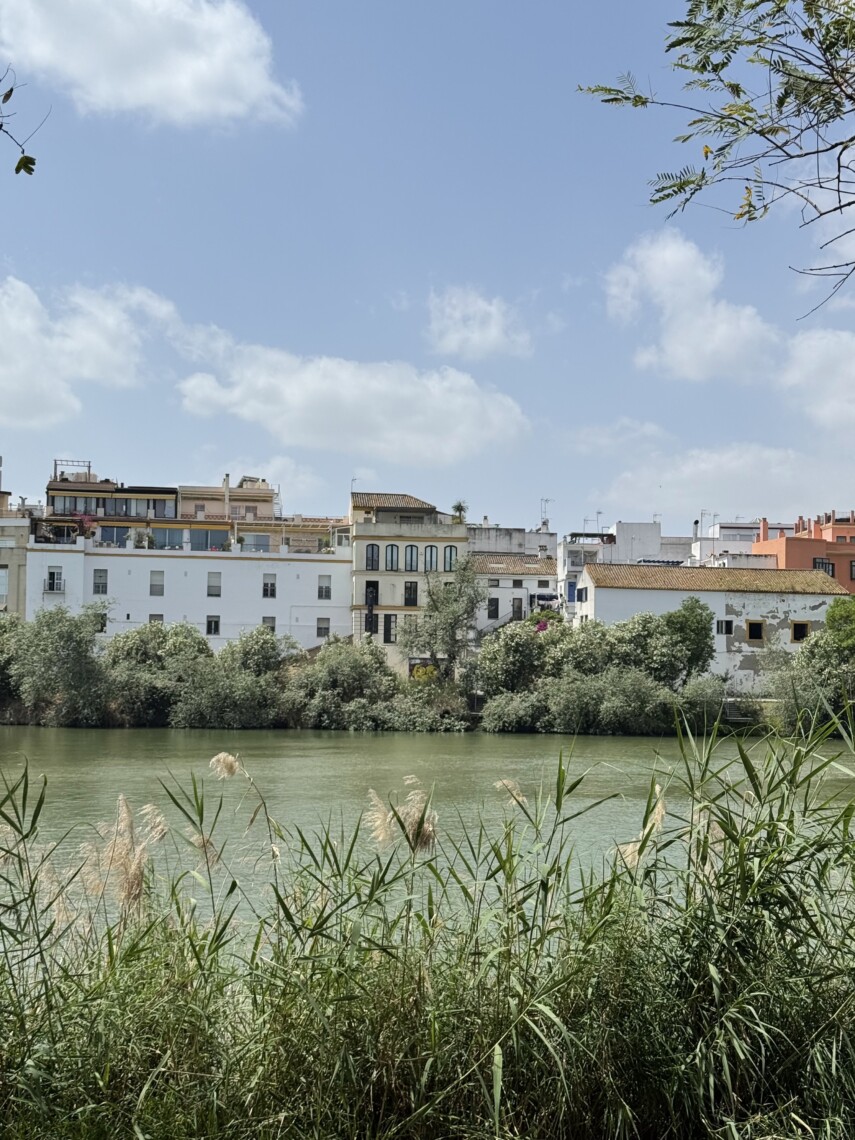
7. Walk Along the Guadalquivir River
You don’t need an itinerary for every hour of your trip. One afternoon, simply walk along the Guadalquivir River.
The river Guadalquivir played an enormous role in Seville’s development and its historic connection with maritime trade and the Americas. Today, the waterfront is simply a lovely place for a walk.
Cross Puente de Isabel II into Triana, explore the neighborhood, and come back toward Calle Betis around golden hour.
8. Explore Triana Market
Once you’re across the river, stop at Triana Market.
Mercado de Triana is a great place to wander through stalls selling produce, meat, fish, and other local products while getting a glimpse of everyday life beyond Seville’s biggest monuments.
Afterward, spend some time exploring the surrounding Triana neighborhood rather than immediately crossing back.
9. See a Flamenco Show
Yes, plenty of flamenco shows cater to tourists. However, it’s still a fun activity while visiting Sevilla.
Flamenco has deep roots in Andalusia, and seeing a talented dancer, guitarist, and singer perform together is completely different from hearing flamenco playing from a restaurant speaker.
Look for a smaller venue or traditional tablao rather than simply booking the first enormous flamenco show advertised outside your hotel.
10. Visit Palacio de las Dueñas
If you want to see one of Seville’s traditional Andalusian palaces and patios, add Palacio de las Dueñas to your itinerary.
It’s quieter than the Alcázar and gives you another look at the courtyards, gardens, tilework, and architectural details that characterize the city.
11. Visit Casa de Pilatos
Another beautiful palace worth considering is Casa de Pilatos, which blends Mudéjar and Renaissance architecture.
If you have three or four days in Seville, it’s an easy addition after you’ve covered the major attractions.
12. Explore Seville Beyond the Main Sights
Have additional time?
Walk along Calle Sierpes for shopping, wander up Calle Feria, explore the Fine Arts Museum, or head toward La Cartuja.
Part of Seville University is also housed in the former Royal Tobacco Factory, another impressive historic building close to María Luisa Park.
What to Eat in Seville, Spain
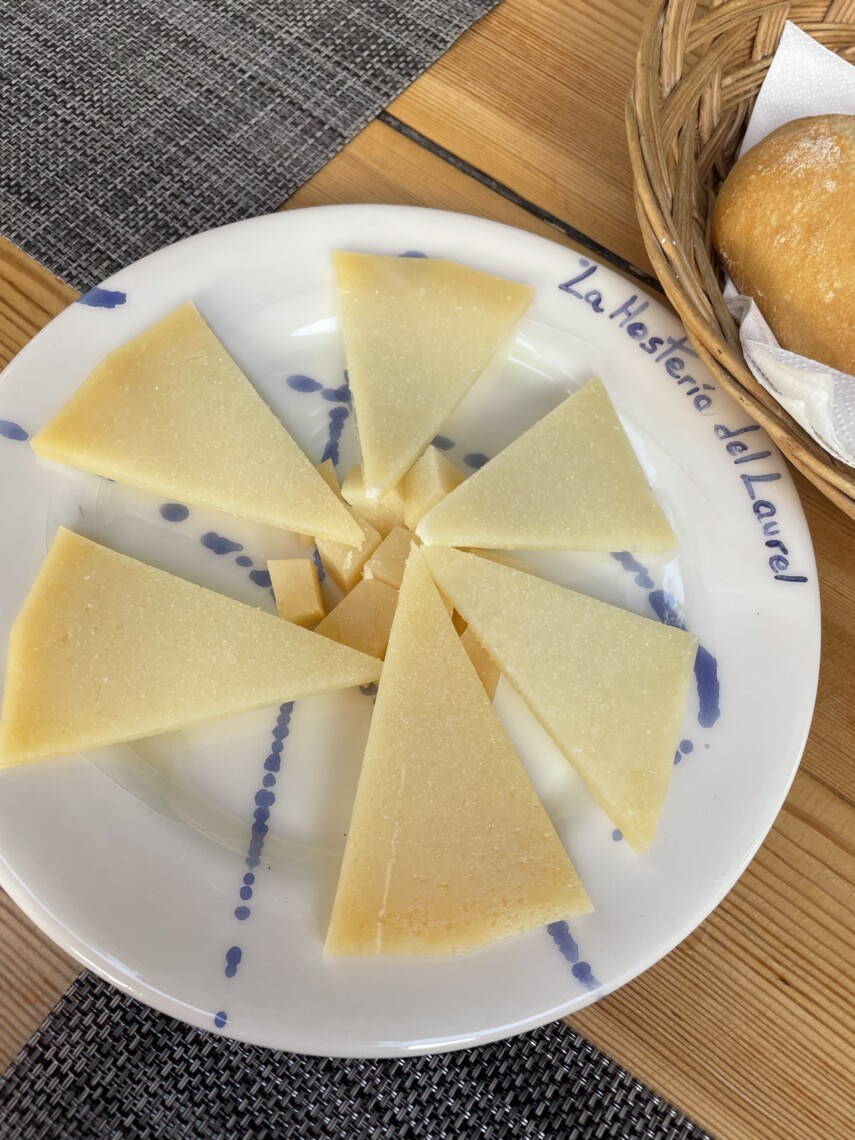
Please don’t come to Seville planning to survive on paella. Tapas culture is one of the best parts of visiting the city, and eating small plates means you can try far more dishes than you could with a traditional appetizer-main-dessert dinner.
Some foods I’d look for include:
- Espinacas con garbanzos: Spinach and chickpeas flavored with spices; simple but incredibly satisfying. I LOVE this dish.
- Montaditos: Small sandwiches filled with everything from pork to cured meats.
- Croquetas: You probably don’t need me to convince you.
- Pescadito frito: Small pieces of fried fish.
- Cazón en adobo: Marinated and fried dogfish, this is by far my favorite tapa.
- Flamenquín: Pork wrapped around ham and sometimes cheese, breaded and fried.
- Gambas al ajillo: Shrimp cooked with garlic and olive oil.
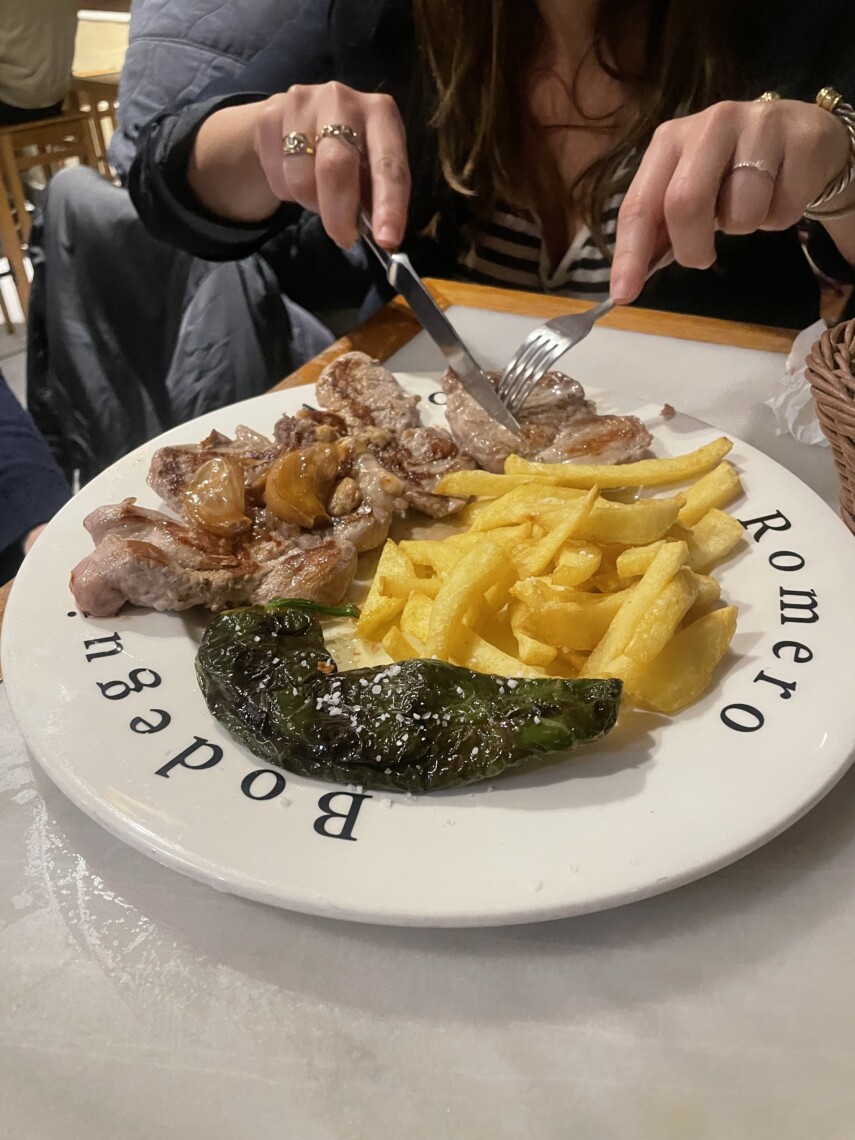
- Solomillo al whisky: Pork tenderloin served with a garlicky whisky sauce.
- Pringá: Slow-cooked meats often served inside a montadito.
- Tostada: A classic Andalusian breakfast. Order one with jamón, tomato, olive oil, or whatever combination sounds good.
And when you’ve somehow made room for dessert, head to Bar El Comercio for churros con chocolate.
Best Restaurants and Tapas Bars in Seville
You could build an entire trip around eating here. Also this city has so many amazing restaurants that it’s hard to even narrow down this list. However, here are a few of my favorites that I revisit time and time again.
- Espacio Eslava: By far my favorite restaurant in Sevilla. Creative tapas in a relaxed setting. Make a dinner reservation if you can, it’s popular.
- Bodega Santa Cruz: A lively, casual spot near the cathedral for traditional tapas. Come for the food and bustling atmosphere and make sure to order their famous montaditos.
- Cañabota: One of my top picks for seafood and a slightly more elevated dining experience.
- Los Coloniales: Traditional, casual, and unfussy. A great choice for classic Sevillian dishes.
- Antonio Romero: A local favorite known for montaditos. Try the solomillo al whisky, pringá, or piripi. I come multiple times on every trip. They also have several locations, so if one is too busy, just walk to the next!
- La Casa del Tigre: A fun, lively restaurant serving creative tapas and small plates.
- El Disparate: Contemporary tapas near Alameda with a more modern feel.
- El Rinconcillo: One of Seville’s oldest and most historic tapas bars, worth visiting for the old-school atmosphere alone.
Is Seville Expensive?
Compared with Barcelona and many major Western European destinations, Seville can feel relatively affordable.
You can still find casual tapas for reasonable prices, and because the city is so walkable, transportation costs stay low.
Accommodation is where prices can fluctuate dramatically.
Semana Santa and Feria de Abril are completely different beasts from an ordinary November weekend. During major festivals, hotel prices can jump significantly, so book early if your dates overlap.
Is Seville Safe?
Seville is generally considered a very safe destination for travelers, including solo travelers.
As in other popular European cities, the most likely issue visitors encounter is petty theft rather than violent crime.
Keep an eye on your belongings around busy tourist areas, public transportation, and crowded plazas. Don’t leave your phone sitting unattended on an outdoor café table, and use the same common sense you’d use elsewhere in Spain.
FAQ: Planning a Trip to Seville, Spain
Is Seville worth visiting?
Sevilla is absolutely worth visiting if you’re coming to Spain. Seville is one of the best destinations in southern Spain for travelers interested in food, architecture, history, flamenco, and walkable cities.
How many days do you need in Seville?
Plan three days in Seville for your first visit. Two days is enough for the highlights, while four days gives you more time for neighborhoods, restaurants, museums, or a cooking class.
What is Seville most famous for?
Seville is particularly famous for the Real Alcázar, Seville Cathedral and La Giralda, Plaza de España, flamenco, tapas, Semana Santa, and la Feria de Abril.
What shouldn’t I miss in Seville?
For a first visit, don’t miss the Royal Alcazar, cathedral and Giralda Tower, Plaza de España, Barrio Santa Cruz, Las Setas, the Guadalquivir River, Triana, and at least one flamenco performance.
Is Seville or Barcelona better?
They’re completely different.
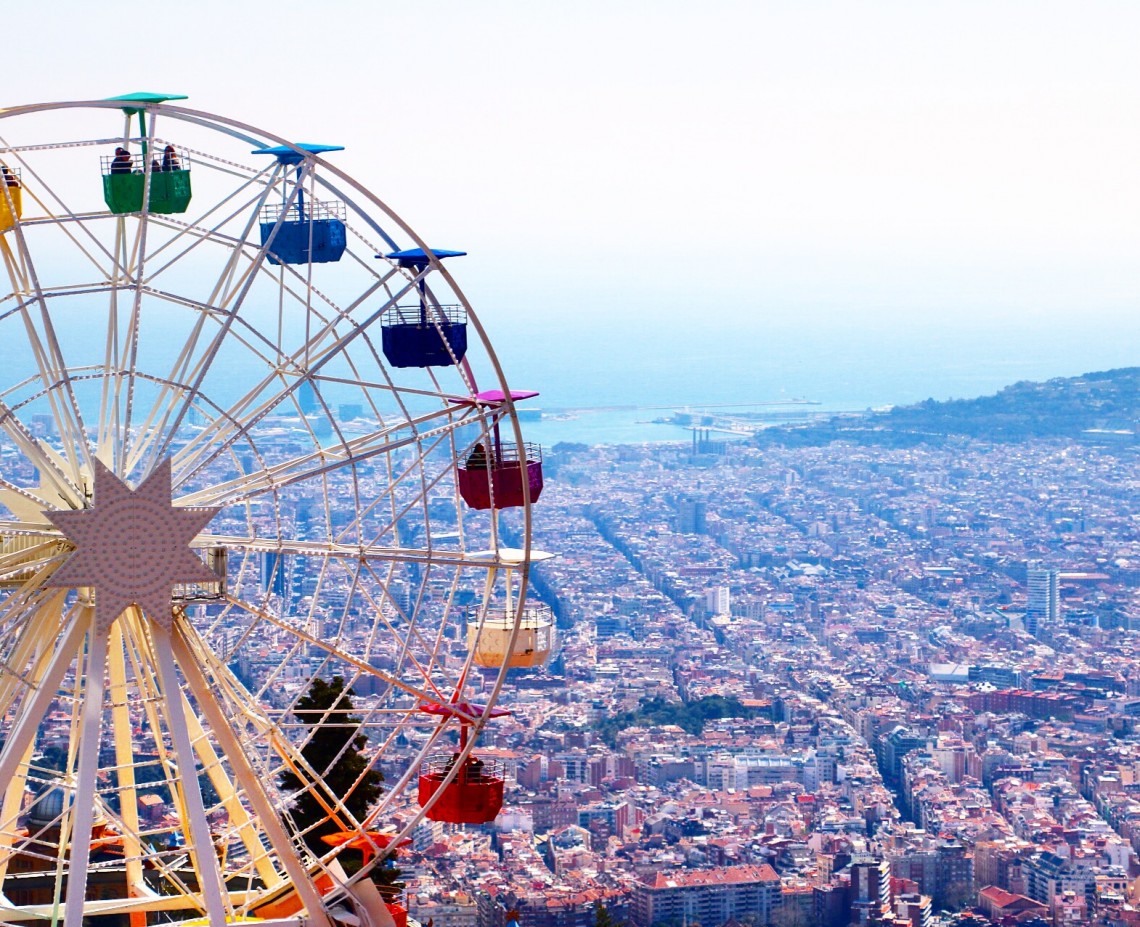
Barcelona gives you Gaudí architecture, Mediterranean beaches, cosmopolitan neighborhoods, and a much bigger-city atmosphere. Seville feels smaller, warmer, more traditionally Andalusian, and more intimate.
If possible, visit both rather than choosing.
Can you visit Seville on a day trip?
You can, but I wouldn’t recommend it unless you’re short on time. There’s simply too much to see, and part of Seville’s charm comes after the major attractions close and everyone heads out for drinks and tapas.
What’s the best area to stay in Seville for first-time visitors?
Barrio Santa Cruz and El Arenal are two of the easiest areas for a first visit because they’re close to the cathedral, Alcázar, restaurants, and river. Staying around Las Setas is another excellent option.
Final Thoughts on Visiting Seville
Seville has plenty of blockbuster attractions.
The Real Alcázar is spectacular. Plaza de España deserves the hype. Standing at the top of La Giralda and looking across the terracotta rooftops is one of those moments you remember long after a trip ends.
But I don’t think that’s why Seville sticks with people.
It’s the hour you accidentally spend sitting outside a tapas bar. It’s getting completely turned around in Barrio Santa Cruz. It’s hearing flamenco from somewhere down the street. It’s crossing the Guadalquivir River as the buildings along Calle Betis turn golden in the evening light.
Seville is beautiful without feeling polished to the point of losing its personality.
And while you could rush through the highlights in a day or two, don’t. Give yourself three days. Walk everywhere. Order another plate. Stay out later than you planned.
That’s when Seville is at its best.


No Comments