
After years of living abroad and traveling around Europe, it’s safe to say I’ve developed some strong opinions about the luggage I travel with. Funny enough, when it comes to hard vs soft luggage, I wouldn’t say I have a clear favorite. Instead, I tend to reach for one over the other depending on the type of trip I’m taking.
For carry-on luggage, I almost always reach for a hard shell suitcase. European airlines can be notoriously strict about cabin baggage dimensions, and I like knowing that my suitcase will maintain its shape no matter how much I pack inside.
For checked luggage, however, I tend to favor a soft shell suitcase. There’s something to be said for having a little extra flexibility when you’re packing for a longer trip (or bringing home a few too many purchases).
If you’re weighing the pros and cons of hard vs soft luggage, the right choice ultimately comes down to how you travel, what you pack, and whether you plan on checking your bag.
Below, I’m breaking down the differences between the two, including their durability, weight, storage capacity, and overall practicality, to help you decide which style is worth investing in.
This article contains affiliate links, which means I may earn a small commission if you shop through them, at no extra cost to you. I only share products I genuinely recommend for travel.
Hard vs Soft Luggage Key Takeaways
- Hard shell luggage generally offers better structural protection for fragile items and greater resistance to moisture.
- Softside luggage provides more packing flexibility, often with expandable compartments and easily accessible exterior pockets.
- Hardside suitcases are a practical choice for carry-on travel, especially when flying with airlines that enforce strict baggage dimensions.
- Soft sided luggage is ideal for travelers who need additional packing room or flexibility when checking a bag.
My Top Picks: Softside vs Hardside Luggage
 AWAY The Softside LargeLarge checked bagShop
- CALPAK Luka Soft-Sided Carry-OnCarry-on · Most stylishShop
- DELSEY PARIS Helium DLX 33-Inch Expandable Check-InChecked · Long trips on a budgetShop
- BÉIS The Pro Rolling Duffle Check-InChecked · Bulky layers & ski tripsShop
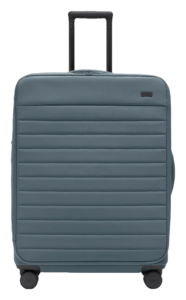
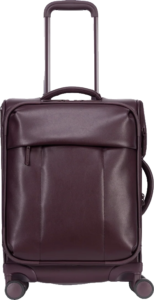
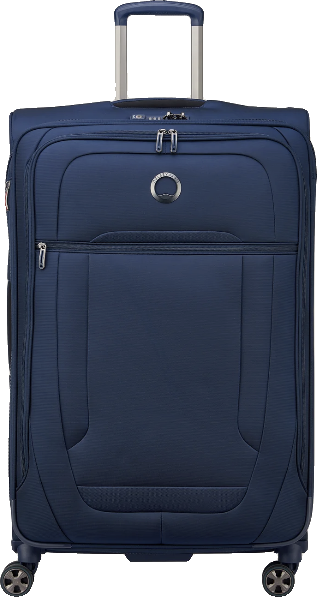
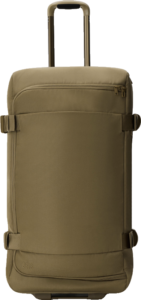
- BÉIS The Large Check-In RollerLarge checked bagShop
- AWAY The LargeLarge checked bagShop
- Quince Expandable Large Check-In SuitcaseExpandable checked bagShop
- July Checked PlusExtra-roomy checked bagShop
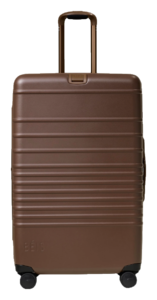
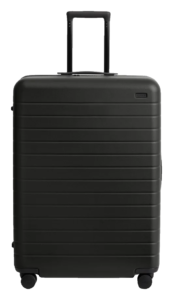
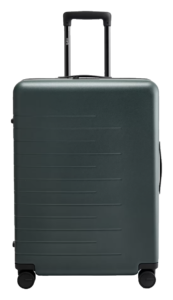
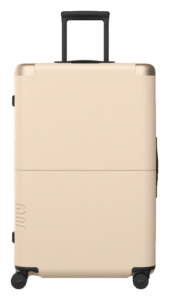
Prices change often, especially during sales, so check the current price before you buy.
Hard vs Soft Suitcase: What’s the Difference?
The biggest difference between a hard and soft suitcase comes down to the exterior material. While I love the structure of a hard shell suitcase and how well it maintains its shape, there’s something to be said for the flexibility of softside luggage, especially when you’re trying to squeeze in a few extra belongings.
Hard shell luggage is typically made from polycarbonate, ABS, polypropylene, or aluminum. You’ll notice that many of the more premium luggage brands use polycarbonate, as it’s durable, relatively lightweight, and has a little give to it.
Soft shell luggage, on the other hand, is typically made from nylon or polyester. If you’re investing in a softside suitcase, I’d recommend looking for one with reinforced corners, durable fabric, and a water-resistant exterior.
Of course, the differences between the two go well beyond the exterior material. From how you pack and access your belongings to how much you can realistically squeeze into your suitcase, there are a few practical differences worth considering.
Hardside Luggage vs Softside Luggage: At a Glance
Here’s a quick side-by-side comparison of the two luggage styles.
Hard Shell vs Soft Sided Luggage: 7 Key Differences
While aesthetics might initially draw you toward one suitcase over another, there are several practical differences worth considering before making your purchase.
1. Durability and Protection
One of the biggest advantages of hard shell luggage is the protection it provides. Its rigid exterior helps shield your belongings from external pressure, making it a great option if you’re traveling with electronics, delicate souvenirs, or other fragile items.
That said, hard cases aren’t indestructible. Lower-quality plastic shells can crack under pressure, while aluminum suitcases are susceptible to dents.
Soft sided suitcases tend to absorb impacts differently. Rather than cracking, the material can bend or compress. However, fabric is more vulnerable to tears, abrasions, and punctures.
If you’re investing in checked luggage that will regularly endure rough handling, pay close attention to the quality of the wheels, handles, zippers, and reinforced corners. These components are just as important as the exterior itself.
Winner: Hard shell luggage for structural protection.
2. Weight
There’s a common misconception that soft luggage is always lighter than hard luggage. While that may have been true years ago, modern luggage materials have narrowed the gap.
Many polycarbonate and polypropylene suitcases are impressively lightweight. Meanwhile, premium softside luggage with reinforced frames and multiple pockets can weigh more than you might expect.
For frequent travelers, every pound counts. This is especially true when flying with European airlines that impose cabin baggage weight restrictions.
Rather than choosing a suitcase based solely on its exterior, compare the empty weight of the individual models you’re considering.
Winner: Tie. It depends on the suitcase.
3. Packing Capacity and Flexibility
This is where soft luggage really shines for me.
The flexible exterior makes it easier to accommodate bulky sweaters, an extra pair of shoes, or those last-minute purchases you somehow need to squeeze into your suitcase before heading home.
Many softside bags also feature expandable compartments that provide additional packing capacity when needed.
Hard shell suitcases are less forgiving. Unless you’re traveling with an expandable model, there’s only so much you can fit inside before the two halves refuse to close.
Of course, overpacking comes with its own risks. An expanded suitcase may exceed your airline’s baggage allowance (I personally always struggle to stay within the weight limit), so always double-check its dimensions and weight before leaving for the airport.
Winner: Softside luggage.
4. Organization and Accessibility
If you’ve ever had to open your entire suitcase in the middle of an airport just to retrieve something, you’ll appreciate the convenience of external pockets. Soft shell luggage typically features front compartments where you can store travel documents, chargers, a light jacket, or other essentials you want within easy reach.
Many hard shell suitcases feature a clamshell design, opening into two separate packing compartments. I like this layout for keeping my clothes organized, especially when using packing cubes.
Some newer hardside designs also incorporate front-opening compartments, offering a nice middle ground between the two styles.
Winner: Softside luggage for accessibility; hardside luggage for compartmentalized packing.
5. Water Resistance and Cleaning
From rainy cobblestone streets in Europe to wet airport tarmacs, your luggage is bound to encounter the elements eventually.
Hard sided luggage generally offers better resistance to moisture, although most suitcases aren’t completely waterproof. Water can still enter through zippers and seams. It’s also incredibly easy to clean. A damp cloth is usually enough to remove surface dirt and dust after a trip.
While many soft sided bags are made with water-resistant fabrics, they’re still more susceptible to absorbing moisture. I remember sitting on a plane once, staring out the window as I watched my suitcase get absolutely soaked in the pouring rain while it was being loaded onto the aircraft. While this certainly doesn’t happen on every trip, I definitely wished I’d packed a hard shell suitcase at that moment.
Winner: Hardside luggage.
6. Storage and Maneuverability
One thing that’s often overlooked when shopping for luggage is where you’ll actually store it once you reach your destination. Having spent years traveling around Europe, I know how limited space can be in boutique hotels, small apartments, and older buildings.
A traditional clamshell suitcase requires enough room to open both halves. Soft suitcases with a single-lid design can be easier to access in tight spaces, and some fabric designs offer additional flexibility when tucked away.
As for maneuverability, both styles are available with spinner wheels. The quality and positioning of those wheels will make a bigger difference than the exterior material.
Winner: Softside luggage for flexible storage.
7. Style and Appearance
There’s no denying the appeal of a sleek hard shell suitcase. Brands like Away, Monos, and Quince have made minimalist luggage feel like an extension of your personal style.
But softside luggage has come a long way, too. Today’s designs are far more polished than the bulky fabric suitcases many of us grew up traveling with.
Keep in mind that hard luggage can show scratches and scuff marks, while darker fabric suitcases tend to disguise everyday wear more easily.
Ultimately, this one comes down to personal preference.
Winner: Tie.
Is Hard or Soft Luggage Better for Carry-On Travel?
For carry-on travel, I personally prefer hard shell luggage. When flying around Europe, I often travel with airlines that have strict cabin baggage size restrictions. A non-expandable hard shell suitcase helps me maintain consistent exterior dimensions without worrying about an overstuffed front pocket adding extra bulk. I also appreciate the added protection for the belongings I prefer to keep with me rather than check in.
However, not every hard shell carry-on is suitable for international travel. In fact, most expandable carry-ons that are approved in the US are too big for budget airlines in Europe. And, unfortunately, I had to learn that lesson the hard way. Always check the complete exterior dimensions, including the wheels and handles, against your airline’s baggage policy.
If you’re shopping for a new cabin bag, I’ve rounded up some of my favorite options in my guide to the best carry-on suitcases. And if you’re not sure what counts toward your allowance, here’s my breakdown of carry-on vs. personal item rules.
Shop my favorite hard shell carry-on suitcases:
Is Hard or Soft Luggage Better for Checked Baggage?
When it comes to choosing a checked bag, I generally lean toward softside luggage.
For longer trips, I appreciate having additional packing flexibility without feeling restricted by a rigid shell. It’s also convenient when I’m returning home with more than I originally packed.
That being said, if you’re checking fragile belongings or traveling somewhere with unpredictable weather, a high-quality hard shell suitcase may be the better investment.
For anyone considering a fabric suitcase, look for reinforced corners, durable zippers, sturdy spinner wheels, and an expandable design. I’ve reviewed my favorites in detail in my guide to the best softside luggage.
Shop my favorite softside luggage:
Which Type of Luggage Is Best for Your Travel Style?
Still on the fence? Think about the types of trips you take most frequently.
If you travel regularly, owning both styles may make more sense than trying to find one suitcase that does it all.
Hardside Luggage vs Softside Luggage: Frequently Asked Questions
Do airlines prefer hard or soft luggage?
Airlines generally accept both types of luggage, provided they meet the applicable size, weight, and baggage requirements. The exterior material doesn’t typically affect whether a suitcase can be brought onboard or checked.
Does hard shell luggage crack easily?
High-quality polycarbonate luggage is designed to flex under pressure and resist impacts. However, cheaper materials, extreme temperatures, and rough handling can increase the likelihood of cracking. No suitcase is completely damage-proof.
Can you fit more in a hard or soft suitcase?
Soft sided luggage generally offers more flexibility when packing because the fabric can accommodate irregularly shaped items. However, actual capacity depends on the suitcase’s dimensions, internal layout, and whether it features an expandable compartment.
Which type of luggage lasts longer?
Both styles can last for years when properly constructed and maintained. The quality of the materials, wheels, handles, and zippers is often a better indicator of longevity than whether the suitcase has a hard or soft exterior.
Is hard shell luggage better for international travel?
Hard shell luggage is a practical option for international carry-on travel because it maintains consistent dimensions and provides structural protection. For longer international trips that require checked baggage, expandable softside luggage may offer greater versatility.
Is softside luggage going out of style?
Not at all. While hardside suitcases have become increasingly popular, softside luggage remains a practical choice. Many premium luggage brands now offer contemporary fabric designs that combine functionality with a more elevated aesthetic.
Final Thoughts: Is Hard or Soft Luggage Better?
When it comes to the hard shell vs soft sided luggage debate, I don’t think there’s one clear winner.
For most of my trips, I’ll continue reaching for a hard shell carry-on. I love the sleek design, structured packing compartments, and peace of mind that comes with knowing my suitcase won’t bulge beyond its original dimensions.
For checked luggage, though, I’m still a fan of softside suitcases. The extra packing flexibility and convenience of storing them once I reach my destination make them a worthwhile investment, especially for longer trips.
If you’re building your luggage collection from scratch, I’d recommend starting with a quality hard shell carry-on and an expandable softside checked suitcase. Between the two, you’ll be well-equipped for everything from a quick European city break to a few weeks abroad.
Ready to shop? Browse my full guides to the best carry-on suitcases and the best softside luggage for more of my favorite picks.



No Comments