
If you’re looking for the perfect day trip from Barcelona, Tarragona is an excellent option. With its Roman ruins, beautiful beaches, and charming old town, it makes for a great add-on if you’re already planning to visit Barcelona.
But how exactly do you get from Barcelona to Tarragona? The train is the way to do it. It’s quick, it’s cheap, it drops you near the center of the city, and you get to stare at the Mediterranean for most of the ride. If you want the full picture, this guide breaks it all down. Below, I go over how the Barcelona to Tarragona journey works, what it costs, and how to avoid ending up at the wrong station.
This article contains affiliate links, which means I may earn a small commission at no extra cost to you if you book or purchase through them. Thank you for supporting my blog!
Short on time? Here’s my Tarragona hotel cheat sheet:
- Best all-rounder / first visit: H10 Imperial Tarraco
- Best for couples / design lovers: Hotel Boutique Làpety
- Best for families: Hotel Astari
- Best for a spa splurge: Le Méridien Ra Beach Hotel & Spa
- Best for a foodie country escape: La Boella
- Best reliable mid-range: Hotel Núria
Key Takeaways
- Take the train. The train from Barcelona to Tarragona is faster, cheaper, and more relaxing than driving, and it leaves you near the action rather than hunting for parking.
- Mind the two stations. Tarragona has two: central Tarragona Estació (in the city, walkable to the old town) and Camp de Tarragona (the high-speed station 11 km out of town). This is the single most important thing to get right.
- Regional trains are often the smarter pick. A direct regional train to Tarragona Estació drops you straight in the city centre, no onward transfer needed.
- How far is Tarragona from Barcelona? Roughly 100 km by road, with a train journey time of about an hour on regional services, or 30 to 40 minutes on a high-speed train.
- Book ahead for the cheapest train tickets. Fares climb closer to the date, so booking early gets you genuinely cheap tickets.
How Far Is Tarragona From Barcelona, Really?
Let’s anchor the basics first. How far is Tarragona from Barcelona? It’s about 100 kilometres down the coast, southwest of the city. Close enough to be an easy day trip, far enough that you’ll want a sensible plan rather than just winging it.
By car it’s a little over an hour with clear roads. By train, you’re looking at roughly an hour on regional services or as little as half an hour on the fastest high-speed train. Either way, Tarragona from Barcelona is one of the most painless trips you can make in this corner of Catalunya.
The Train From Barcelona to Tarragona: Your Best Bet
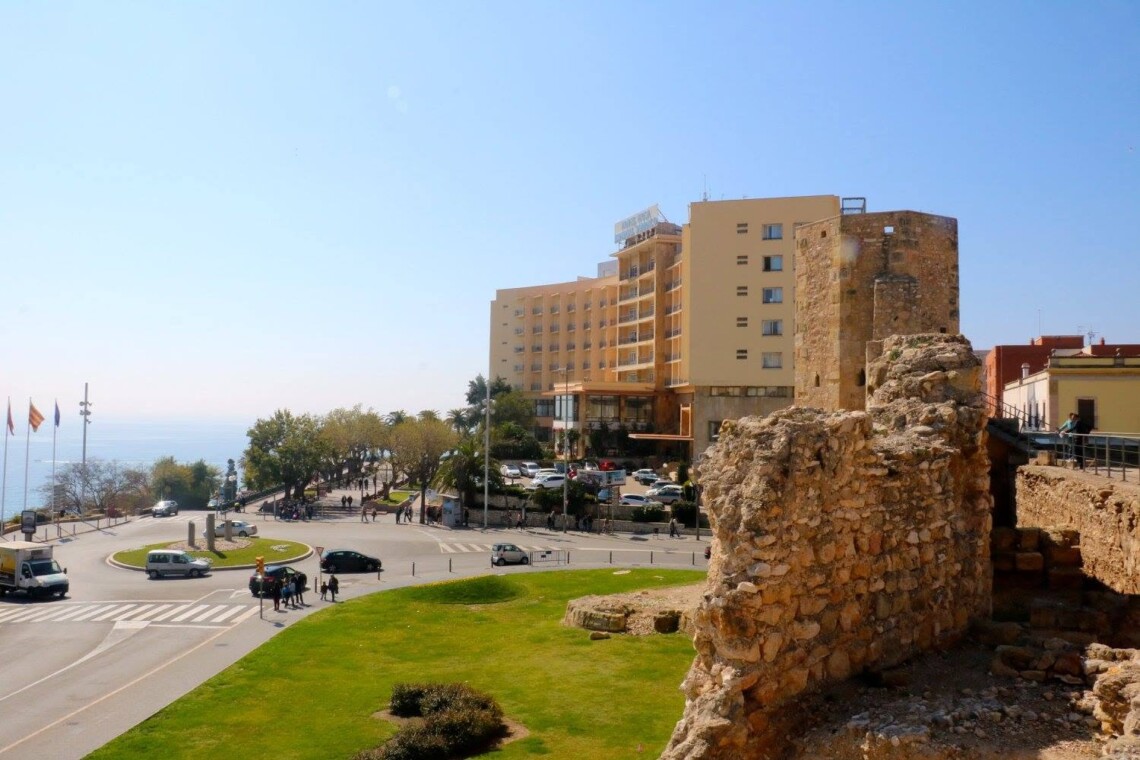
If you take one thing from this guide, let it be this: get the train. The train from Barcelona to Tarragona is the popular route for good reason, and once you’ve done it you’ll understand why locals barely think twice about it.
Where You Leave From
Most trains to Tarragona depart from Barcelona Sants, the city’s main station and the hub for pretty much every long-distance and regional service. It’s well connected to the metro, so wherever you’re staying, getting to Barcelona Sants is straightforward. Some regional trains also call at Estació de França, closer to the old town, which can be handy depending on where you’re based.
A quick travel tip: give yourself a buffer. Barcelona Sants is big and busy, especially in summer, and you don’t want to be sprinting for a platform with a coffee in one hand and a ticket you can’t find in the other.
The Two Tarragona Stations
Okay, here’s a rookie mistake a lot of travelers make. Tarragona has two train stations, and they are nowhere near each other.
- Tarragona Estació: the central station, right down by the port and the Mediterranean Sea. From here you can walk to the old town, the Tarragona Cathedral, the Roman amphitheater, and the Balcó del Mediterrani. This is almost certainly the one you want.
- Camp de Tarragona: the high-speed station, sitting out in the countryside about 11 km north of the city, between a couple of small towns. The high-speed train gets you here fast, but then you’ve got a bus or taxi transfer (another 20 to 30 minutes) to actually reach Tarragona city.
See the trap? The “fastest” train on paper can end up slower door to door once you factor in getting from Camp de Tarragona into town.
My rule of thumb: if your goal is the old town and the Roman ruins, aim for Tarragona Estació. If you’re connecting from somewhere further afield on the high-speed network, Camp de Tarragona makes more sense.
Train Companies and Types
A few different operators and train types run this corridor, which is great for choice but mildly confusing at first glance. Here’s the lay of the land:
- Renfe trains run the show as Spain’s national operator, covering both the regional and high-speed services.
- Regional trains (the Rodalies R16, essentially a regional express) are the slower-but-direct option into Tarragona Estació. Cheap, frequent, no transfer confusion.
- Avant trains are mid-speed services that use the high-speed line and tend to stop at Camp de Tarragona.
- AVE is the flagship high speed train, the fastest train on the route, also into Camp de Tarragona.
- iryo trains are a newer private high-speed operator that has run seasonal stops here, adding a bit more competition (and sometimes cheaper tickets).
For most day-trippers heading to the old town, a direct regional train into Tarragona Estació is the sweet spot.
A Rough Sense of Cost and Timing
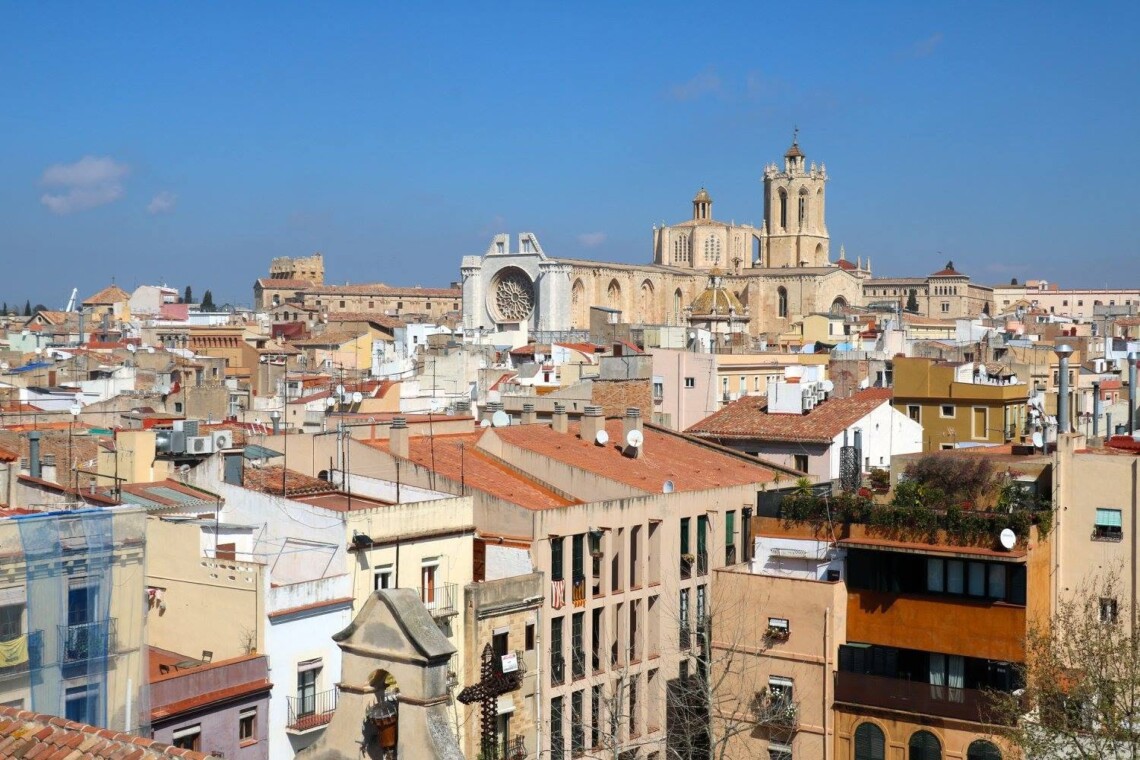
Prices swing a fair bit depending on how far ahead you book and which service you choose, but to set expectations:
- Regional trains: cheapest tickets, often only a handful of euros one way, with a journey time around the hour mark, direct to the city center.
- High-speed trains (AVE / Avant): pricier, journey time of roughly 30 to 40 minutes to Camp de Tarragona, plus your onward transfer.
- Trains run frequently throughout the day, with dozens of departures, so you’re rarely waiting long.
Two money-saving notes from experience. First, book ahead where you can; cheap train tickets on the faster services tend to vanish as the date approaches, while last-minute fares can be significantly more. Second, the regional trains are usually a fixed, low price regardless of when you book, which makes them low-stress for a spontaneous day trip.
What About Flying In? Barcelona Airport and Reus Airport
If you’re arriving from abroad, you’ve got options.
Most people land at Barcelona Airport (El Prat). From there, you can connect into the rail network (via Barcelona Sants) and carry on to Tarragona by train as described above. It’s a couple of steps, but perfectly doable.
There’s also Reus Airport, much closer to Tarragona and the wider Costa Dorada, served mainly by budget and seasonal flights. If your route allows it, flying into Reus can shave a lot off the overland leg. It’s worth a look if you’re building a beach-focused trip rather than a Barcelona-plus-day-trip itinerary.
Driving From Barcelona to Tarragona
Could you drive? Sure. The roads are good and it’s a straightforward run down the coast. But personally, I’d always take the train over renting a car as it’s far more enjoyable and stress free.
Driving earns its place if you’re planning to roam the wider Costa Dorada, hit beaches the train doesn’t reach, or carry on somewhere rural afterward. For a straight Barcelona-to-Tarragona city trip, the train wins on basically every metric.
Once You Arrive: A Taste of What’s Waiting
I’ll keep this brief, because there’s a whole separate guide on the best things to do in Tarragona, but a quick word on why you’re making this trip at all.
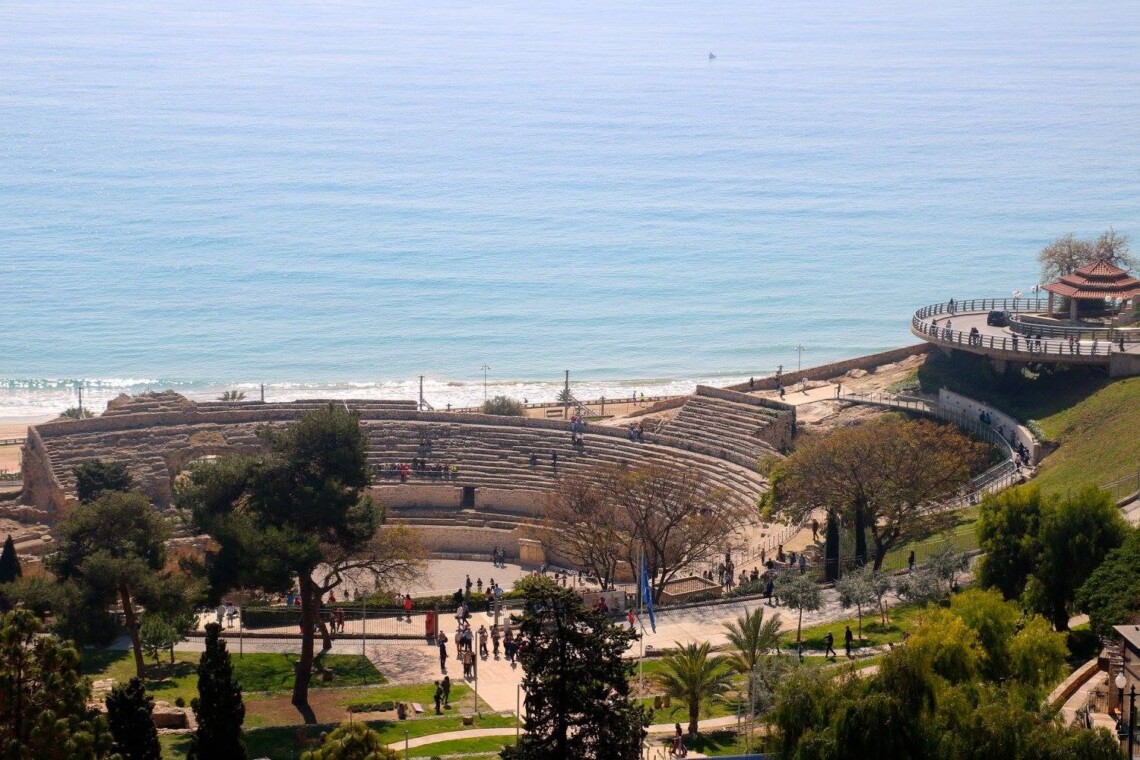
Tarragona is a UNESCO World Heritage Site thanks to its astonishing collection of ancient Roman ruins. This was a heavyweight city of the Roman Empire, once known as Tarraco, and the evidence is everywhere: the Roman amphitheater perched over the sea, the Roman circus tucked beneath the modern streets, the old Roman walls. Add a gorgeous old town crowned by the Tarragona Cathedral, the sweeping Balcó del Mediterrani, and a fishermen’s quarter at El Serrallo where the seafood is the real deal (do yourself a favor and eat there), and you’ve got one of Catalunya’s most rewarding day trips.
Step off at Tarragona Estació and you’re minutes from all of it. Which is rather the point of getting the station right.
A Few Practical Travel Tips
Before you go, a handful of things I wish someone had told me the first time:
- Validate your regional ticket if required before boarding to avoid a fine.
- Aim for Tarragona Estació, not Camp de Tarragona, unless you specifically need the high-speed connection.
- Travel light. The old town is uphill and cobbled; you won’t want a heavy bag.
- Check the last train back before you settle in for a long, lazy lunch. It can be easy to lose track of time there.
- Go midweek if you can for quieter trains and quieter Roman ruins.
Frequently Asked Questions
How do I get from Barcelona to Tarragona?
The easiest way is by train from Barcelona Sants. Regional trains run directly to the central Tarragona Estació in about an hour, while high-speed trains reach Camp de Tarragona (outside the city) in 30 to 40 minutes.
How far is Tarragona from Barcelona?
Tarragona is about 100 kilometres southwest of Barcelona along the coast. The train journey takes roughly an hour on regional services or around half an hour on the fastest high-speed train.
Which Tarragona station should I use?
For the old town and Roman ruins, use Tarragona Estació, the central station within walking distance of the main sights. Camp de Tarragona is a high-speed station 11 km outside the city and requires an onward bus or taxi.
Is there a direct train from Barcelona to Tarragona?
Yes. Direct regional trains run from Barcelona Sants to Tarragona Estació with no changes, making this one of the simplest day trips from Barcelona.
How much does the train from Barcelona to Tarragona cost?
Regional train tickets are usually just a few euros each way. High-speed train tickets cost more and vary with demand, so booking ahead helps you find cheap tickets.
Can I do Tarragona as a day trip from Barcelona?
Absolutely. With frequent trains and a short journey time, Tarragona is one of the best day trips from Barcelona. Aim for an early train out and check the last train back.
How do I get to Tarragona from Barcelona Airport?
From Barcelona Airport, connect to the rail network via Barcelona Sants and continue to Tarragona by train. Alternatively, Reus Airport sits closer to Tarragona and is served by some budget and seasonal flights.
Final Thoughts
The trip from Barcelona to Tarragona really is as simple as picking up a train ticket, finding the right platform at Barcelona Sants, and settling in for a scenic hour down the coast. The only genuine pitfall is the two-station thing, and now that you know about it, you’re miles ahead of most first-timers.
So book your tickets, aim for Tarragona Estació, and go meet a 2,000-year-old Roman city that somehow still flies under the radar.
Planning a trip to this corner of Spain? Here are a few other helpful articles:
15 Best Things to Do in Tarragona, Spain: A Complete Travel Guide
The Best Hotels in Tarragona, Spain: Where to Actually Stay in 2026
Is Tarragona, Spain Worth Visiting? What You Need to Know
The 20 Best Cities to Visit in Spain in 2026
The Best Hotels in Sitges Spain: My Honest Guide to Where to Actually Stay
The 15 Best Day Trips From Barcelona: 2026 Guide
Where to Stay Near Calella de Palafrugell
How to Get From Barcelona to Costa Brava: Best Routes & Travel Tips
Tossa de Mar, Spain: The Complete Guide to Costa Brava’s Most Beautiful Medieval Town
The Best Costa Brava Hotels: 16 Incredible Coastal Stays
Barcelona Travel Guide: 3 Day Itinerary
Best Hotels in Barcelona: 18 Incredible Stays (From Boutique to Luxury)

No Comments