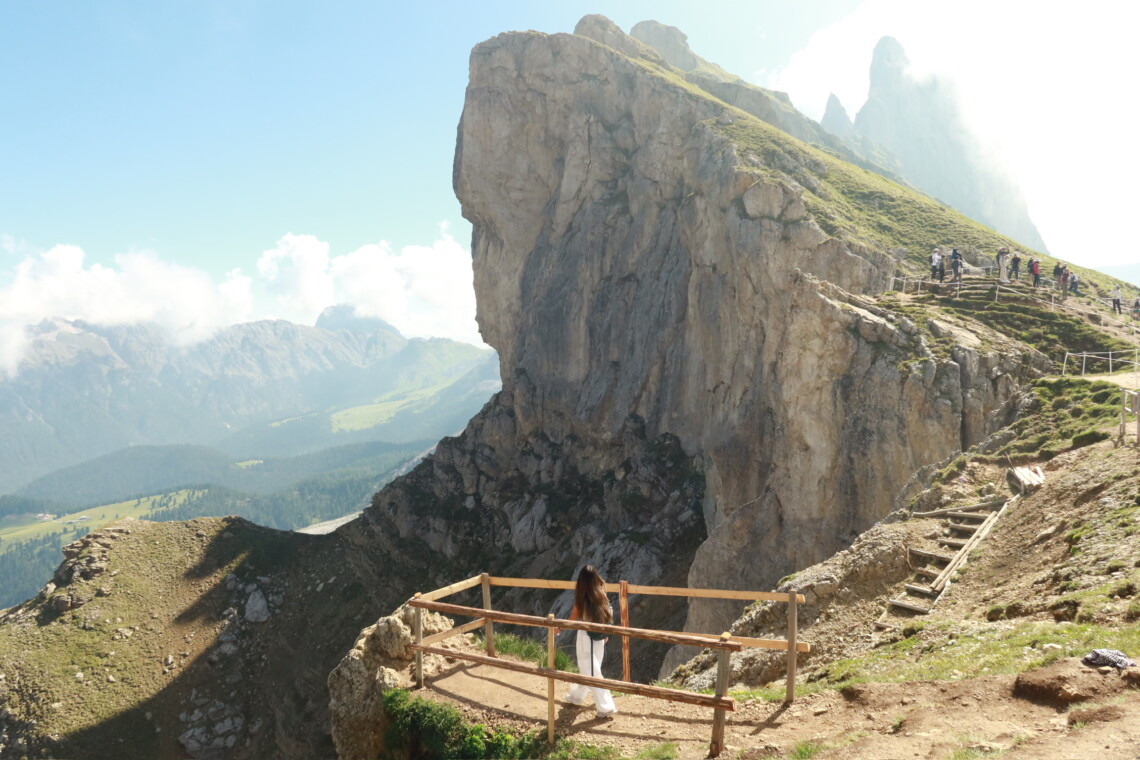
On my last trip to the Dolomites, Seceda was one of the first things I penciled into my itinerary. It’s one of the most iconic viewpoints in the entire region, and once you’ve seen a photo of that ridgeline, it’s hard not to want to stand there yourself. The trail is stunning, and there’s no shortage of hikes to do once you’re up there, but a little planning goes a long way, especially in summer if you want to actually enjoy it without fighting crowds the whole time.
So how do you get up to Seceda, and when’s the best time to go? Below, I’m answering all the questions I had before my own visit, so you can plan your day at Seceda without any of the guesswork.
This guide covers everything: how to get to Seceda by cable car or on foot, the best hiking routes along the ridgeline, where to eat and stay, and how to time your visit so you’re not sharing the view with a thousand other people.
This post contains affiliate links, which means I may earn a small commission if you book through them, at no extra cost to you.
Quick Picks: Where to Stay Near Seceda
- Hotel Gardena Grödnerhof: a luxury base in Ortisei, a short walk from the Seceda valley station.
- Dorfhotel Beludei: a comfortable option in Santa Cristina, close to the Col Raiser cable car.
- Garni Sunela B&B: a great value stay in Selva di Val Gardena for anyone hiking up rather than riding.
Key Takeaways
- Seceda is a 2,519-meter summit above Val Gardena, reached by cable car from Ortisei or Santa Cristina (Col Raiser), or on foot without a lift.
- Starting in 2026, the Ortisei-Furnes-Seceda cable car may require a pre-booked, timed-entry ticket; book online in advance rather than showing up and hoping for the best.
- Late May through early November is when the lifts run; late June and September offer the best balance of open trails and thinner crowds.
Where Exactly Is Seceda?
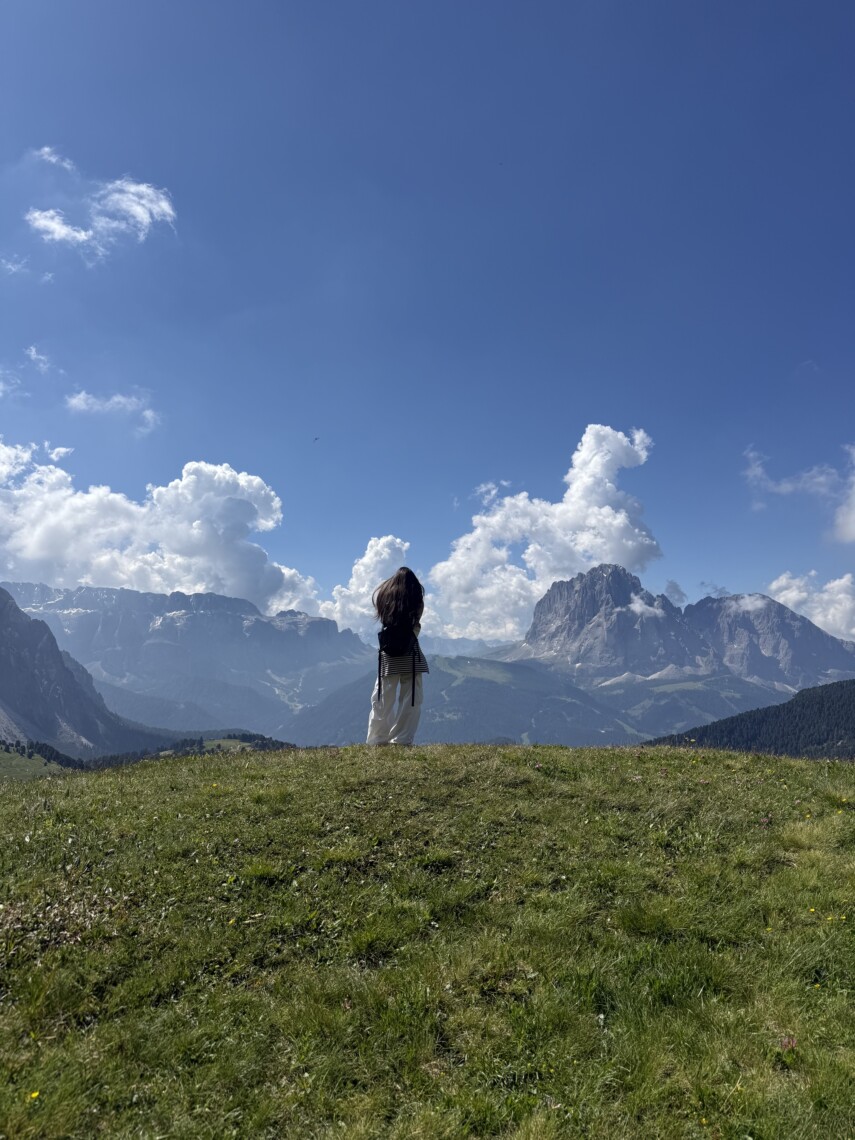
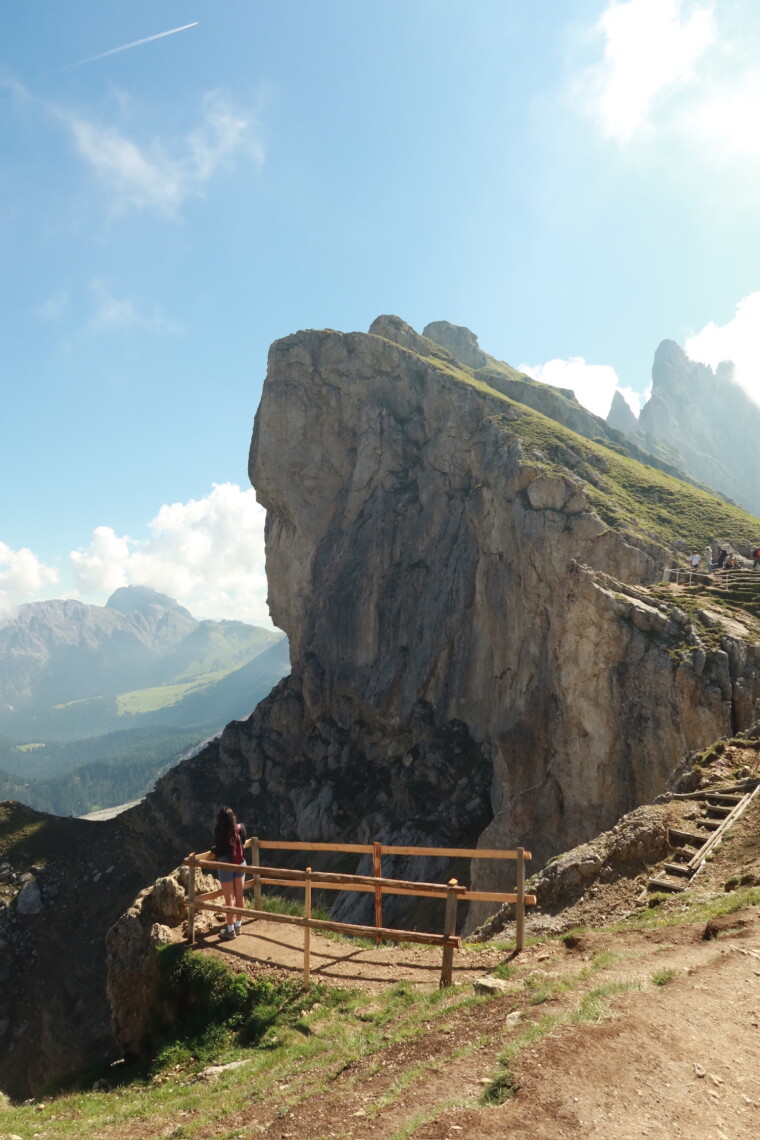
Seceda is a 2,519-meter mountain in the Puez-Odle Group, part of the Italian Dolomites in South Tyrol, northern Italy. It rises directly above Val Gardena, a valley that’s home to three main towns: Ortisei, Santa Cristina, and Selva di Val Gardena. Like much of this corner of the Dolomites, the area is trilingual, so don’t be surprised to see trail signs and menus switching between Italian, German, and Ladin depending on where you are.
What makes Seceda so recognizable is the view north from its summit ridge toward the Odle Group, a jagged wall of limestone spires that looks almost too dramatic to be real. The mountain also sits at the edge of the Puez-Odle Nature Park, a protected area and part of the Dolomites UNESCO World Heritage Site, which is why you’ll notice strict rules here around drones, wild camping, and staying on marked trails.
How to Get to Seceda: Cable Car, Gondola, and Hiking Routes
There’s no way to drive to Seceda. Whichever route you choose, you’re either taking a lift or hiking up on your own two feet. I personally took the chairlift up, and although it was expensive, it was worth it to save time.
The Ortisei Cable Car (the Classic Route)
The most popular and straightforward way up is the two-stage cable car from Ortisei. First, a small gondola carries you from the valley station in town up to the mid-station at Furnes. From Furnes, you transfer to a larger cable car, which takes you the rest of the way up to the Seceda plateau at roughly 2,500 meters. The whole trip takes about fifteen to twenty minutes, and the views only get better the higher you climb.
Important 2026 update: Starting this summer, the Ortisei-Furnes-Seceda cableway requires a pre-booked ticket with a fixed 30-minute time slot, purchased online in advance. This is a new system designed to manage the crowds, so don’t plan on just showing up and buying a ticket at the counter, especially in July and August. Book as early as possible to avoid any issues down the road.
Parking at the valley station is limited, so public transport or walking is genuinely the smarter option in peak season.
The Col Raiser Cable Car (the Quieter Alternative)
If you’d rather skip some of the Ortisei crowds, the Col Raiser gondola from Santa Cristina is a solid alternative. It’s a single lift rather than a two-stage cable car, and from the top station, a network of trails leads up to the Seceda ridge in roughly one to two hours of walking with about 500 meters of elevation gain. You can also connect to the Fermeda chairlift partway along, which shaves off some of the climbing. This route tends to draw far fewer people than the direct Ortisei option, and it’s a nice way to combine a bit of a hike with a lift-assisted shortcut.
Hiking to Seceda Without a Cable Car
If you’d rather earn the view entirely on foot (and not pay the steep prices for the cableway), there are a few solid hiking routes up. The classic approach starts at the Cristauta-Praplan parking lot above Santa Cristina, following forest trails past Baita Gamsblut, Rifugio Fermeda, and Baita Daniel before reaching the Seceda summit. Expect around six hours round trip with roughly 1,000 meters of elevation gain if you loop in Monte Pic on the way back down.
Hiking directly from Ortisei is possible too, and it’s one of the more demanding climbs in Val Gardena: about 1,200 meters of elevation gain and 3.5 to 4.5 hours of steady uphill through forest before the views open up. It’s a serious trail, so come prepared with proper footwear and water.
Best Time to Visit Seceda in the Dolomites
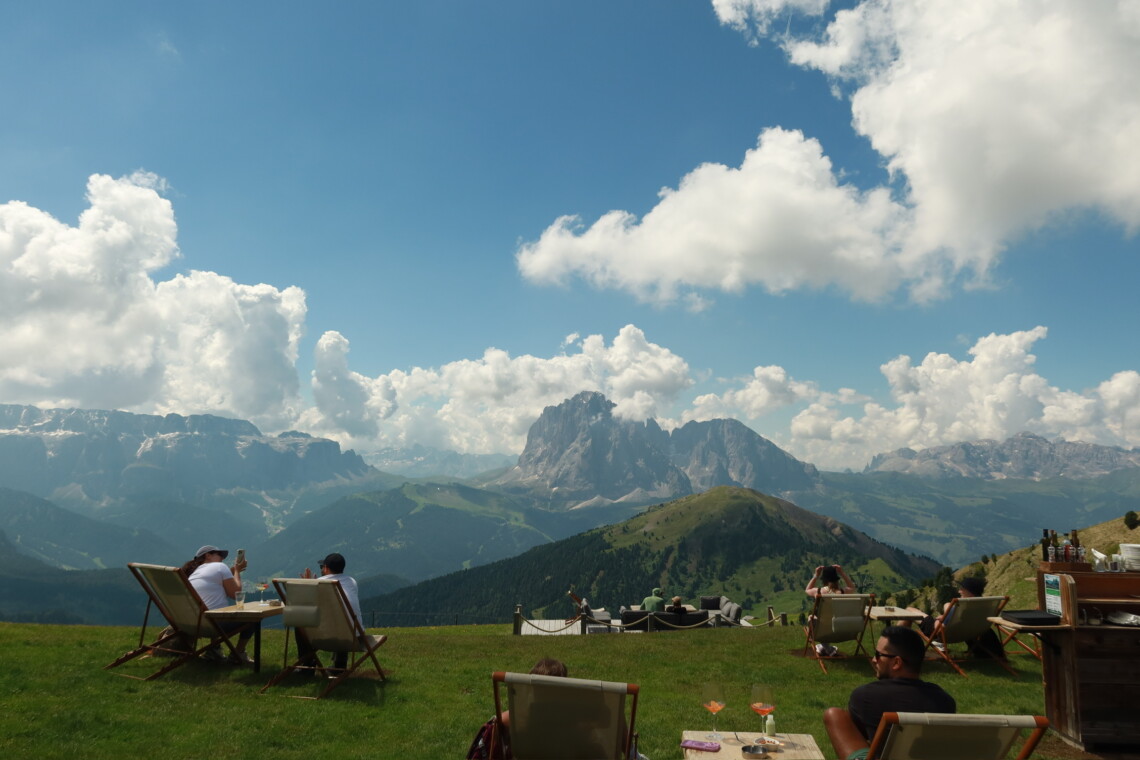
Timing matters here just as much as it does anywhere else in the Dolomites.
Late May to early November is when the cable cars run at all, so this window defines your options. Outside of it, Seceda is only reachable on foot, and conditions can be genuinely wintery.
Peak summer (July-August) brings the warmest weather but also the heaviest crowds, longest ticket lines, and the busiest ridgeline photos you’ll see online. If you’re set on visiting in summer, arrive right at opening, around 8:30am, to beat the rush.
Early autumn (September into early October) might be the sweet spot. The summer crowds thin out noticeably after the last week of August, the alpine meadows start turning gold, and the air is crisp enough to make the uphill sections of any hike far more comfortable.
Late spring and early winter, right at the edges of the operating season, tend to be quieter still, though you’ll want to double-check that lifts and mountain huts are actually open before you commit to a plan. I came in mid June and even then I still came across significant crowds by 9:30am.
Whatever the season, mornings consistently offer the clearest light and the calmest weather. Clouds tend to build over the peaks by early afternoon, so if you want that famous unobstructed ridgeline shot, don’t sleep in.
What to Do at Seceda
Walk to the Famous Seceda Viewpoint
From the top cable car station, it’s roughly a ten to fifteen-minute walk to the main viewpoint, a short, well-marked path that delivers the exact scene you’ve probably seen already while researching your trip. A summit cross and a lookout point installed in 2007 mark the spot, with a panoramic board identifying the surrounding peaks.
Note that in recent years, private landowners along part of this trail have installed a small toll (around €5) to access the most direct stretch of path to the viewpoint. There’s a free alternative route that adds about ten minutes to your walk, so budget-conscious hikers have options.
Hike the Seceda Ridgeline to Forcella Pana
For a longer, more rewarding walk, continue past the main viewpoint along the ridge toward the Fermeda peaks, following signed trail No. 6. The path is reinforced with railings and cement blocks in places, since it’s a fairly exposed stretch, and it leads to Forcella Pana (also called Panascharte), a narrow, dramatic saddle at around 2,440 meters that connects Val Gardena with Val di Funes on the other side. This is where you get some of the closest views of the Fermeda Towers, and it’s a fitting reward if you want more than just the postcard shot.
Hike to Rifugio Firenze and the Pieralongia Meadows
From Forcella Pana, a popular loop continues down toward the Pieralongia mountain pasture, home to a rustic hut and a pair of striking twin rock spires, before dropping further to Rifugio Firenze, a mountain hut with sweeping views back toward the Sassolungo, Sella Group, and Catinaccio ranges. This entire circuit, also known as the Seceda-Rifugio Firenze loop, is considered one of the best introductions to hiking in Val Gardena: scenic, moderately challenging, and dotted with huts where you can stop for local dishes along the way.
Tackle Monte Pic for a Quieter Perspective
If you want to get away from the crowds entirely, the trail south from the Seceda ridge toward Monte Pic (2,363 meters) and the Baita Sëurasas mountain pasture is a favorite among locals. It’s a longer, more demanding route, typically done as part of a bigger loop starting from the Cristauta-Praplan car park, but it rewards you with some of the quietest, most photogenic corners of the whole Seceda area.
Grab a Bite at a Mountain Hut
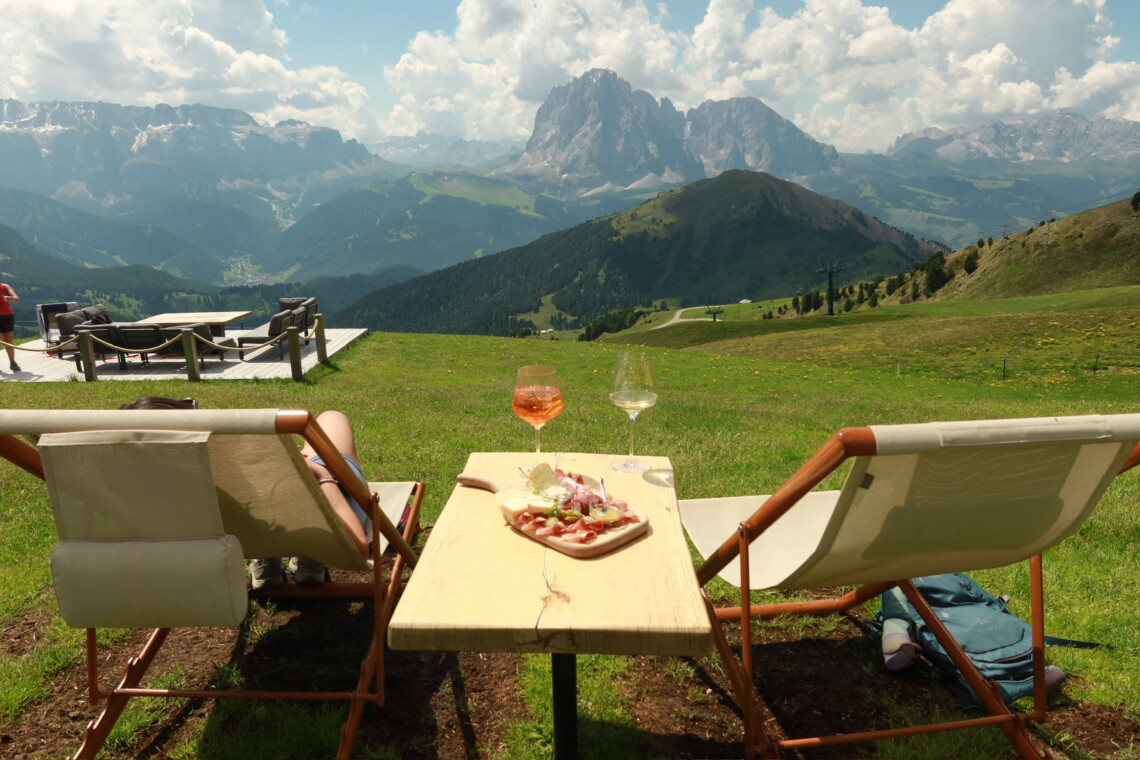
Part of what makes hiking here so enjoyable is the sheer number of huts scattered across the mountain. Baita Sofie, Baita Daniel, Rifugio Fermeda, and Pieralongia Hut are all well-placed stops for a plate of canederli or a slice of strudel with a view. Most are open only during the summer hiking season, so don’t count on them being staffed outside of late May through early November.
Where to Stay Near Seceda
In Ortisei
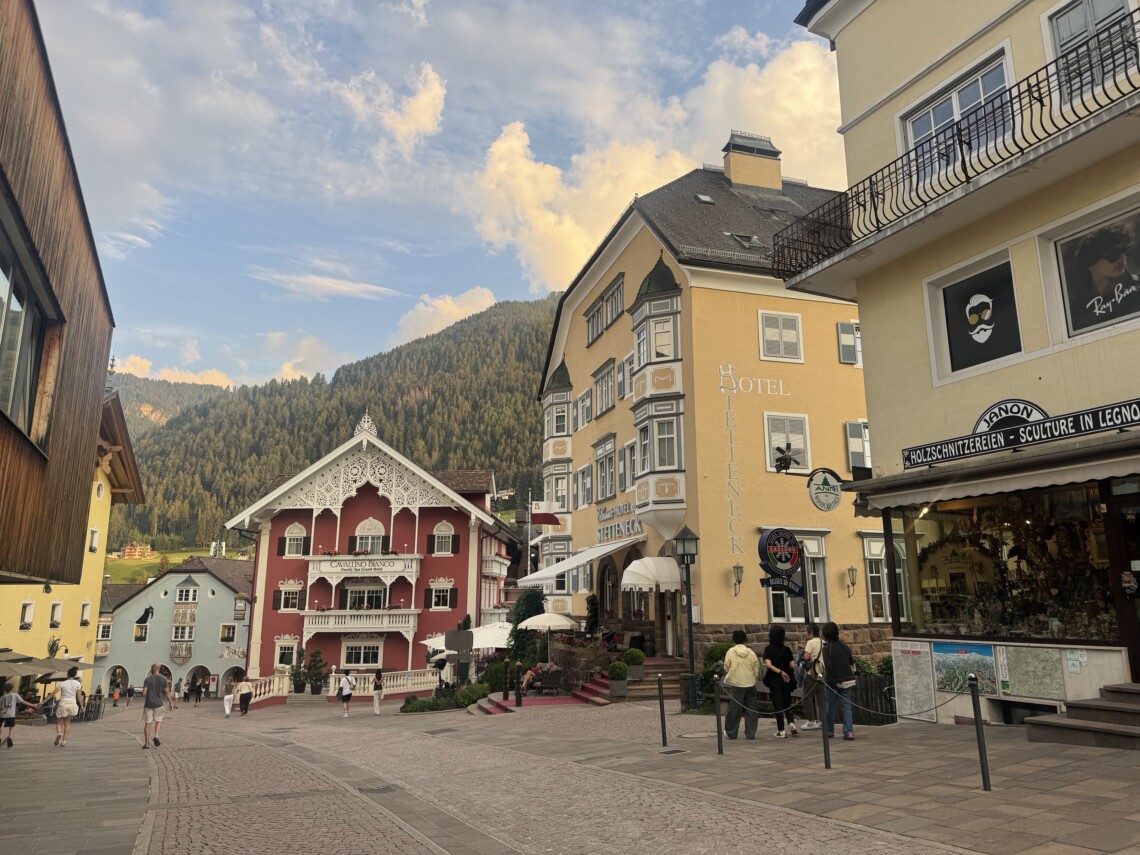
Ortisei is the natural base for most visitors, since it sits right at the foot of the main cable car and offers the widest range of hotels, from mid-range guesthouses to luxury spa resorts. Staying here means quick access to the valley station and the “La Curta” escalator connection.
In Santa Cristina
Santa Cristina, home to the Col Raiser cable car, is a slightly quieter alternative that still puts you within easy reach of Seceda. Options here range from budget bed and breakfasts to more upscale stays like Dorfhotel Beludei, and it’s a smart choice if you’re planning to hike part of the way up.
In Selva di Val Gardena
Selva sits a bit further from the Ortisei cable car but is the natural starting point if you’re planning to hike up via the Juac trail or connect toward Alpe di Siusi. It also tends to have a livelier après-hike scene.
Staying on the Mountain
For a genuinely memorable experience, a handful of rifugios on Seceda itself, including Rifugio Fermeda and Rifugio Firenze, rent rooms. Staying overnight means you get the ridgeline to yourself at sunrise and sunset, long after the day-trippers have headed back down.
Seceda vs. Other Dolomites Viewpoints
Seceda isn’t the only showstopping viewpoint in the Italian Dolomites, though it’s arguably the most accessible one. Cinque Torri, near Cortina d’Ampezzo, offers a different kind of drama with its cluster of rock towers and open-air WWI museum trail. The Sella Massif and surrounding Sella Group deliver a bigger, wilder feel for hikers willing to go further afield. And if lakes are more your thing, Lago di Braies remains the classic still-water counterpart to Seceda’s ridgeline drama.
What sets Seceda apart is how quickly you can go from valley floor to jaw-dropping panorama. Few places in the Dolomites offer this much visual payoff for this little physical effort, which is exactly why it’s become such an icon.
Practical Tips for Visiting Seceda
- Book your cable car ticket online well in advance for 2026, since the new timed-entry system means walk-up tickets are no longer guaranteed.
- Arrive at opening (around 8:30am) if you’re visiting in summer; the difference between an 8:30am and a 10am arrival at the viewpoint is enormous.
- Bring layers. Even in July, temperatures at 2,500 meters can be dramatically colder and windier than in the valley.
- Wear proper hiking shoes if you’re doing anything beyond the short walk to the main viewpoint, especially along the ridge toward Forcella Pana.
- Carry cash for the small trail toll near the viewpoint and for huts that don’t take cards.
- Check trail closures before you go, since sections like Forcella Pana have occasionally closed due to rockfall.
- Respect the nature park rules. Drones are banned, wild camping isn’t allowed, and you should stay on marked trails throughout the Puez-Odle Nature Park.
FAQ: Visiting Seceda in Italy
How do I get to Seceda?
The most common way is the two-stage cable car from Ortisei, via Furnes, to the Seceda mountain station. Alternatives include the Col Raiser gondola from Santa Cristina or hiking up entirely on foot from Ortisei, Santa Cristina, or Selva di Val Gardena.
Do I need to book Seceda cable car tickets in advance?
Yes, as of 2026 the Ortisei-Furnes-Seceda cableway requires a pre-booked, timed-entry ticket purchased online. It’s worth booking as early as possible, especially for summer visits.
How long does the Seceda hike take?
The walk from the cable car station to the main viewpoint takes about ten to fifteen minutes each way. A longer ridgeline hike to Forcella Pana adds an hour or two, and full circuits to Rifugio Firenze or Monte Pic can take five to seven hours.
What is the best time to visit Seceda?
Late June and September tend to offer the best mix of good weather, open trails, and manageable crowds. Early mornings are best year-round for clear skies and calmer light.
Can you drive to Seceda?
No, you cannot drive to Seceda. There’s no road access to the summit, so you’ll need to take a cable car or hike up from one of the Val Gardena valley towns.
Is Seceda worth visiting if I only have one day in the Dolomites?
Absolutely. Even a short visit to the main viewpoint delivers one of the most rewarding views in the entire mountain range, and it pairs well with a half-day trip to nearby Alpe di Siusi if you have time.
Final Thoughts
Seceda earns its reputation as one of the most beautiful spots in the Dolomites. It’s rare to find a view this dramatic that’s also this easy to reach, and that combination is exactly why it’s become one of the most famous corners of the Italian Dolomites. Whether you’re riding the cable car up for a quick look at the ridgeline or committing to a full day of hiking past mountain huts and alpine meadows, a little planning around tickets, timing, and trail conditions goes a long way toward making the visit feel like the postcard version rather than a crowded scramble.
Book your cable car slot early, get there before the crowds do, and give yourself time to wander past the first viewpoint. The best parts of Seceda are usually just a little further down the trail.
Planning a trip to the Dolomites? Check out my latest articles:
- The Best Things to Do in the Dolomites: Hikes, Drives, & Towns
- Lago di Sorapis: The Complete Guide to Hiking This Famous Dolomites Trail
- Ortisei Travel Guide 2026: The Most Charming Village in the Dolomites
- Tre Cime di Lavaredo Hike: The Complete Guide (2026)
- Where to Stay in the Dolomites: The Best Hotels for Every Budget
- Best Time to Visit the Dolomites: A Season-by-Season Guide
- Dolomites Hiking Guide: Best Hikes in the Dolomites
- My Complete 9 Day Dolomites Itinerary: Hikes, Rifugios, and Where to Stay
- Dolomites Hiking Guide: Best Hikes in the Dolomites
- Everything You Need to Know About the Cadini di Misurina Hike in the Dolomites
- The Ultimate Dolomites Packing List for Summer
- Cortina d’Ampezzo Travel Guide 2026: Hotels, Hiking & How to Get There
- Lago di Braies: The Complete Guide to Visiting the Dolomites’ Most Famous Lake
- Alpe di Siusi in 2026: The Complete Guide to Europe’s Highest Alpine Meadow

No Comments