
Italy is always a top destination for travelers, but few venture into the country’s northern, mountainous territory: the Dolomites. Rugged, wild, and somehow picture-perfect all at once, this region is paradise for anyone who’d rather trade cobblestone streets and rooftop bars for green rolling hills and dramatic trekking. I’ve been gravitating toward nature more and more on my trips lately, and the South Tyrol region was exactly what my body was craving.
I was fortunate enough to spend nine full days exploring this region’s most iconic hiking trails, mountain rifugios, and landscapes so picturesque they barely feel real. I’d do it all over again in a heartbeat, but it’s worth noting upfront that this trip took more planning than your typical hiking getaway. The Dolomites have seen a massive surge in tourism over the past few years, which means visitors now need to reserve, plan, and prepare far more than they would for a standard hike.
So in this guide, I’m walking you through my entire 9 day Dolomites itinerary: where the Dolomites actually are, the best home bases on both sides of the range, how to fly in, and then my exact day-by-day breakdown with the hikes, the rifugios, and the mistakes worth avoiding.
This article contains affiliate links, which means I may earn a small commission at no extra cost to you if you book or purchase through them. Thank you for supporting my blog!
Short on time? Here are the best hotels in the Dolomites:
- Western Dolomites: Garni Corturina, Garni Cir, Hote Steger – Dellai
- Eastern Dolomites: Hotel Oasi, Hotel de Len, Rosapedra Spa Resort
Key Takeaways
- The Dolomites sit in northern Italy, spanning South Tyrol, Trentino, and Belluno, and they split nicely into eastern Dolomites (Cortina-based) and western Dolomites (Val Gardena-based).
- A 9 day Dolomites itinerary gives you enough breathing room to properly explore both the eastern and western Dolomites without feeling rushed; if you’re tight on time, a 7 day Dolomites itinerary can still hit most of the highlights.
- Venice is the easiest airport for reaching the eastern Dolomites, while Milan or Innsbruck work better if you’re starting from the western side.
Where Are the Dolomites?
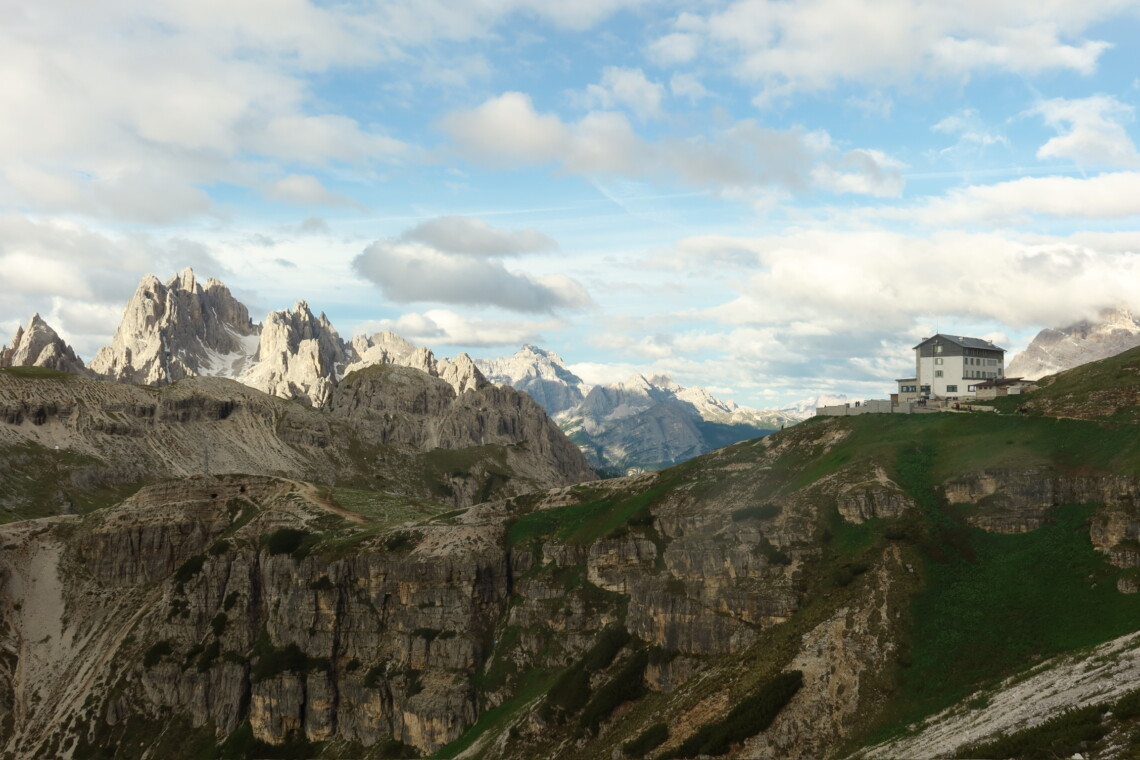
The Dolomites are a mountain range tucked into northeastern Italy, mostly spread across the regions of South Tyrol, Trentino, and the province of Belluno. They’re part of the larger Alps system, but their limestone mountains give them that distinct jagged, almost otherworldly silhouette, pale grey rock that turns pink and orange at sunset (a phenomenon locals call “enrosadira”). UNESCO designated them a World Heritage Site back in 2009, and honestly, one glance at Tre Cime or the Sexten Dolomites and you’ll understand exactly why.
This is not a destination I would recommend for just a short weekend (however, if you only have a few days, coming for a few days is still better than not seeing them at all). To really get a good feel for this region, I suggest coming for at least seven days and renting a car so you can have complete flexibility.
Where to Stay in the Dolomites: Eastern vs. Western
This was honestly the trickiest part of our planning, so let me save you some headaches. The Dolomites essentially break into two halves. If you have the time, I suggest staying in both the eastern and western parts so you can hit all the iconic highlights.
Western Dolomites: Val Gardena and Alpe di Siusi
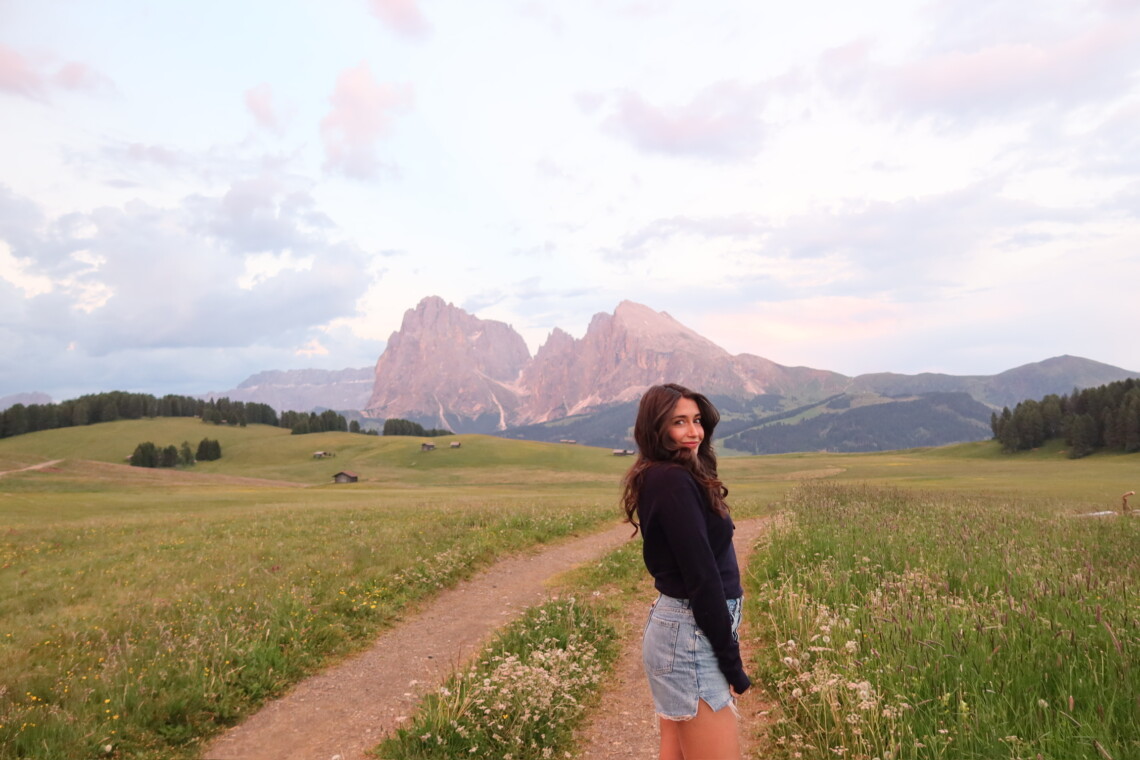
The western side is anchored by Val Gardena, home to the towns of Ortisei, Santa Cristina, and Selva. This area gives you direct access to Alpe di Siusi (also called Seiser Alm), which is the largest high-altitude alpine meadow in Europe, and trust me, this place should be among the top 3 attractions you see in the dolomites. While I didn’t get to actually stay in Alpe di Suisi (I chose to stay in mountain rifugios and Ortisei, but more on that later), I would have loved to spend at least a night here. Waking up surrounded by that meadow with zero crowds around is a completely different experience than visiting between 11 a.m. and 5 p.m. with everyone else.
This side also puts you close to Val di Funes (with that postcard view of the Geisler Alm peaks and the little San Giovanni church), Val Badia, Alta Badia, and the passes like Passo Gardena and Passo Sella.
Hotel Recommendations: Western Dolomites
- Garni Corturina: This is where we stayed and we had a lovely stay. What we loved about this hotel is that they offered a great breakfast and the rooms were very comfortable.
- Garni Cir: this hotel is located in Santa Cristina, a smaller, quieter town compared to Ortisei, and still close to everything.
- Hote Steger – Dellai: If you want a truly unique experience, I recommend staying in the heart of Alpi di Siusi at least for one night.
Eastern Dolomites: Cortina d’Ampezzo
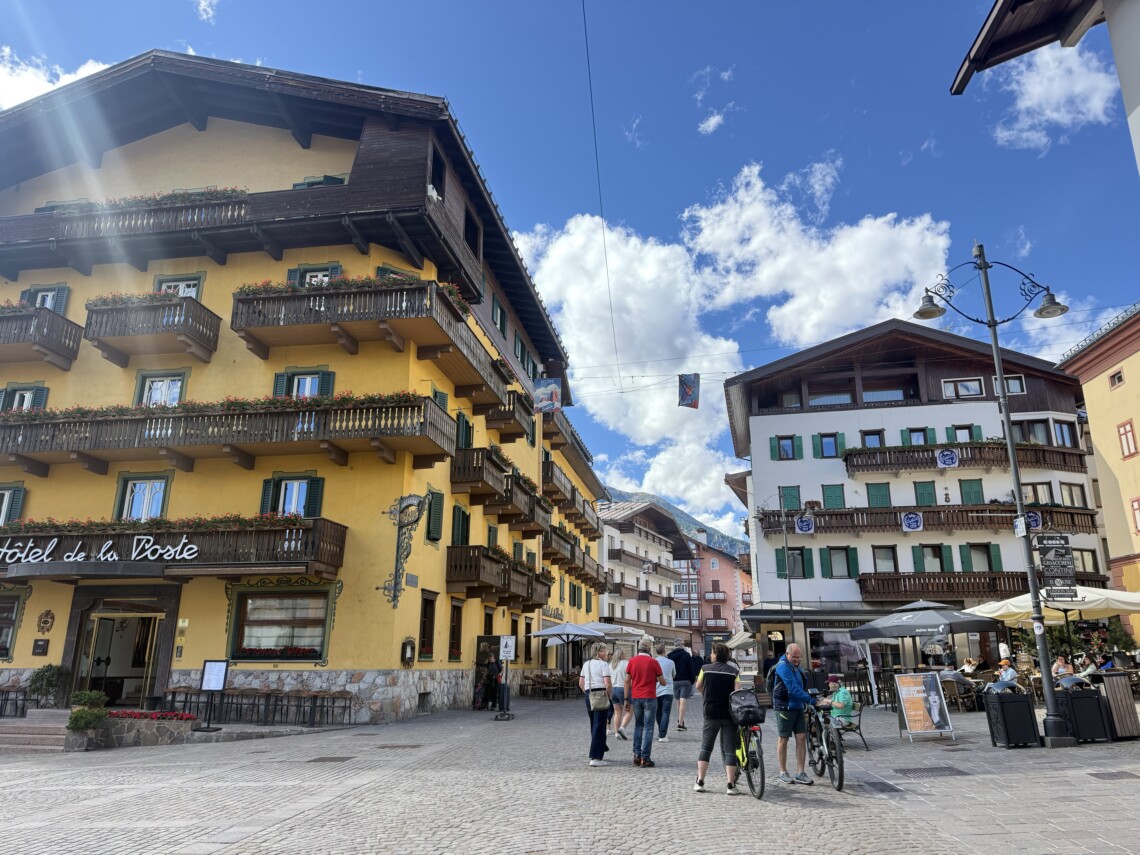
The eastern Dolomites revolve around Cortina d’Ampezzo, the glitzy mountain town that’s basically the Aspen of Italy. This is where I stayed and it was honestly the perfect home base for discovering this section of the Dolomites. From here, you’re a short drive from Tre Cime di Lavaredo, Lago di Sorapis, Cinque Torri, Passo Giau, Passo Falzarego, Lago di Misurina, and Lake Antorno. Cortina itself is also wonderfully walkable, with plenty of restaurants for refueling after a long day on a hiking trail.
Hotel Recommendations: Eastern Dolomites
- Hotel Oasi: A solid budget-friendly pick right on the outskirts of Cortina with easy parking and a great home base feel.
- Hotel de Len: If you’re looking for a luxury hotel in Cortina, this is an excellent spot. The hotel’s comfortable interiors and spacious rooms serve as the perfect refuge after a day of hiking.
- Rosapedra Spa Resort: If you’re after a more luxurious and relaxing stay, this hotel is the perfect choice. Located a few miles outside Cortina center, this is a great hotel if you’re after a spa-like experience with incredible nature views.
Where to Fly Into the Dolomites
Venice to the Dolomites: This is the move if you’re starting on the eastern side. It’s roughly a two-hour drive from Venice Marco Polo Airport to Cortina, and the drive itself is a gorgeous warm-up act, winding you up out of the flat Veneto plains and into the mountains.
Milan to the Dolomites: If you’re beginning on the western side, flying into Milan and driving toward Val Gardena or Bolzano makes more sense logistically, even though the drive runs a bit longer.
Either way, you’ll want a rental car. You’ll definitely want to do a Dolomites road trip here, public transport exists, but a car gives you the freedom to chase mountain passes and rifugios on your own schedule.
Italian Dolomites Travel Guide: My Exact 9 Day Dolomites Itinerary
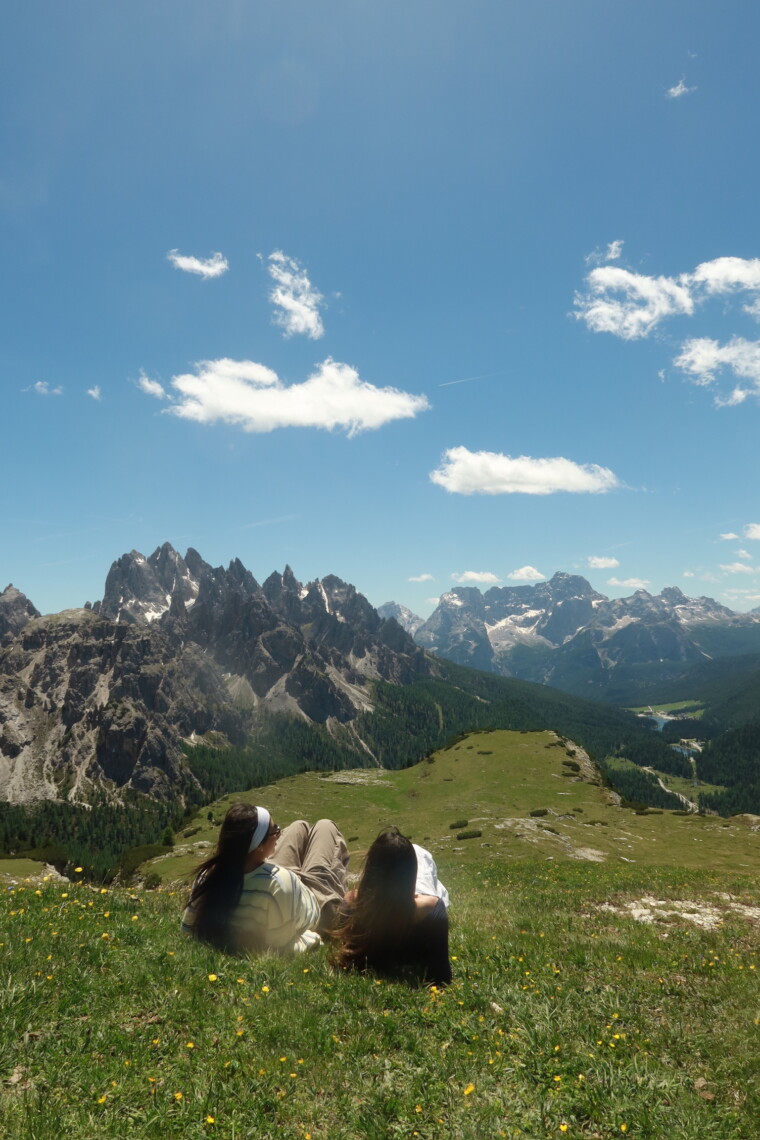
Okay, now I’m going to go into my exact dolomites itinerary which includes where I stayed, the hikes we did, and even a few notable restaurants we went to.
Day 1: Venice to Cortina
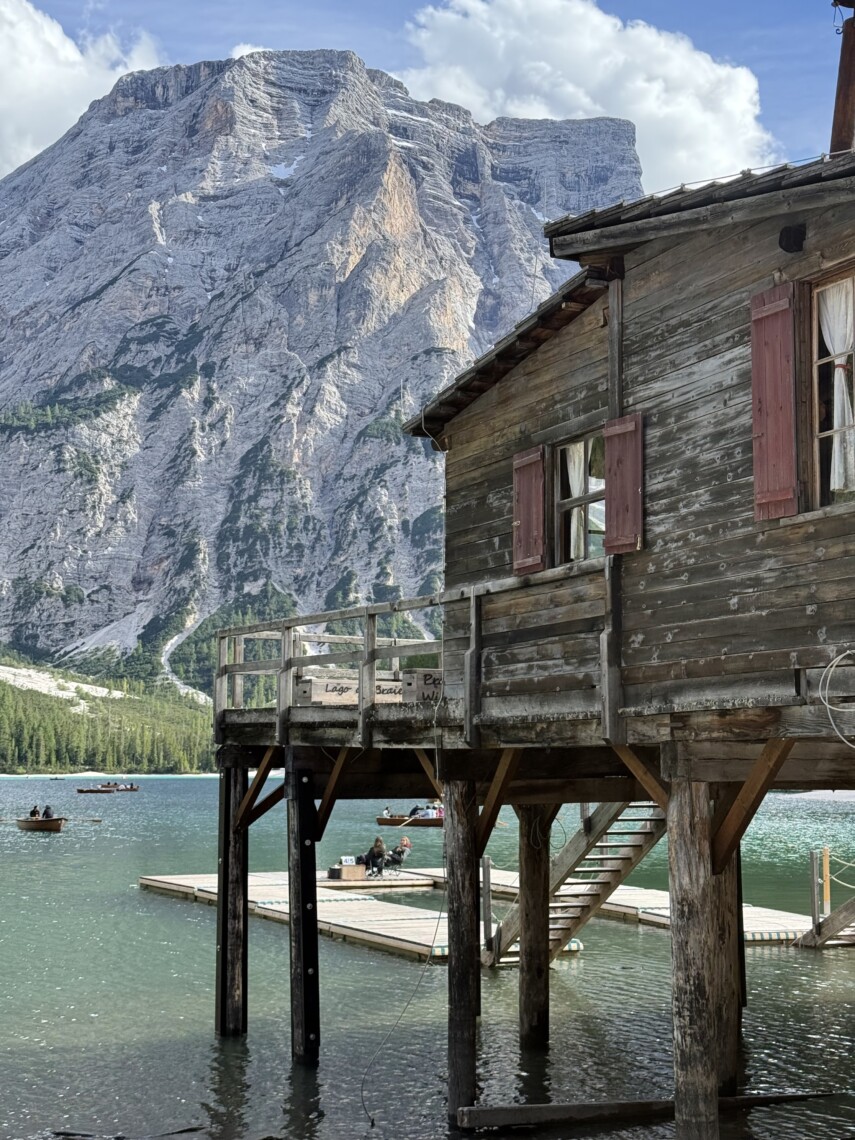
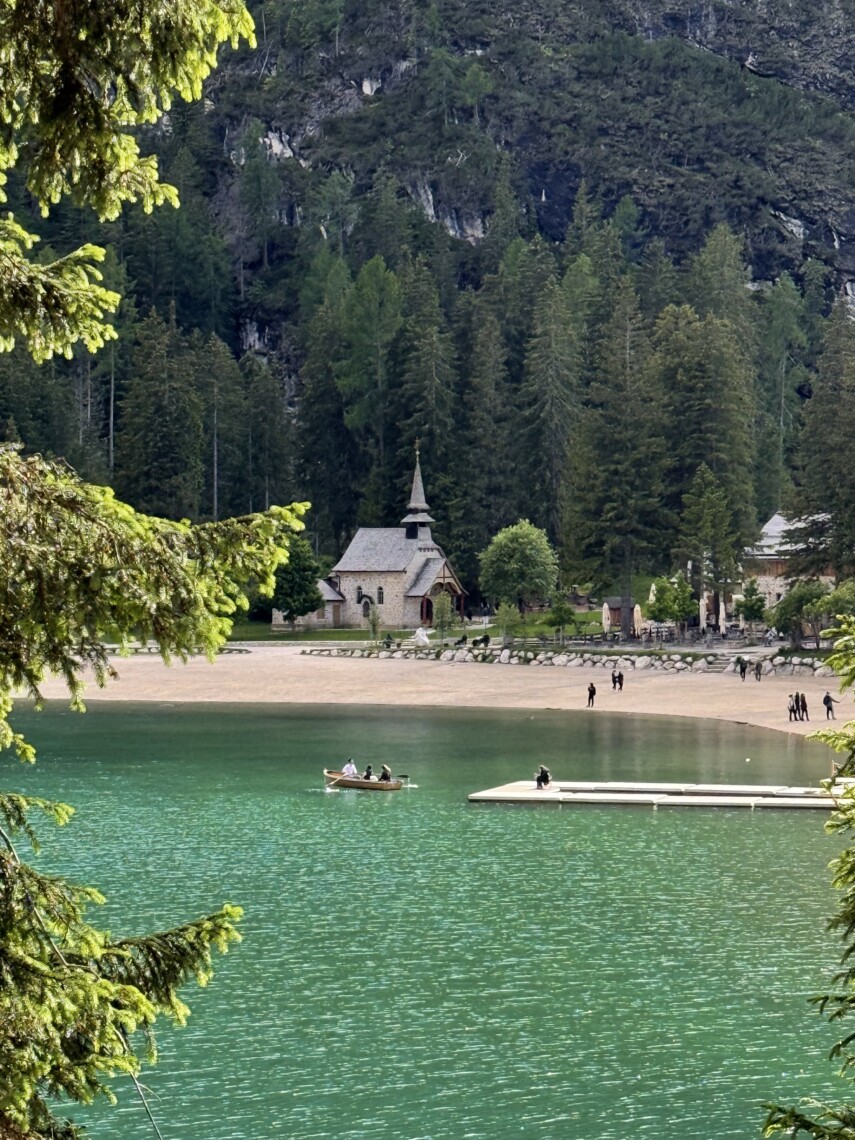
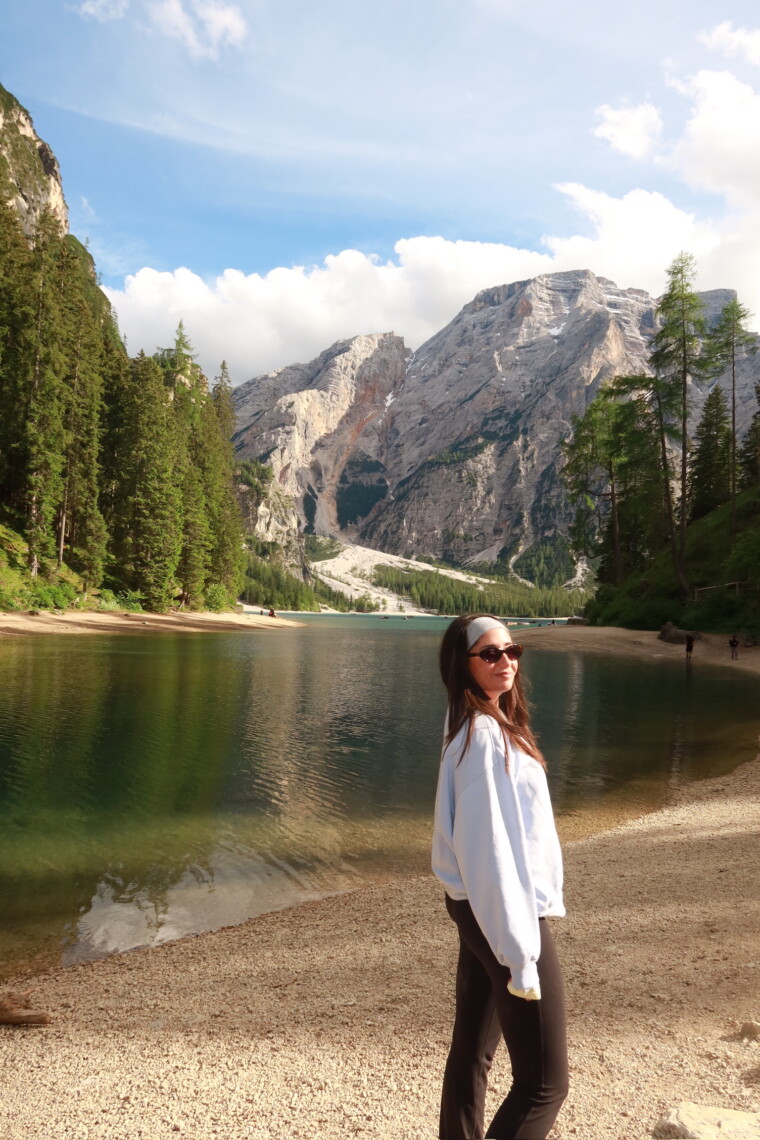
We landed in Venice in the morning, grabbed our rental car, and drove about two hours to Cortina. We checked into Hotel Oasi (great location on the edge of town) and had lunch at Il Vizietto Di Cortina. From there, we drove to Lago di Braies (Pragser Wildsee), arriving around 5 p.m., late enough to dodge the worst crowds but still plenty of light to soak in those impossibly turquoise waters. Definitely hike around the lake to gain a different perspective of the area. Dinner was at St. Pontejel Bierstube Forst, and was one of my favorite restaurants in Cortina.
Day 2: Lago di Sorapis
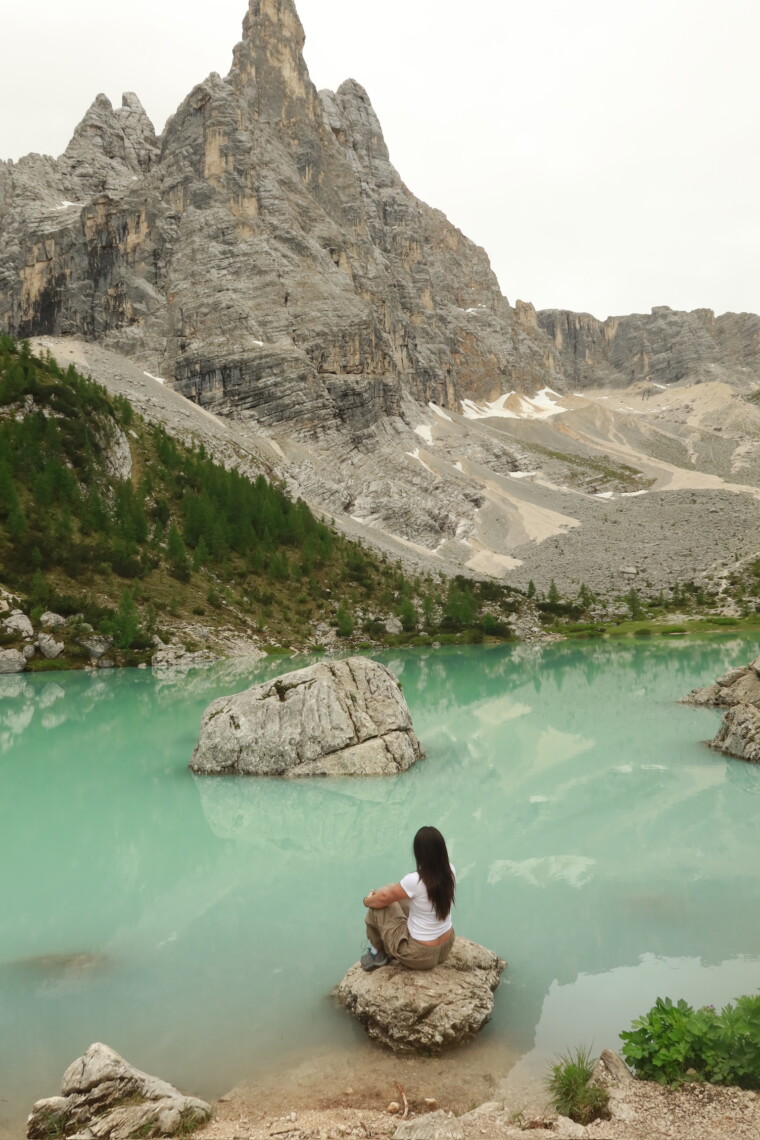
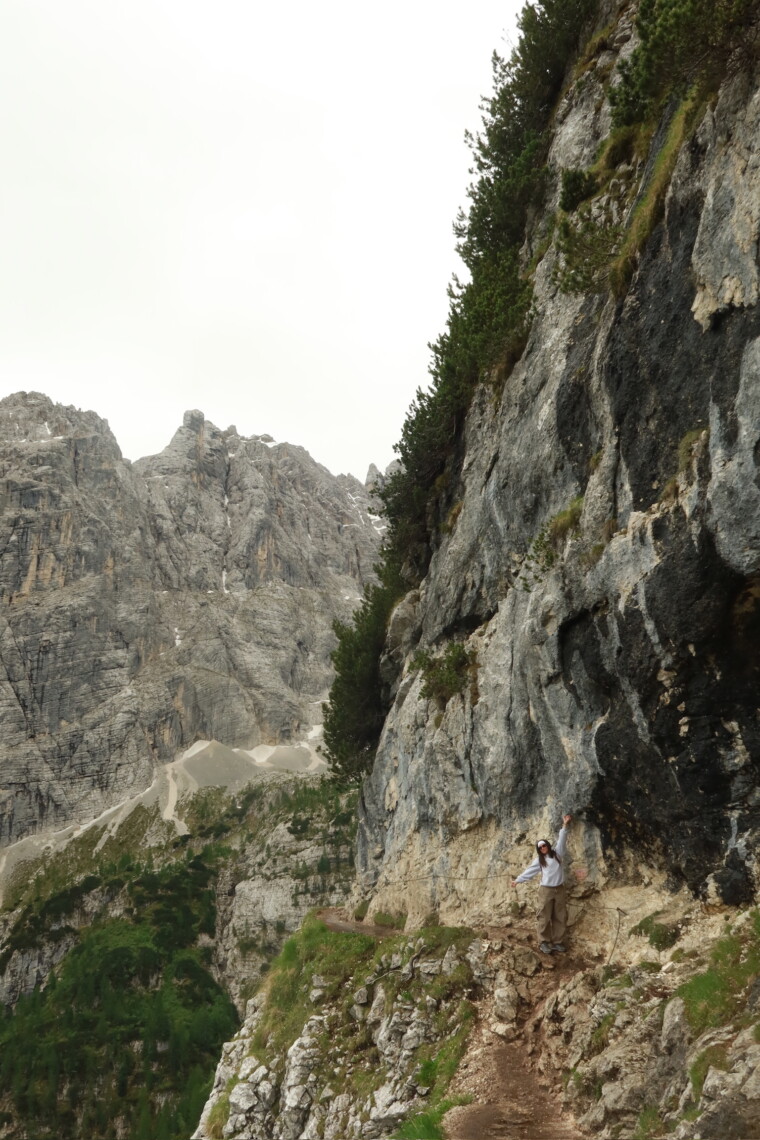
For Lago di Sorapis, you’ll definitely want to get here before 8 a.m. to find parking along the roadside near the trailhead. In all honesty, if you really want the trail to yourself, I would suggest getting here even earlier as this is one of the most popular Dolomites hiking trails in the entire region. The Lago di Sorapis hike rewards you with one of the most strikingly milky-blue lakes I’ve ever seen, and although it is known to be a little scary (lots of drop off cliffs and narrow trails), it is 100% worth it.
If you’re feeling ambitious, you can also squeeze in the Cinque Torri hike via chairlift. However, keep in mind that the last chairlift is at 5 p.m. We had to learn the hard way and arrived right at the cut off time. That night, we had an amazing pizza dinner at La Tavernetta di Cortina.
Day 3: Cadini di Misurina and Tre Cime di Lavaredo
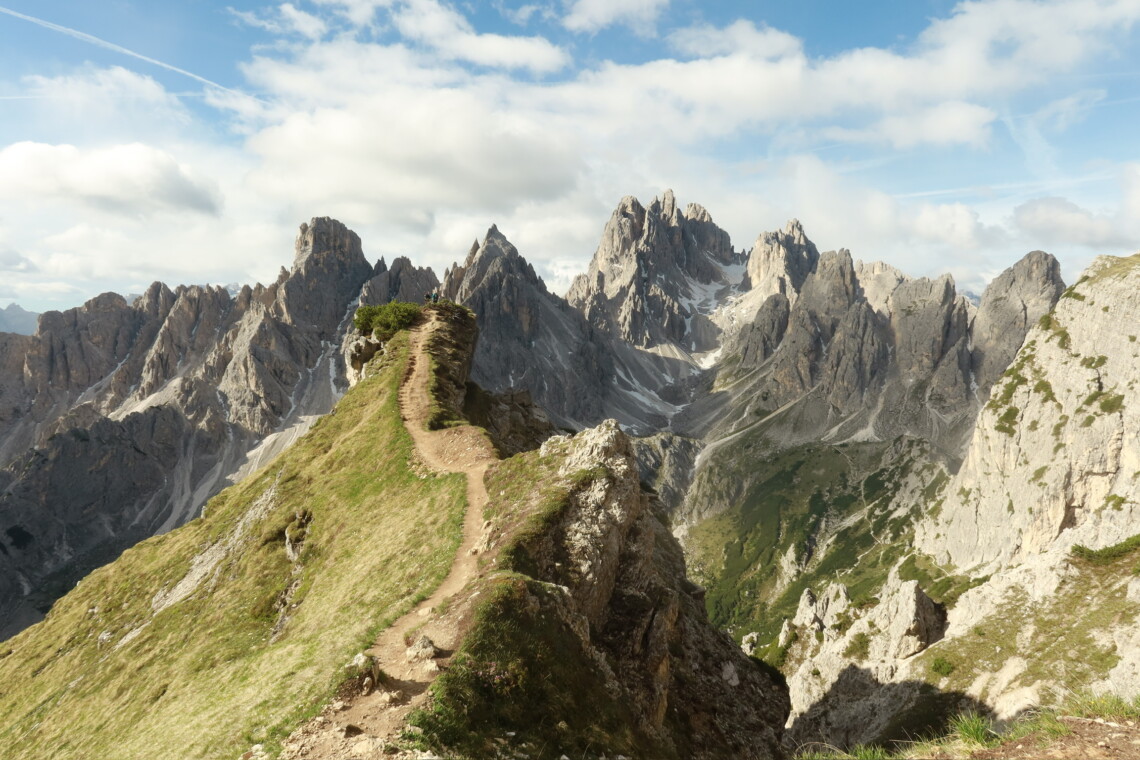
For me, this was probably my most favorite hiking day in the Dolomites. We were up early to hike to the Cadini di Misurina viewpoint, arriving around 7:30 a.m. Now these trails are properly the most popular hikes in the entire Dolomites, and you even have to reserve your parking ahead of time
Pro tip: bring real layers for this one, the wind up there does not play. Also, double check your trailhead. Cadini di Misurina and Tre Cime start in a similar general area but use different trailheads, and we wasted time figuring that out. Even arriving early, we waited about 40 minutes for the iconic shot; by the time others arrived around 9:30, the line had stretched past an hour and a half. Get there by 7:30 if you can.
From there, we grabbed a coffee at Rifugio Auronzo before tackling the Tre Cime di Lavaredo loop, a roughly 6.7-mile hiking trail that’s genuinely one of the most beautiful walks I’ve ever done. We stopped at a rifugio along the way for a quick beer, had lunch at Rifugio Ospitale (the mushroom pasta, unreal), and finished the evening with dinner at a spot called Dolomeats back in town.
Quick note: as of recent seasons, Rifugio Auronzo parking requires an advance online reservation through the official Auronzo municipality booking portal, there’s no driving up and hoping for the best anymore. Book ahead, and budget roughly €45 for the day.
Day 4: Into the Western Dolomites
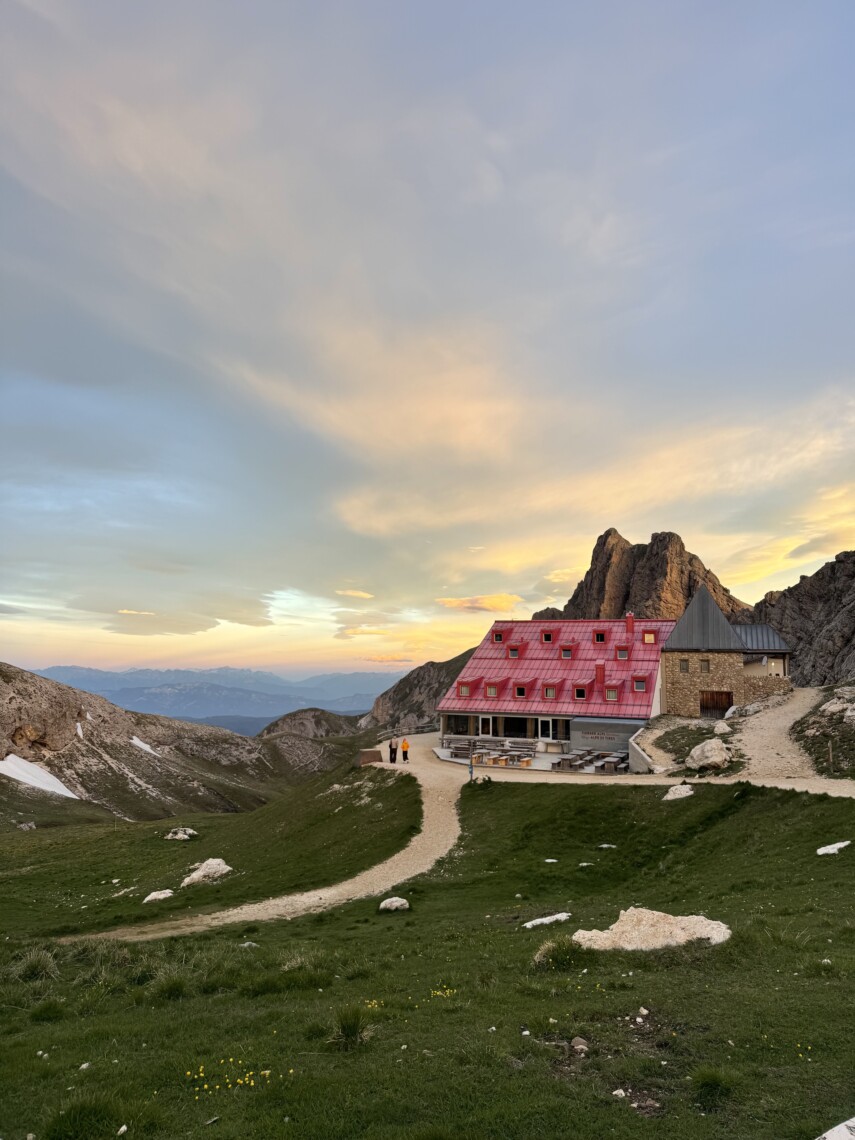
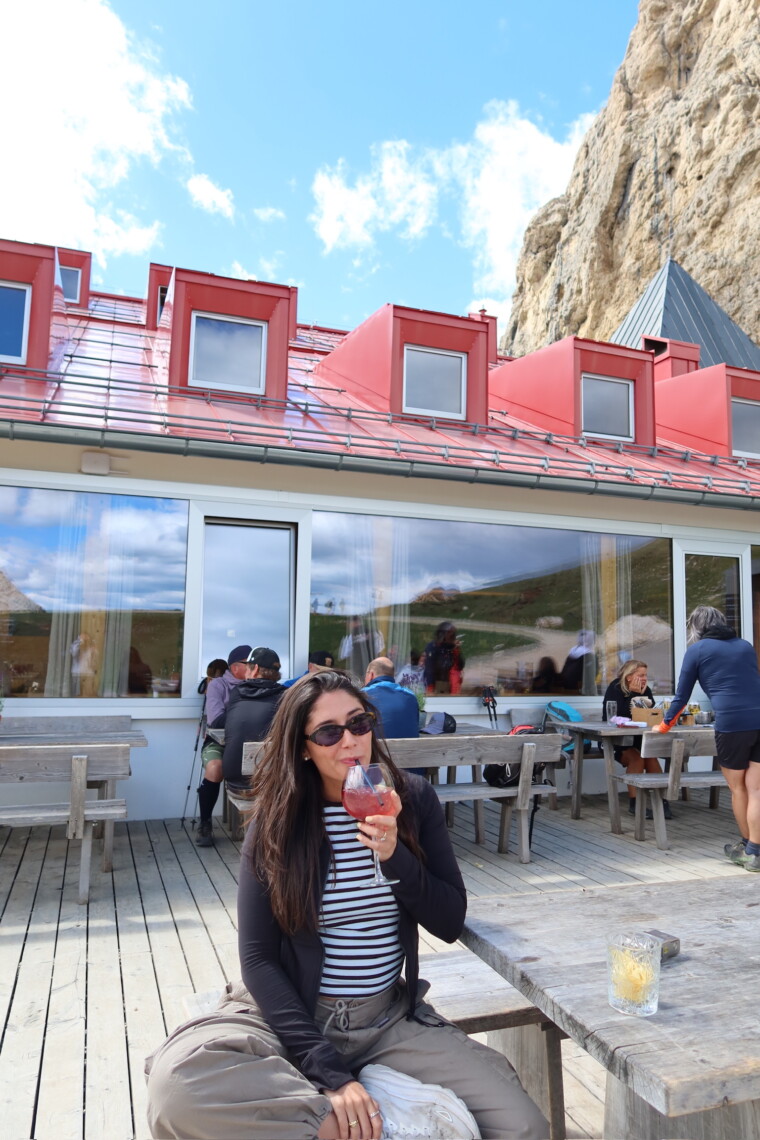
We drove to Seiser Alm (Alpe di Siusi), arrived around 8:30 a.m., and parked in the P2 lot (around €8/day, fine for an overnight stay). Cable car tickets to Compatsch ran about €30 each, with the gondola running 8 a.m. to 7 p.m. From there, we hiked roughly six miles to Rifugio Alpe di Tires, pastures and easy walking for the first half, then a much steeper, switch-back-heavy second half. We checked in around 1 p.m., tried the local Tyrolean dumplings, and spent the rest of the afternoon outside with a raspberry-ginger spritz, taking in the view.
Quick note: you don’t have to stay in mountain rifugios when visiting the Dolomites, but for me, it was the best part of the trip. Reserving a bed means booking months in advance, and coordinating your hiking trails around those stays takes a bit more effort, but waking up each morning in the heart of the mountains made it more than worth it. If you plan on getting a taste of hut-to-hut hiking in the Dolomites, definitely do your research on the rifugios as each one has a different personality and draw (we absolutely loved Rifugio Alpe di Tires, while Rifugio Bolzano was a more rustic experience.)
Day 5: Rifugio Bolzano
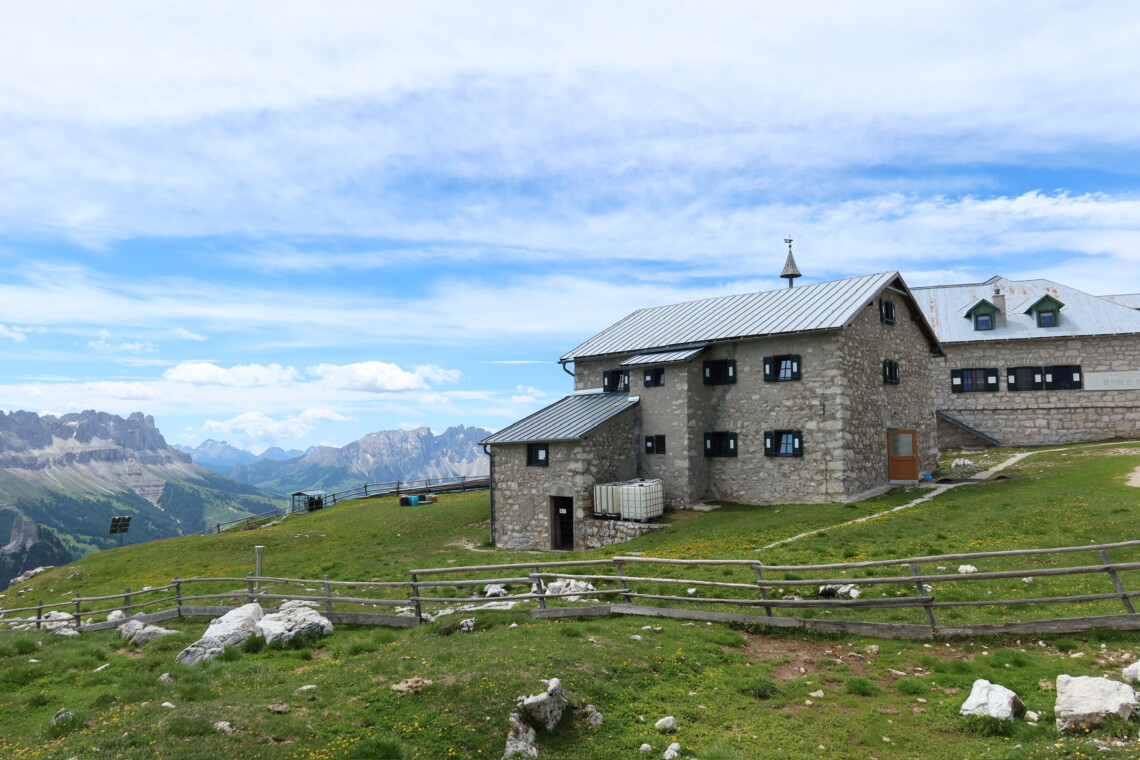
After breakfast at Rifugio Alpe di Tires, we hiked about two easy, mostly flat hours to Rifugio Bolzano. We dropped our bags and then hiked another 1.5 hours straight down to Baita Saltner Hütte for lunch (then, of course, the same hike straight back up). While we loved our experience staying at huts, if I had more time, I would have loved to stay one extra night to try another rifugio in the area.
Day 6: Compatsch to Ortisei
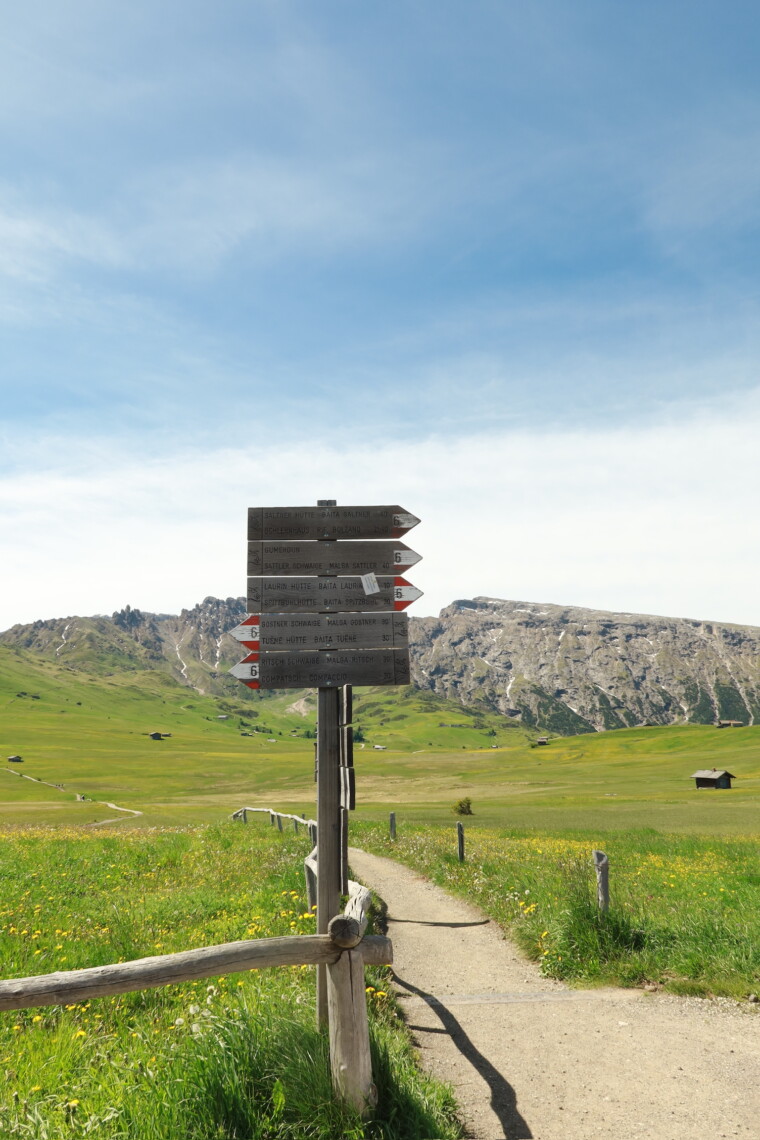
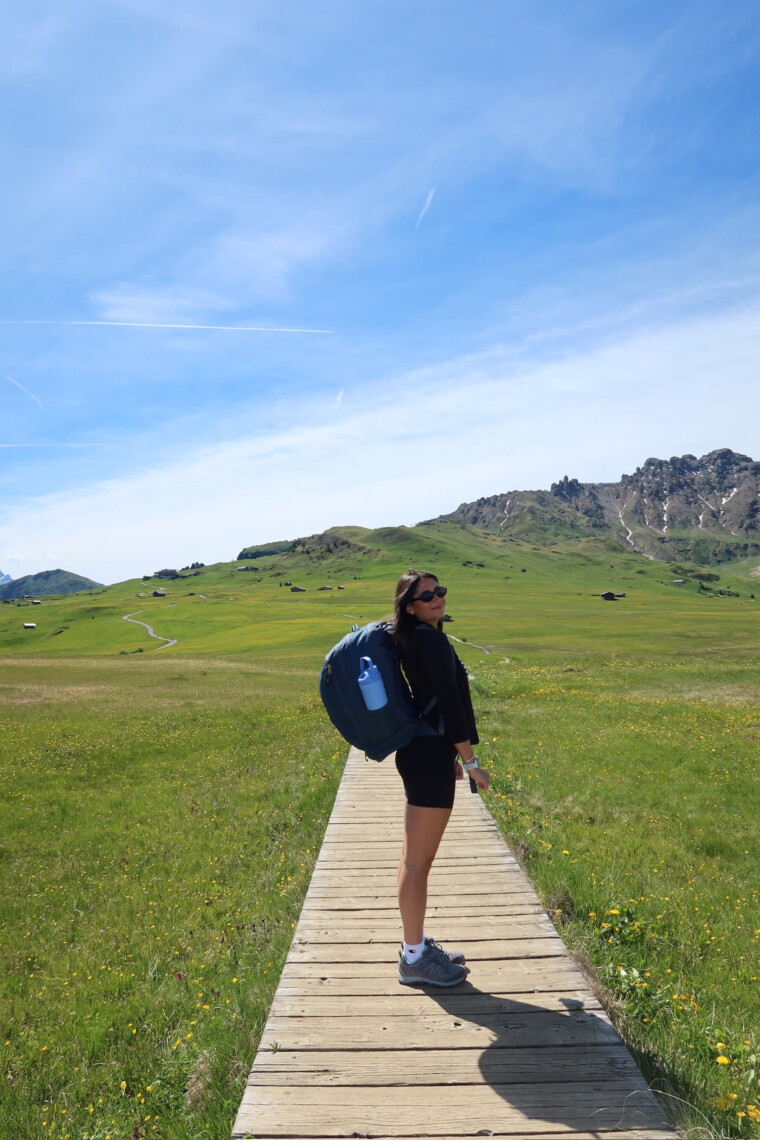
We descended back toward Compatsch, where the cable car runs, enjoying a genuinely lovely walk down. We rented e-bikes from Sport Hans and rode around Alpe di Siusi, stopping for homemade ravioli at Saltner Schwaige, some of the best we had on the whole trip. From there, we drove down to Garni Corturina in Ortisei for the next few nights, then had dinner in nearby Santa Cristina, which I’d recommend as a quieter alternative base.
Day 7: Val di Funes
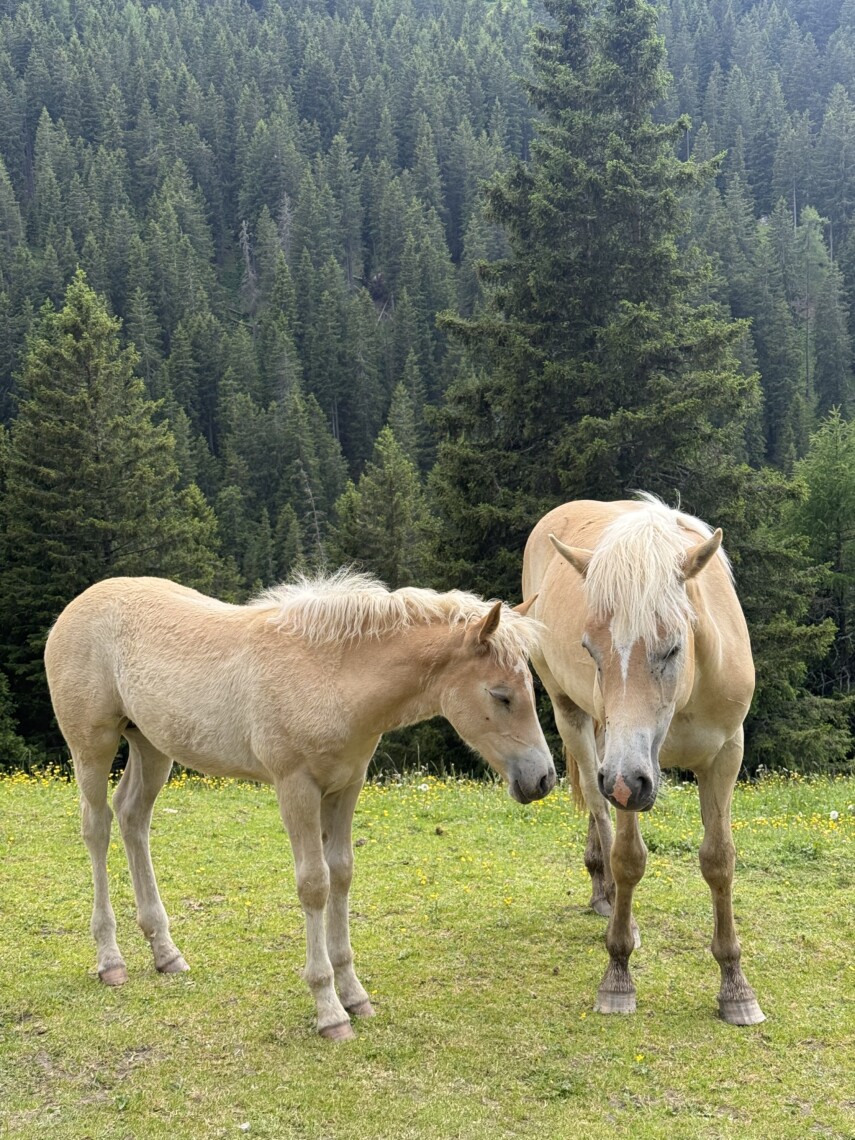
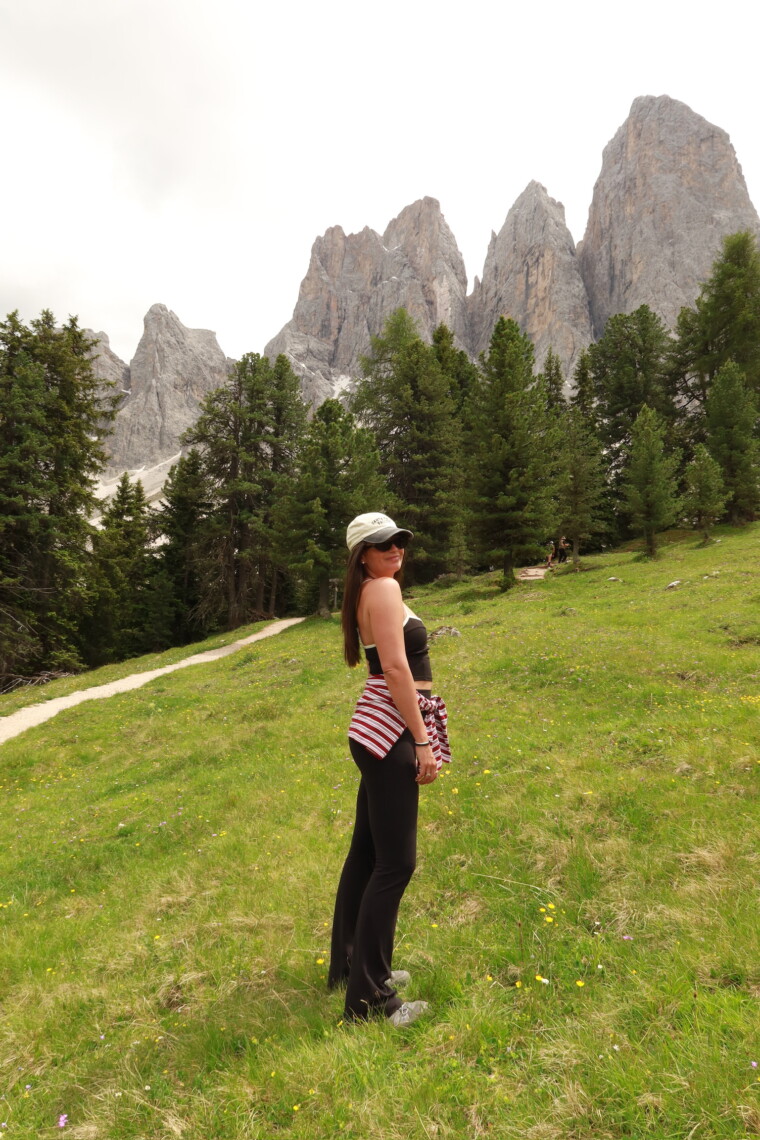
We hiked the Adolf Munkel Trail beneath the Geisler Alm peaks, about 8.5 miles total, with horses grazing along the trail and a rifugio lunch stop. One of the best things about this area is how many connecting trails branch off, so you can build your own loop depending on your energy levels.
Day 8: Passo Sella and Rifugio Friedrich August
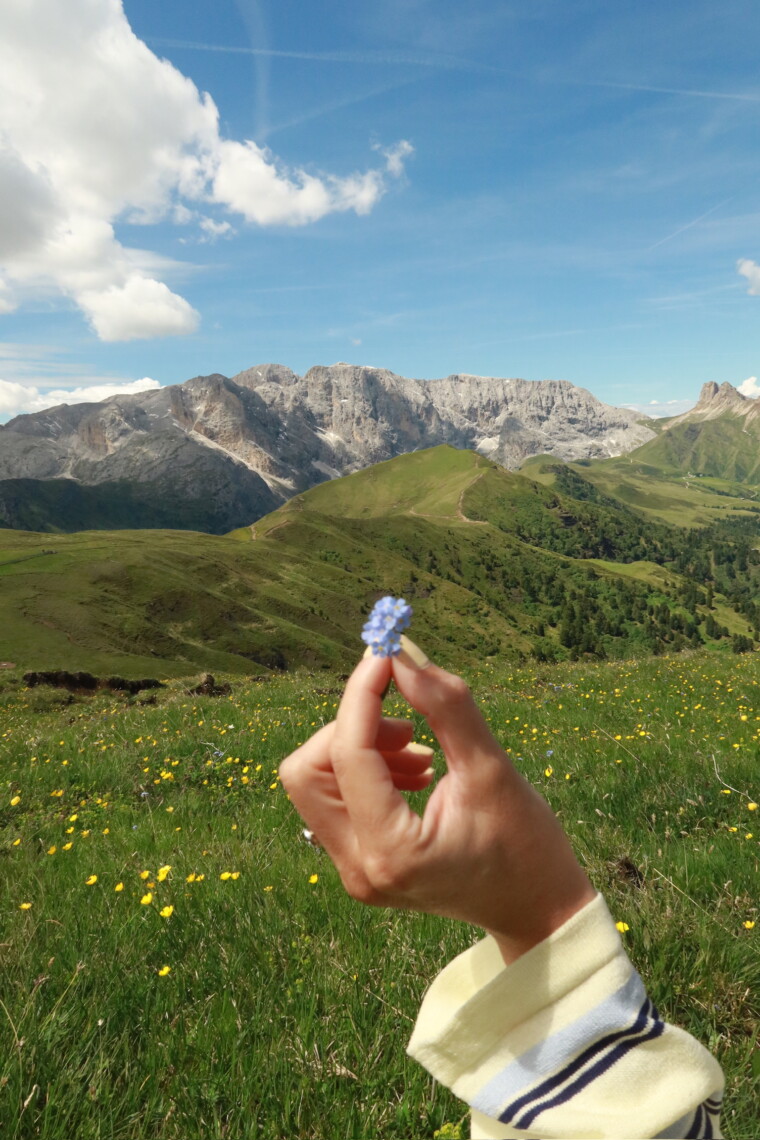
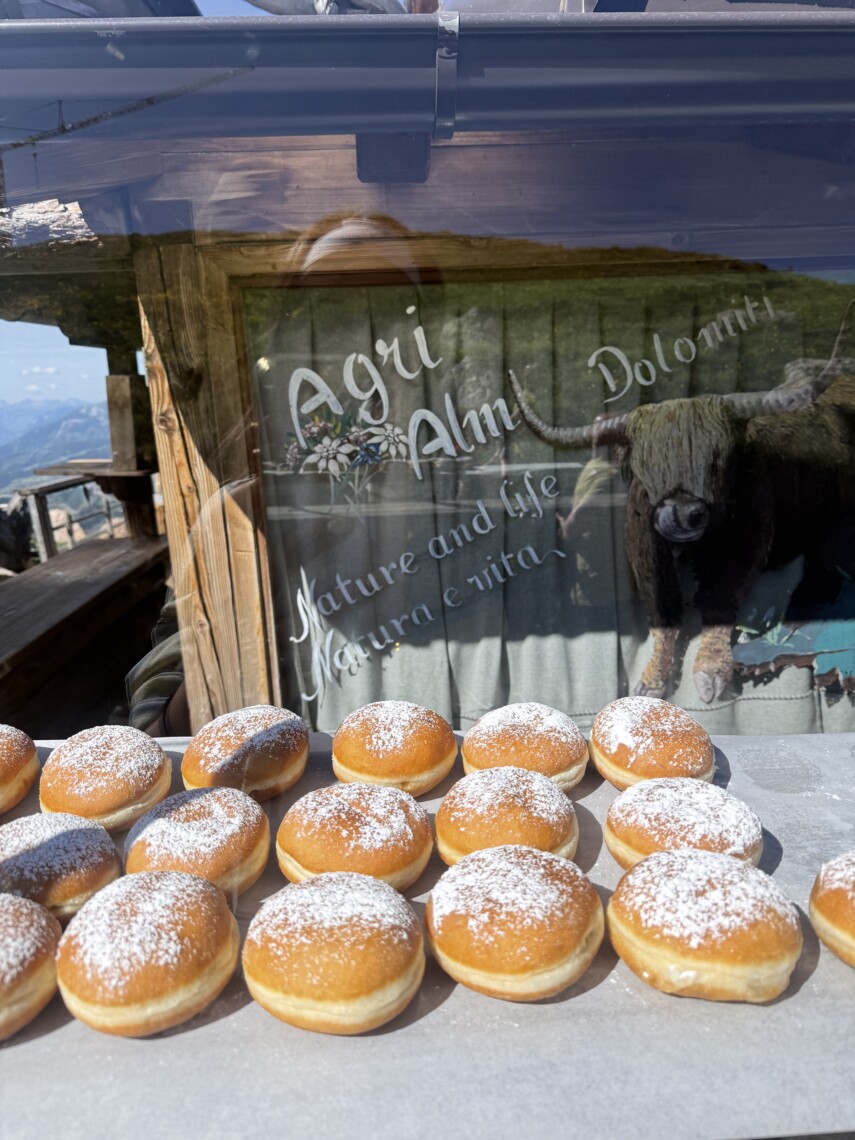
This day had a very specific mission: donuts. Rifugio Friedrich August, near Passo Sella, is famous for serving fresh donuts in the morning, but only until they run out, get there before 9 a.m. if you want to try these viral treats! We parked around 8:40, hiked in, and made it to the donuts by 9:10. We continued hiking, had lunch at Rifugio Sasso Piatto, which made for a full day of hiking. That night, we went to dinner at a beautifully hidden restaurant tucked into the courtyard overlooking a church called Restaurant Turmwirt before heading back to Alpe di Siusi at dusk (it opens to cars in the evening) for one last unforgettable sunset.
Day 9: Seceda
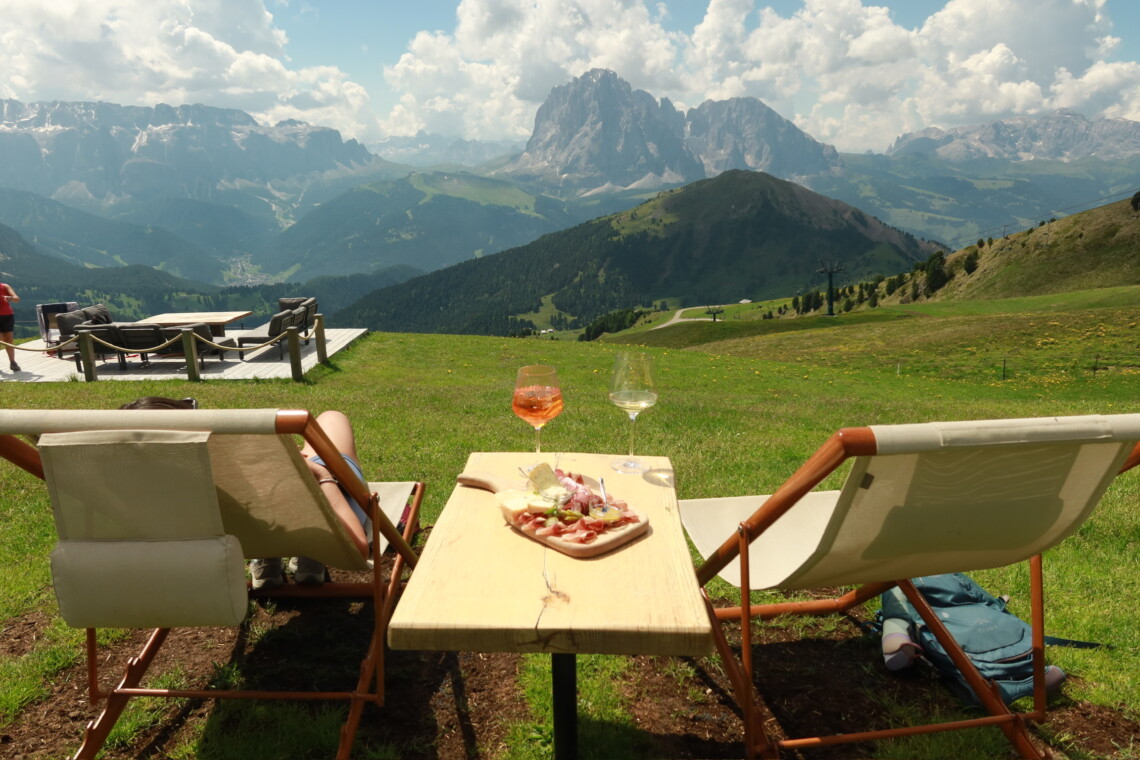
For our last full day, we took the Seceda cable car up at around 9 a.m. Just like other popular areas in the Dolomites, you can book the cable car in advance, which I highly suggest you do especially if you’re coming in high season. We wandered the ridgeline, taking in some of the best mountain views of the entire trip, then walked the entire way back down to our car instead of taking the lift. During our hike, we stopped by a few different rifugios for drinks and lunch. I highly recommend coming to Seceda early as this was by far the most crowded area we hiked in during our entire trip to the Dolomites. Dinner that night was at Ristorante Sotriffer & Wine Bar in Ortisei, which was the perfect close to nine days in the Dolomites.
Dolomites, Italy Itinerary: Frequently Asked Questions
Do I need 9 days for the Dolomites, or can I do it in 7?
Nine days lets you properly cover both the eastern Dolomites and the western Dolomites without rushing, and also spend two nights in rifugios which is an incredible experience. A 7 day Dolomites itinerary works too, just plan to cut one or two rifugio overnights and focus on day hikes instead.
Do I need to book Tre Cime di Lavaredo parking in advance?
Yes, absolutely. Rifugio Auronzo parking now requires an online reservation through the official municipal booking system, and spots can sell out, especially in peak summer.
What’s the best time of year to visit the Dolomites?
Late June through September is your safest bet for open mountain passes, accessible rifugios, and reliably hikeable trails. Many high-altitude routes and toll roads only open from late May through October. We came the second week in June and got lucky with incredible weather and very few crowds.
Is a car necessary for a Dolomites road trip?
For this kind of itinerary, yes. You’ll want the flexibility to drive between Passo Gardena, Passo Falzarego, Passo Giau, and the various valley towns on your own schedule.
Which side is better: Cortina or Val Gardena?
Honestly, neither is “better”, they’re just different. Cortina and the eastern Dolomites give you Tre Cime, Sorapis, and Cinque Torri. Val Gardena and the western Dolomites give you Alpe di Siusi, Val di Funes, and Seceda. A 7 to 9 day Dolomites itinerary lets you experience both.
Final Thoughts on Traveling to the Dolomites
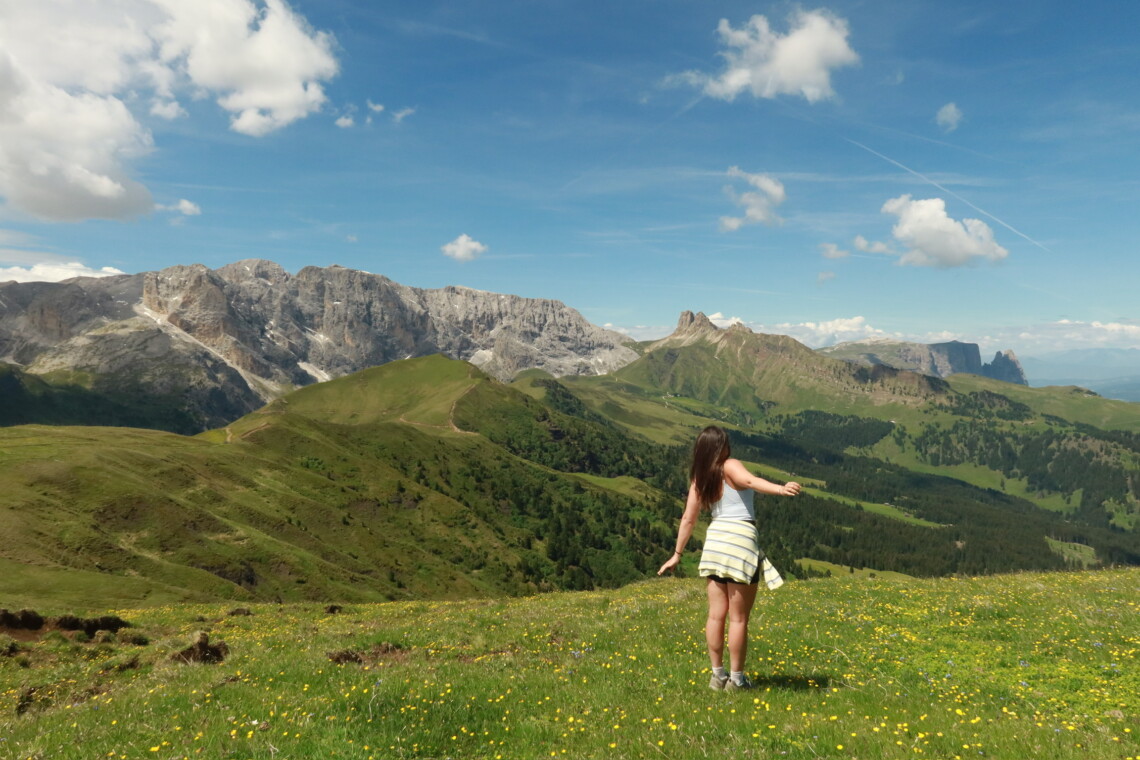
Nine days gave us enough time to genuinely settle into the South Tyrol region, rather than just check boxes off a list. If I had one piece of advice, it would be to plan ahead wherever you can. Book your Tre Cime parking, reserve your rifugio beds, and pack for changing weather, since conditions can shift quickly even in the middle of summer.
Beyond the logistics, this is a trip that rewards slowing down. Some of our best moments weren’t the iconic viewpoints, but the quieter stretches in between: a spritz on a rifugio terrace, a slow descent through a valley we weren’t in a rush to leave. Whether you’re working with seven days or nine, I’d encourage you to build in some room for those slower moments.
Planning a Dolomites trip? Here are a few more guides to help you plan:
- The Best Things to Do in the Dolomites: Hikes, Drives, & Towns
- Lago di Sorapis: The Complete Guide to Hiking This Famous Dolomites Trail
- Tre Cime di Lavaredo Hike: The Complete Guide (2026)
- Where to Stay in the Dolomites: The Best Hotels for Every Budget
- Best Time to Visit the Dolomites: A Season-by-Season Guide
- Dolomites Hiking Guide: Best Hikes in the Dolomites
- My Complete 9 Day Dolomites Itinerary: Hikes, Rifugios, and Where to Stay
- Dolomites Hiking Guide: Best Hikes in the Dolomites
- Everything You Need to Know About the Cadini di Misurina Hike in the Dolomites
- The Ultimate Dolomites Packing List for Summer
- Cortina d’Ampezzo Travel Guide 2026: Hotels, Hiking & How to Get There

No Comments