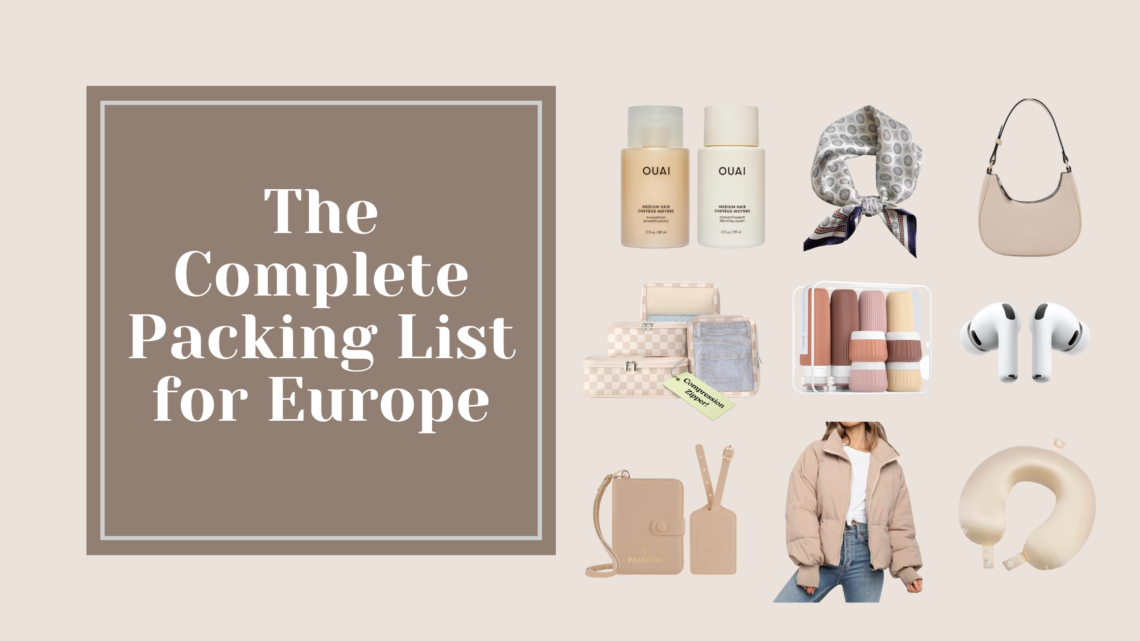
Packing for Europe sounds romantic until you’re knee-deep in clothes, staring at your suitcase, wondering how this all spiraled so quickly. Europe isn’t just one destination, and that’s where most packing lists fall short. A single Europe trip can mean beaches, museums, rain, sun, cobblestone streets, early trains, late dinners, and a lot of walking in between.
This packing list for Europe is written specifically for women who want to travel comfortably, look put together, and avoid hauling unnecessary weight from city to city. It’s not about packing everything. It’s about packing smart. Whether you’re planning a short summer trip, a European winter travel adventure, or even long term travel, this Europe trip packing list focuses on intention, flexibility, and ease.
Not sure what to pack for Europe? Here’s exactly what you need.
This post contains affiliate links. I may earn a commission at no extra cost to you.
Key Takeaways
- What to pack for a Europe trip comes down to versatility: a capsule wardrobe of neutral, mix-and-match clothes, one pair of comfortable walking shoes, and packing cubes to keep it all organized
- Choose a travel backpack or medium luggage plus one well-organized personal item, Europe’s cobblestone streets and narrow train platforms punish overpacking
- Adjust your europe packing list by region and season: Southern Europe summers call for breathable layers, while Northern and Central Europe often need a real winter packing list
- Don’t skip the unglamorous essentials, travel documents, travel insurance, and a small aid kit matter as much as clothes
1. Luggage and Travel Backpacks: Choose What Moves as Easily as You Do
The first decision you make affects every single travel day that follows. Your luggage should support movement, not slow you down.
For most women, a medium-sized suitcase paired with a well-organized personal item is the sweet spot. Europe has narrow staircases, train platforms without elevators, and sidewalks that were never designed for oversized bags. A suitcase you can lift, roll, and maneuver easily will save time and energy throughout your trip.
Your personal item matters just as much. This is where you’ll keep documents, long-haul flight essentials, and anything you need quick access to during a long flight or train ride. Think practical, not oversized.
- AWAY Checked In Bag: This suitcase is one of my favorites as its durable and has all the accessories you need.
- Beis Mini Weekender: This is one of my favorite personal item bag. It looks beautiful and is super practical.
- Tote Bag: I love traveling with a tote bag that can be easily packed while still being able to hold all of my essentials.
Shop my collection of recommended suitcases and duffle bags here
2. Packing Cubes: Fewer Items, Better Control
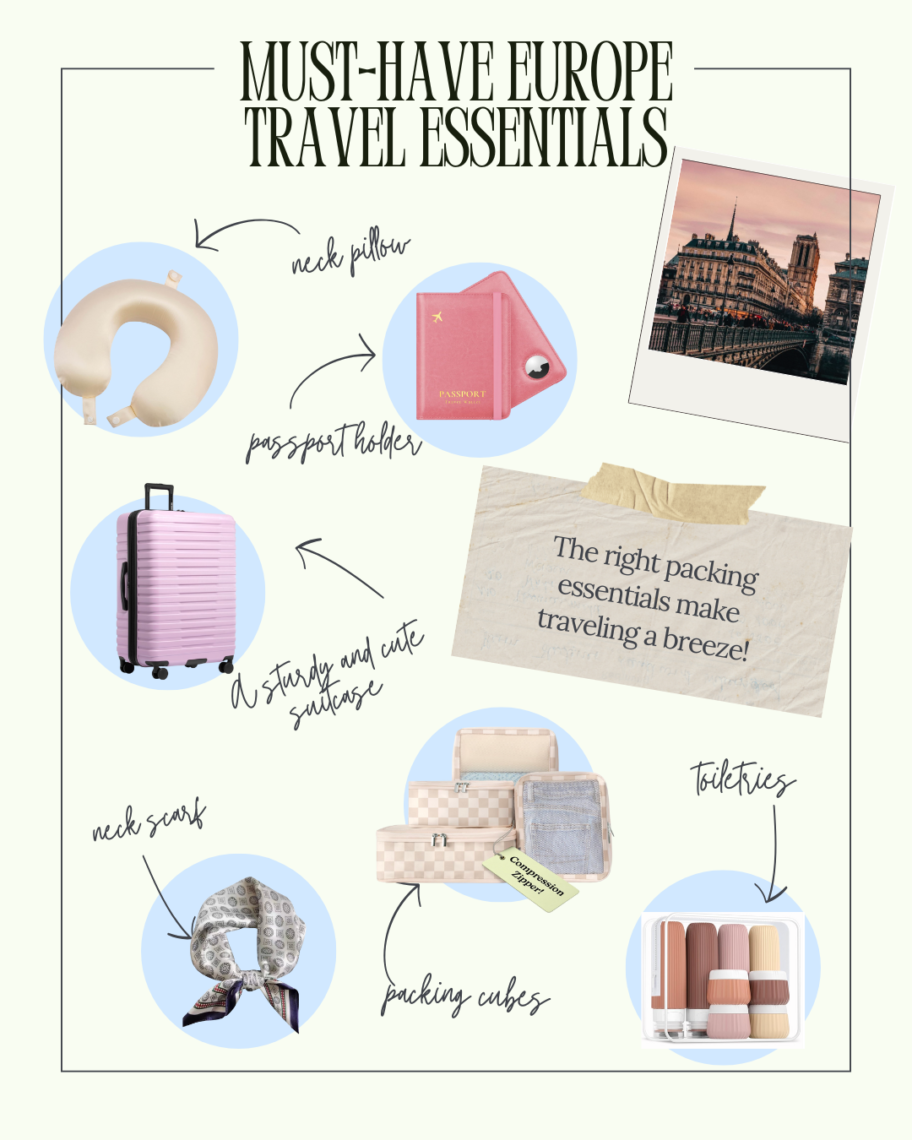
If you’ve never used compression cubes or packing cubes, Europe is the trip that will convert you. They’re not about aesthetics; they’re about control. When your itinerary includes multiple cities, unpacking and repacking quickly becomes part of daily life.
Using one packing cube for tops, another for bottoms like jeans and shorts, and a smaller one for underwear keeps your suitcase organized without constant digging. It was honestly one of my favorite hacks when I was studying in Barcelona and needed a way to organize my study abroad essentials. Compression packing cubes are especially helpful if you’re trying to pack light or planning a longer stay. They reduce bulk while keeping clothes wearable and accessible.
This is one of those simple packing tips that makes your entire Europe trip packing experience smoother.
3. Clothes to Pack for Europe: Build a Capsule Wardrobe
Europe doesn’t reward overpacking. What it does reward is thoughtful outfits that can handle walking, weather changes, and long days.
Instead of packing by “occasion,” pack by compatibility. Choose clothes that work together effortlessly. A neutral color palette allows you to repeat pieces without repeating outfits. Comfortable fabrics matter more than trends, especially when you’re spending hours exploring a European city.
Your clothing selection should feel versatile enough to handle museums, cafés, and evenings out without needing multiple wardrobe changes. The goal is confidence and comfort, not excess. This approach turns your packing list into something functional instead of overwhelming.
4. Shoes to Pack for Europe: Comfortable Walking Shoes Are Non-Negotiable
No Europe packing list is complete without addressing shoes honestly. You will walk more than you expect. And then you’ll walk more.
A single pair of comfortable walking shoes that you trust is essential. These should already be broken in before you leave. European sidewalks, especially cobblestone streets, are unforgiving, and sore feet can derail an otherwise perfect day.
You can add a lighter shoe for warm weather or evenings, but shoes should earn their place in your suitcase. Style matters, but comfort matters more.
My favorite shoe styles for European travel:
- Havaianas sandals
- Versatile white sneakers
- Comfortable heeled sandals (I love these fun cheetah print ones)
- Ankle booties for winter
5. Toiletry Bag Essentials for European Travel
Your toiletry bag should support your routine, not recreate it. Europe has excellent pharmacies, so you don’t need backups for backups.
Bring the essentials you use daily, ideally in travel-sized containers. Focus on travel skincare, hair care, and medications you rely on. Everything else can be replaced along the way if needed. Keeping this category streamlined frees up space for clothes and souvenirs.
My essential toiletries for traveling to Europe:
6. Travel Essentials and Accessories That Make Every Travel Day Easier
Some items don’t look important until you need them, and then they feel essential.
A travel pillow makes overnight flights and long train rides significantly more comfortable, while also helping you avoid jet lag. A reusable water bottle keeps you hydrated without constantly buying plastic. A universal adapter ensures you can charge devices no matter which European country you’re in.
These are the carry-on travel essentials that quietly improve your experience day after day.
My go-to travel essentials and electronics for Europe:
- Travel pillow
- Reusable waterbottle
- Universal adaptor
- Apple air tags
- Kindle
- Apple airpods
- Airplane bluetooth adaptor for headphones
- Mini travel speaker
7. Travel Documents, Travel Insurance, and Important Documents to Bring
This section may not be glamorous, but it’s critical.
Your passport, copies of personal information, at least one reliable credit card, and proof of travel insurance should always be accessible. Whether you’re crossing borders or simply checking into accommodations, having these items organized reduces stress.
Keep a digital copy of your travel itinerary stored offline. When Wi-Fi fails, preparation shines.
8. Europe Packing List by Season: Southern, Northern, Central, Eastern & Western Europe
Europe’s climate varies wildly, so your Europe trip packing list should adapt to when and where you’re traveling.
Spring brings unpredictable weather, which means layering is key. Light sweaters and flexible outfits work best.
A summer trip through Southern Europe calls for breathable clothes, sleeveless options, and sun protection. Coastal destinations like Cinque Terre reward light fabrics and practical footwear.
Fall introduces cooler mornings and warmer afternoons, making layers essential again. Scarves become especially useful.
Winter travel requires a thoughtful winter packing list. Thermal layers, insulated outerwear, waterproof shoes, and cold-weather accessories are essential in northern Europe and much of central Europe. Staying warm without overpacking is all about layering.
My favorite essentials for winter and summer travel in Europe:
9. Packing for Long Term Travel: Laundry, Repeats, and Packing Light
When your trip lasts weeks instead of days, your mindset has to shift.
Successful long term travel in Europe relies on repeating outfits, doing laundry, and resisting the urge to pack for every scenario. You’ll adapt quickly, and Europe makes it easy to buy what you need locally.
This is where the difference between a stressful trip and a smooth one really shows. As long as you pack a versatile mix of clothes that can easily be paired with different pieces, you’ll have no issues having different combos to wear.
FAQs About What to Pack for Europe
How many outfits should I pack for a Europe trip?
For most trips, 4-5 tops, 2-3 bottoms, and one dress or jumpsuit is enough if you stick to a capsule wardrobe of neutral, mix-and-match pieces. You can repeat outfits and do laundry along the way, especially on longer trips.
What shoes should I bring for a European city?
One pair of broken-in, comfortable walking shoes is the priority. Cobblestone streets and long travel days add up fast, so comfort should come before style. A lighter second pair for evenings is optional.
How many packing cubes do I need for Europe?
Three is usually enough: one for tops, one for bottoms, and one smaller cube for underwear and socks. Packing cubes make the biggest difference on multi-city trips where you’re repacking often.
What should I pack differently for Southern vs. Northern Europe?
If you’re planning a European beach destination trip, you’ll want to pack breathable fabrics, sandals, and sun protection. Northern and Central Europe, especially outside summer, need real layering, think a trench coat, thermal layers, and waterproof shoes for cooler evenings.
Do I need travel insurance for a trip to Europe?
It’s strongly recommended, especially for longer or multi-country trips. Travel insurance covers you for medical issues, cancellations, and lost luggage, and it’s worth comparing a few providers before you book.
What important documents should I bring on a European trip?
Your passport, printed and digital copies of your ID and itinerary, at least one reliable credit card, and proof of travel insurance. Keep a digital copy of everything stored offline in case you lose access to Wi-Fi.
Is a travel adapter necessary for European travel?
Yes, most of Europe uses a different plug type and voltage than the US, so a universal travel adapter is an essential travel accessory unless every device you’re bringing is already dual-voltage.
What should I leave at home when packing for Europe?
Backup toiletries, “just in case” outfits, and anything you’re only bringing for a single occasion. Most European countries have excellent pharmacies and shops, so it’s easy to buy what you need once you’re there instead of overpacking.
Final Thoughts: Your Ultimate Packing List for Europe
At the end of the day, packing for Europe doesn’t have to feel like a puzzle you can’t solve. A thoughtful packing list for Europe simply gives you a strong starting point, so you can focus less on what’s in your suitcase and more on where you’re going next. When you pack with intention, every travel day feels easier, every outfit feels more comfortable, and every step through a European city feels lighter.
This Europe trip packing list is meant to support your adventure, not control it. You’ll adapt, you’ll repeat outfits, and you’ll probably pick up something special along the way that you hadn’t planned for. That’s part of the magic. With the right essentials packed and a little extra space left over, you’re free to enjoy the trip as it unfolds.
So take a deep breath, zip the suitcase, and trust yourself. You’re ready. Europe is waiting, and this is just the beginning!


No Comments