
After recently returning from my second trip to Dublin, I walked away with a much better sense of how I’d recommend experiencing the city. Dublin isn’t huge, and you really don’t need a week to see it, but there’s a lot packed into its relatively small city center. Between the historic sites, great restaurants, traditional pubs, and neighborhoods that are easy to explore on foot, it’s a city that’s best enjoyed without overcomplicating your itinerary.
So, with that being said, I wanted to put everything I’ve learned from my visits into one complete Dublin travel guide to help you plan your very own trip to this Irish capital. Below, I’m sharing how many days I’d recommend spending in Dublin, where to stay, the attractions actually worth your time, my favorite restaurants and pubs, and a few practical tips to help you plan your trip.
This article contains affiliate links, which means I may earn a small commission if you make a purchase at no additional cost to you. Thank you for supporting my blog!
Dublin Travel Guide: Key Takeaways
If you don’t have time to read this entire travel guide right now, here’s the quick version:
- Spend at least two full days in Dublin. Three is even better if you want to explore without rushing.
- Book popular attractions ahead of time, particularly Kilmainham Gaol and the Guiness Storehouse.
- Don’t spend all your time in Temple Bar. It’s worth seeing, but some of Dublin’s best pubs are elsewhere. Also, I highly avoid TEmple Bar when it comes to booking your hotel.
- Add a day trip if you have extra time. The Wicklow Mountains and Howth are two great options near Dublin.
How Many Days Should You Spend in Dublin?
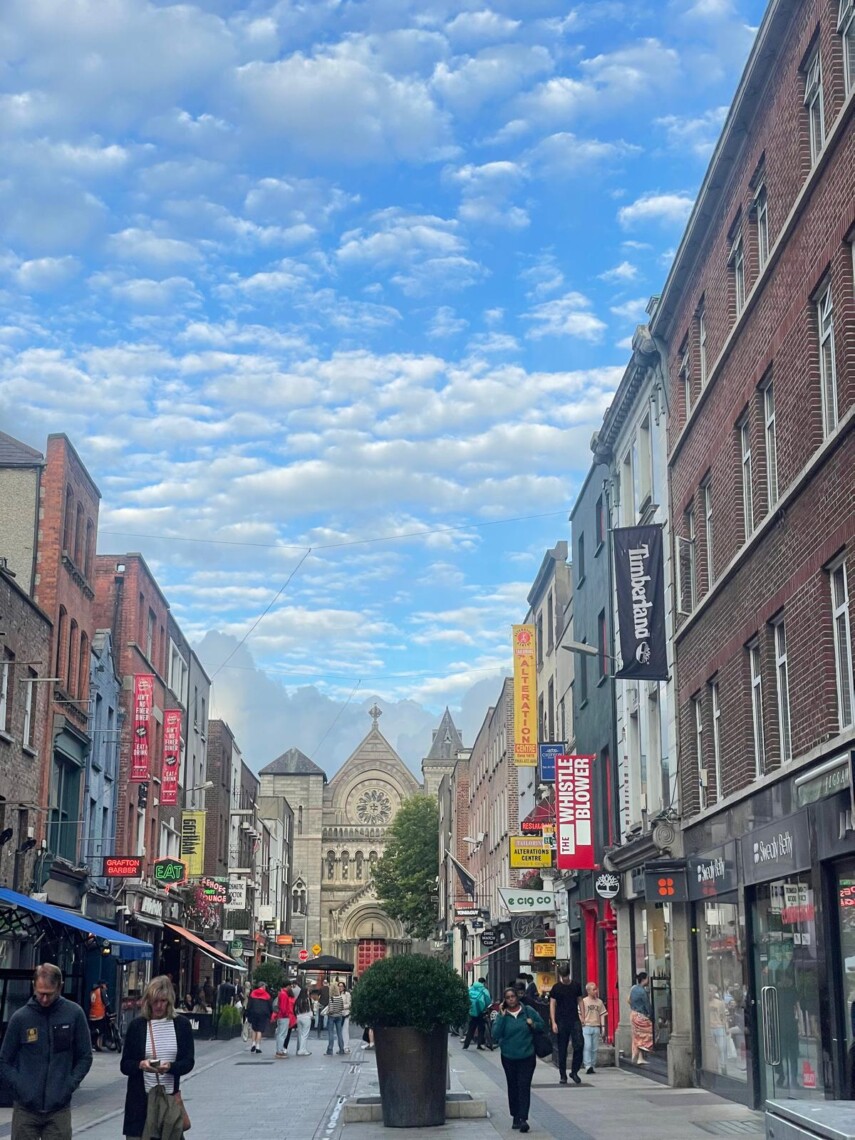
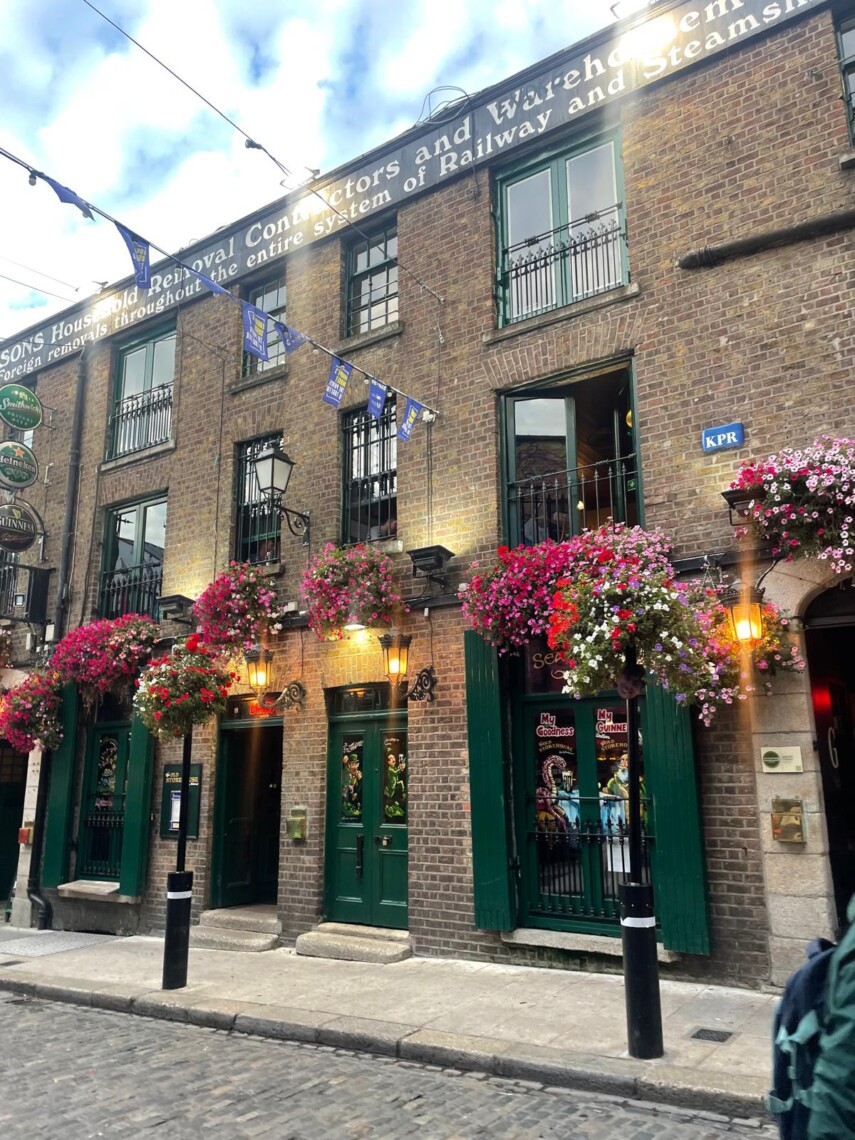
So, how many days should you spend in Dublin? For most first-time visitors, I recommend spending two to three full days in Dublin.
Two days gives you enough time to see the major attractions, explore the city center, and enjoy a few pubs without racing around. Three days gives you more breathing room for museums, restaurants, and simply wandering around.
If Dublin is part of a larger Ireland itinerary (which it most definitely should be), I personally wouldn’t spend four or five days exclusively in the city. There’s so much to see throughout the Emerald Isle, so I’d use those additional days to explore more of the country. I recommend stopping at Killarney National Park, Dingle, and Galway, but I’ll be going more into that in another article.
Where to Stay in Dublin Ireland
Dublin is relatively compact, so choosing accommodation around Dublin city center makes sightseeing significantly easier. Areas around St Stephen’s Green, Trinity College Dublin, and the southern side of the River Liffey put you within walking distance of many major attractions.
Dublin hotels can be expensive, particularly during summer and major events, so booking early is definitely your friend here.
For specific recommendations, check out my complete guide to the best hotels in Dublin Ireland.
Getting to Dublin, Ireland
Flying Into Dublin Airport
Most international visitors arrive through Dublin Airport, located about 10 kilometers north of the city.
There isn’t a direct train connecting Dublin Airport with the center, but airport coaches and Dublin Bus services make getting into town relatively easy. Taxis are also available outside the terminals.
You’ll find plenty of direct European and international flights into Dublin, including routes operated by Aer Lingus.
Unless you’re immediately starting an Ireland road trip, I wouldn’t bother renting a car at the airport. You really don’t need one for exploring Dublin. In fact, we picked up our car as soon as we got to Dublin and I definitely regretted it as we had to find parking in the center.
Getting Around Dublin
One of the things I liked most about Dublin was how easy it was to explore on foot.
Many of the city’s biggest attractions are concentrated within a relatively small area. Walking also means you’ll stumble across colorful doors, historic buildings, little cafés, and pubs you might otherwise miss.
For longer distances, Dublin has a good public transport network consisting of Dublin Bus, the Luas tram system, and DART trains. If you’re planning to use public transport frequently, consider getting a Leap Card rather than purchasing individual fares.
Top Dublin Attractions: What to See While Visiting Dublin

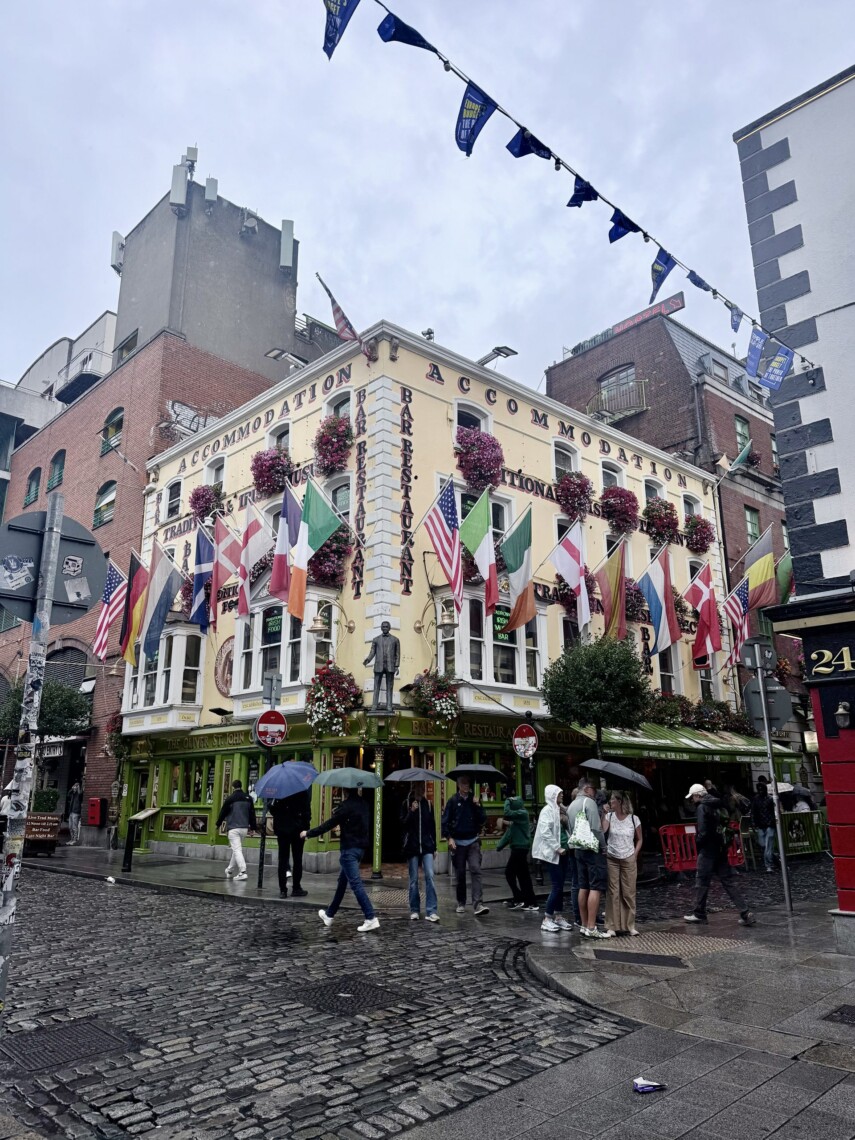
While there are several main Dublin Attractions to cross off your list of sight-seeing, there really aren’t that many things you have to see. In fact, I felt like within a day or two I was able to hit the most important stops.
1. Trinity College Dublin and the Book of Kells
Right in the heart of Dublin city, Trinity College Dublin is Ireland’s oldest university and one of the most famous places to visit in the capital.
The main attraction is the Book of Kells, a beautifully preserved illuminated manuscript dating back more than 1,000 years. Visitors also come to see the university’s famous historic library.
Even if you don’t go inside, Trinity’s campus is worth walking through while you’re exploring central Dublin.
2. Dublin Castle
Dublin Castle sits just off Dame Street and has played a major role in Irish history.
For centuries, it served as the headquarters of British administration in Ireland before being handed over following Irish independence. Today, you can explore the State Apartments, exhibitions, courtyards, and archaeological remains.
3. Kilmainham Gaol
Kilmainham Gaol is one attraction I’d make sure to book well ahead of your trip.
The former prison is closely connected with major events in modern Irish history, particularly the Easter Rising of 1916. Several leaders of the rebellion were imprisoned and executed here.
Visits are conducted as part of a guided tour, which helps put the prison and its history into context.
4. Guinness Storehouse
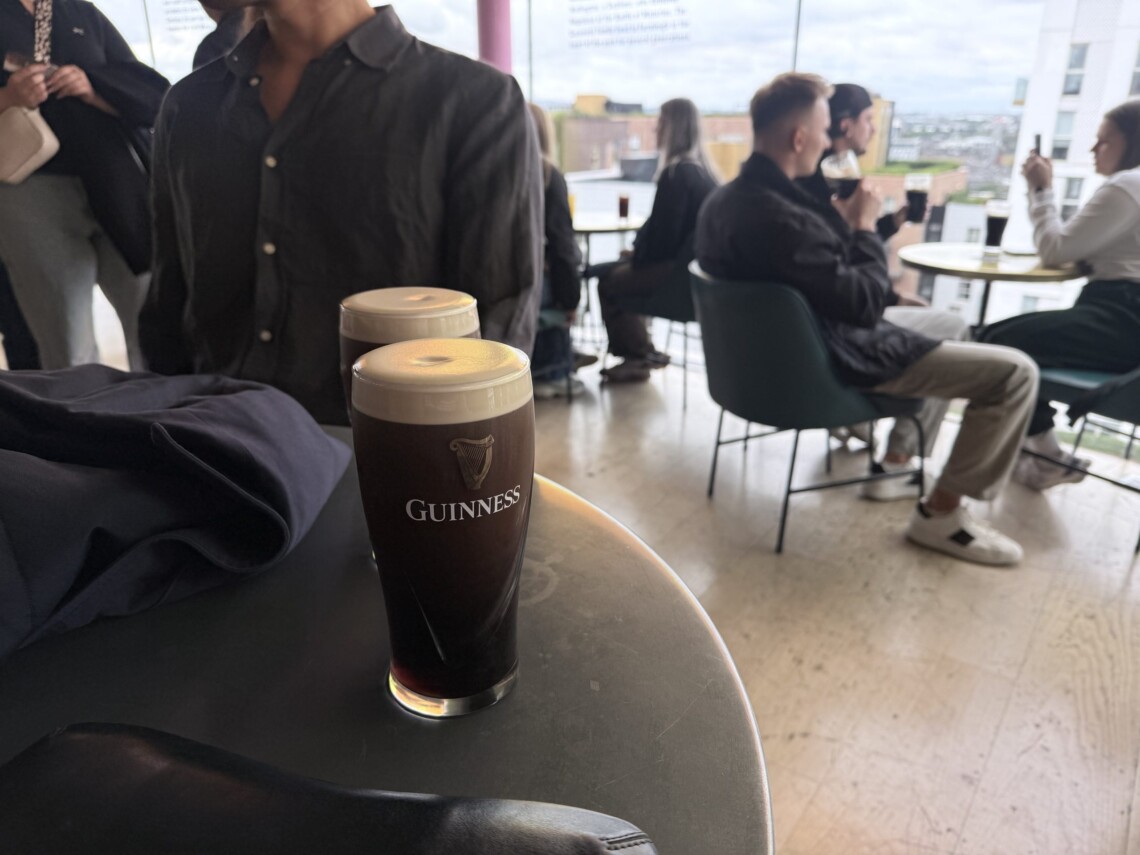
Is the Guinness Storehouse touristy? Absolutely. Would I still go on my first trip to Dublin? Yes.
The experience walks you through the history and production of Ireland’s most famous stout before ending with a pint overlooking Dublin from the Gravity Bar. Even if you’re not a huge Guinness drinker, it’s one of those classic Dublin experiences that’s fun to do. In fact, I’ve done this multiple times and have loved it every visit.
5. St Patrick’s Cathedral
St Patrick’s Cathedral is Ireland’s largest cathedral and one of Dublin’s most recognizable landmarks.
The cathedral dates back centuries and has connections to several important historical figures. Definitely make a stop here while wandering through the city.
6. St Stephen’s Green
After a few hours of sightseeing, St Stephen’s Green is the perfect place to slow things down.
This beautiful park sits right in central Dublin and is filled with walking paths, ponds, gardens, and green space. It’s also conveniently located near Grafton Street.
7. Temple Bar
You can’t write a Dublin travel guide without mentioning Temple Bar.
This historic neighborhood is filled with cobblestone streets, restaurants, pubs, and traditional Irish music. The famous Temple Bar Pub is probably one of the most photographed places in Dublin.
My advice? Walk through, experience the atmosphere, have a pint if you want, and then explore Dublin’s pub scene elsewhere. There are plenty of fantastic pubs outside Temple Bar that feel much more local. However, most people want at least one pint at the iconic Temple Bar, even if it is over priced and touristy.
8. Dublin’s Museums
If the weather isn’t cooperating, Dublin has plenty of museums to keep you busy.
The National Museum of Ireland covers everything from archaeology to Irish history, while the National Gallery of Ireland is conveniently located near Merrion Square.
You can also visit the Chester Beatty Library at Dublin Castle, which houses manuscripts, rare books, and artwork from around the world. For more recent history, EPIC The Irish Emigration Museum explores the stories of Irish people who emigrated and built lives around the globe.
Best Restaurants and Cafés in Dublin

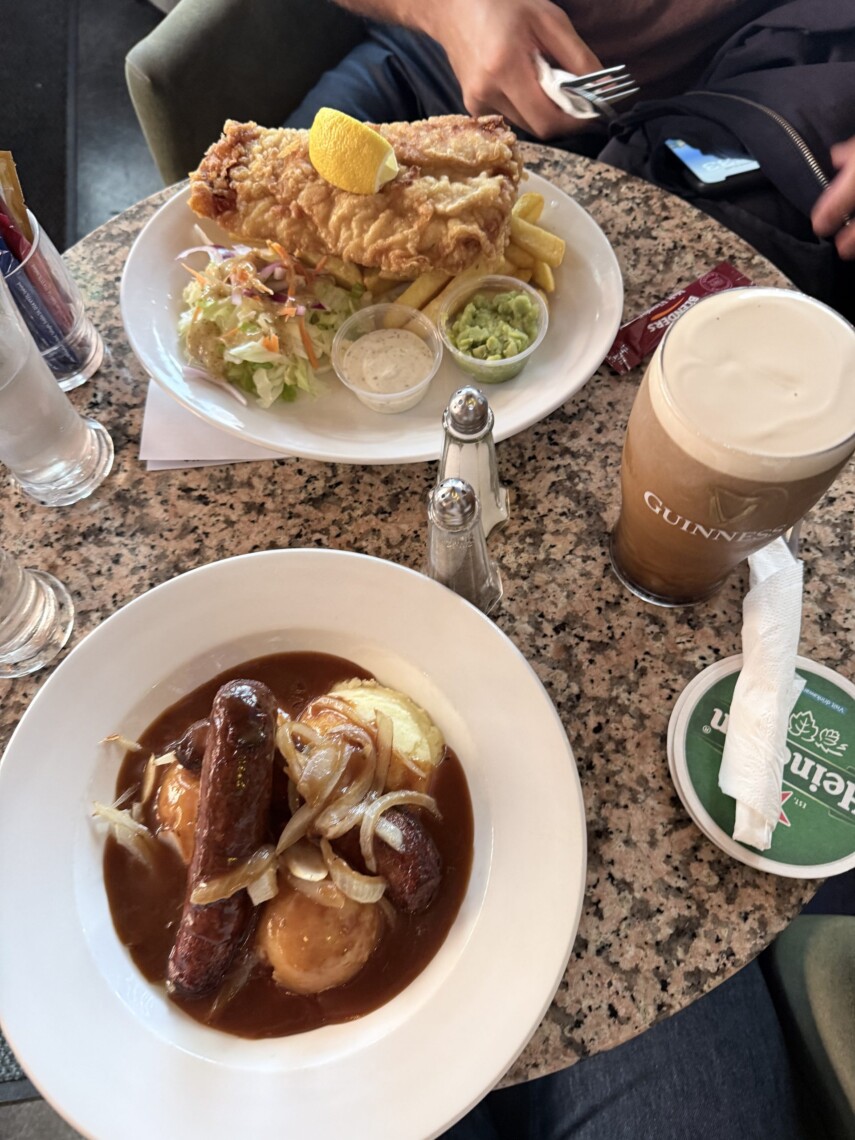
Okay, now we get to the good part. I personally loved Dublin’s casual and inviting food scene. These are a few spots I’d add to your list.
- Gallagher’s Boxty House: Gallagher’s Boxty House is a great place to try traditional Irish food, particularly boxty, an Irish potato pancake. Its Temple Bar location makes it easy to incorporate into a sightseeing day.
- Achara: Achara serves Thai-inspired dishes designed for sharing and is perfect when you’re ready for something completely different from traditional Irish food.
- Kickys: Kickys is a fun choice for a more modern Dublin dinner, with creative dishes and a menu that’s particularly good for sharing.
- Leo Burdock: For classic fish and chips, Leo Burdock is a Dublin institution and an easy casual option between attractions.
- Keogh’s Café: Keogh’s Café is great for breakfast, coffee, or a quick snack while exploring central Dublin. Their muffins are especially popular.
- The Stage Door Café: The Stage Door Café is a tiny, cozy spot in the center that’s perfect for a traditional Irish breakfast before a full day of sightseeing.
The Best Pubs in Dublin
You really can’t visit Dublin without experiencing its pub culture. And while Temple Bar gets most of the attention, I think you’ll find some of the best pubs elsewhere in the city. Here are a few of my favorite spots to add to your list.
- Toners: Toners is exactly what you want from an old Dublin pub: dark wood, cozy corners, plenty of character, and a very good pint of Guinness.
- O’Donoghues Bar: This spot is a must if you’re interested in traditional Irish music. The pub has deep connections with Irish folk music and is famously associated with The Dubliners.
- Kehoes Pub: Kehoes is another historic pub near Grafton Street with cozy rooms and an old-school Dublin atmosphere.
- Grogan’s Pub: This pub has long been associated with Dublin’s artistic and literary communities and remains a great no-frills place for a pint.
- The Long Hall: The Long Hall is easily one of Dublin’s prettiest pubs, with an ornate Victorian interior that makes it worth seeing even if you’re only stopping for one drink.
- The Stag’s Head: Tucked just off Dame Street, The Stag’s Head combines a beautiful Victorian interior with a convenient central location.
- McGattan’s Pub: McGattan’s is another good option if you’re looking for a lively Dublin pub outside the heart of Temple Bar.
My biggest Dublin pub tip is simply to wander. If you hear traditional Irish music coming through a doorway, go inside. Some of the best nights in Dublin don’t require much planning.
Where to Try Irish Whiskey in Dublin
Guinness gets most of the attention, but don’t forget about Irish whiskey.
The Jameson Distillery Bow St. is probably Dublin’s best-known whiskey experience, offering tastings and guided tours covering the history of Jameson and Irish whiskey. Even if you skip the formal tour, ordering a whiskey at one of Dublin’s traditional pubs feels pretty appropriate.
Best Day Trips Near Dublin
If you have an extra day, there are several fantastic destinations near Dublin.
The Wicklow Mountains are one of my top choices. Located south of the city, the region offers beautiful landscapes, lakes, hiking trails, and historic sites such as Glendalough.
Howth is even easier to reach and makes a great half-day trip for coastal walks and seafood.
With more time, you can also find organized tours from Dublin to Cliffs of Moher or Galway. Just keep in mind that these make for very long days.
Practical Dublin Travel Tips
A few final things are worth knowing before you go:
- Prepare for changing weather. Even during summer, bring layers and a lightweight waterproof jacket.
- Book Kilmainham Gaol early. Tickets can sell out well in advance.
- Expect Dublin to be more expensive compared to other European cities. Accommodation in particular can take up a large chunk of your budget.
- Walk whenever possible. Most of central Dublin is easy to explore on foot.
- Don’t over-plan your evenings. Leave room for spontaneous pub stops and live music.
I personally just loved walking around the city, bar hopping wherever there was live music playing, and enjoying the casual fish and chips dinner at any local pub.
FAQ: Visiting Dublin Ireland

Is Dublin worth visiting?
Yes. Dublin is especially worth visiting if you’re interested in Irish history, pub culture, literature, and experiencing a lively European capital.
How many days do you need in Dublin?
I recommend at least two full days, although three gives you a much more relaxed experience. With additional time, I’d start exploring other parts of Ireland.
What shouldn’t you miss in Dublin?
Trinity College Dublin, Dublin Castle, Kilmainham Gaol, St Patrick’s Cathedral, the Guinness Storehouse, and St Stephen’s Green would be at the top of my list. And, of course, make time for at least one or two traditional Dublin pubs.
Do you need a car in Dublin?
No. Dublin city center is very walkable, and public transport can take you farther when needed. I’d only rent a car when you’re ready to leave Dublin and explore more of Ireland.
What is the best month to visit Dublin?
Late spring through early fall gives you longer daylight hours and generally more comfortable sightseeing weather, although rain is possible year-round. May, June, and September are particularly nice months to consider.
Is Dublin expensive?
Dublin can be expensive, particularly when it comes to accommodation. Booking your hotel early and mixing paid attractions with free museums, parks, and walking around the city can help keep costs down.
Dublin Travel Guide: Final Thought
Dublin probably won’t take you a week to explore, and that’s actually part of what makes it such a great addition to an Ireland itinerary.
You can see Trinity College in the morning, wander through St Stephen’s Green in the afternoon, learn about the Easter Rising at Kilmainham Gaol, and end your day listening to traditional Irish music with a pint in hand.
And while the landmarks are certainly worth seeing, some of my favorite parts of Dublin are the moments just enjoying the city. Walking along the River Liffey, ducking into a pub because it started raining, or sitting somewhere much longer than you intended because the music is just that good.
If you’re planning your first trip to the Emerald Isle, give Dublin two or three days before heading farther into Ireland. See the history, eat well, explore beyond Temple Bar, and leave a little room in your itinerary to wander.


No Comments